
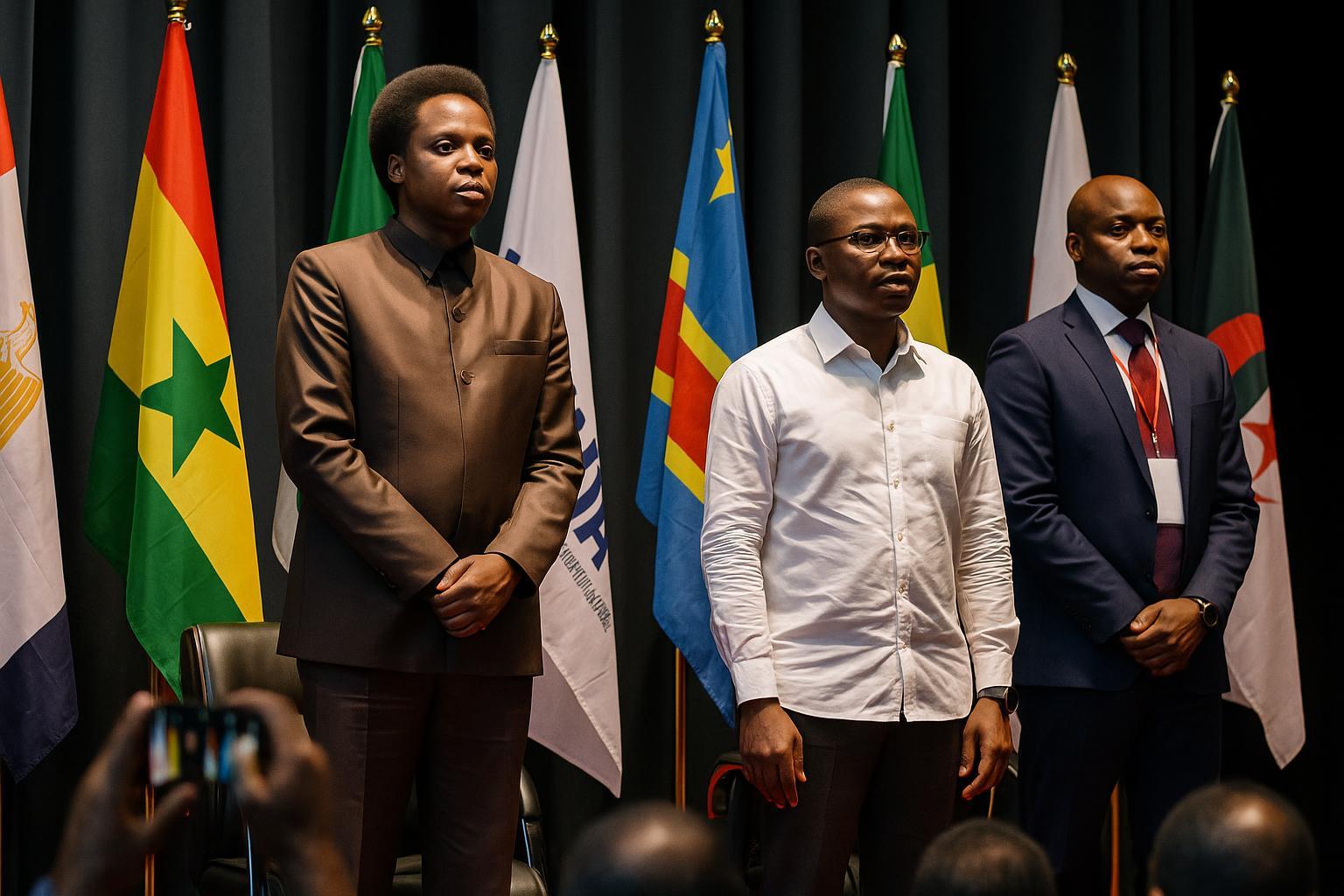
Youth Energy Spans the Congo River
The Congo’s twin capitals are separated by less than a mile of water, yet their calendars rarely sync as neatly as this August. Less than two weeks after Kinshasa hosted the International Youth Day forum, Brazzaville prepares to absorb its findings and translate them into policy.
Inside Kinshasa’s August Dialogues
On 12 August, more than five hundred delegates from twenty-five African nations gathered in the Palais du Peuple under a banner adopted by the United Nations: “Creating a Sustainable Future: Youth Commitment to the Planet”. Organisers called it the largest youth-led environmental exchange Kinshasa has seen since 2019 (UN Youth Day brief).
Forum president Jonathan Lumbeya Masuta opened proceedings with a challenge. “Our continent has the youngest demographics on Earth. If we miss this moment, we risk locking future generations into vulnerability,” he told reporters, framing discussions around climate finance, circular economies and green entrepreneurship.
Key Takeaways from the Forum
The final communiqué urged governments to expand vocational programmes in renewable energy, accelerate continental free-trade protocols for eco-friendly products and strengthen river basin conservation. Delegates also insisted on seats for youth networks inside national climate negotiating teams, reflecting a trend observed at COP 28 preparations (African Union youth desk).
A Delegation Sets Sail for Brazzaville
Masuta now leads a six-member mission across the river to present the Kinshasa roadmap at Hôtel Saphir on 23 August. The ceremony, backed by former legislator José Cyr Ebina, doubles as the formal launch of FIJADA’s Congolese bureau, to be steered by Daniel Biangoud, the forum’s lone Brazzaville delegate.
Government Presence Signals Alignment
Minister of Posts, Telecommunications and the Digital Economy Léon-Juste Ibombo will attend, echoing Brazzaville’s strategy of coupling youth advancement with digital transformation. His ministry recently announced plans to equip two hundred community centres with solar-powered internet this year, a move participants say dovetails with FIJADA’s green skills agenda (ministry release).
Voices from Parliament and Beyond
Deputy Exaucé Ibam Ngambili, himself 35, notes that “the forum’s appeals match the National Development Plan’s human-capital pillar”. He argues that routing environmental training through local start-ups could curb urban unemployment while reinforcing Congo’s nationally determined contributions under the Paris Agreement.
Regional Partners Join the Conversation
United Nations agencies have confirmed representation, citing the forum’s resonance with the Global Accelerator on Jobs and Social Protection. Pamela Audrey Derom, vice-president of the Pan-African Youth Union for Central Africa, will address the meeting virtually from Bangui, broadening dialogue on forest stewardship across the Congo Basin.
Setting Up Shop in Brazzaville
The new FIJADA bureau is expected to operate from the capital’s Mpila district. Its initial programme, obtained by this magazine, prioritises monthly town-hall sessions, a database of green funding opportunities and partnerships with the Sangha and Likouala departments, whose dense forests are central to regional carbon markets.
Financing the Ambition
While participation remains voluntary, FIJADA relies on a blend of philanthropic grants, corporate sponsorships and modest membership dues. Masuta says a forthcoming memorandum of understanding with a Brazzaville-based bank will provide micro-loans for youth-run recycling ventures, making the initiative “self-propelling rather than donor-dependent”.
Youth Perspective on Policy Uptake
Twenty-three-year-old engineering student Grâce Ossila, reached ahead of the event, hopes the government will adopt the forum’s call for climate internships inside public agencies. “We study renewable systems in class, but without practical exposure we can’t innovate locally,” she notes, underscoring the skills gap highlighted in the forum’s report.
Environmental Stakes for Congo
Congo-Brazzaville’s forest covers nearly two-thirds of its territory and acts as a carbon sink of global importance. Analysts observe that empowering youth to manage this resource could enhance the country’s leverage in international climate financing negotiations while safeguarding community livelihoods (Central Africa Forests Initiative data).
Digital Tools Meet Green Goals
Experts at the Kinshasa roundtable praised mobile applications that crowd-source data on illegal logging. Brazzaville’s expanding 4G footprint, supervised by Minister Ibombo’s portfolio, offers a platform for such citizen science. FIJADA’s report urges regulators to keep spectrum costs low so start-ups can scale responsibly.
Security and Mobility Considerations
Cross-river collaboration is not without hurdles. Visa procedures, river-port fees and logistical bottlenecks limit student exchanges. The communiqué recommends a bilateral youth mobility accord between Congo and the DRC, a proposal that diplomatic observers say could strengthen sub-regional cohesion within the Economic Community of Central African States.
Measuring Success Beyond Declarations
Sociologist Clarisse Mvoula cautions that “the credibility of any youth forum depends on tracking implementation”. FIJADA plans to publish a public dashboard by December, listing progress on each recommendation. Transparency advocates welcome the move, seeing it as a template for other civic platforms.
Looking Ahead to 2026
Organisers have already floated Libreville as the venue for next year’s gathering, with a focus on blue economies and coastal resilience. That prospect places Brazzaville in a relay position, tasked with demonstrating that this year’s pledges can translate into measurable action within twelve months.
A Shared Responsibility
As the sun sets over the Congo River on 23 August, Brazzaville’s audience will weigh the Kinshasa document’s 14 recommendations against national priorities. In Masuta’s words, “governments can set direction, but the steering wheel must be held collectively”. The coming months will test that collaborative promise.
Why Diplomats Will Be Watching
For foreign missions, the forum’s trajectory offers insight into how Congo manages inter-generational inclusion while pursuing climate resilience. Effective alignment could attract climate finance and tech partnerships, reinforcing regional stability. Failure, diplomats note privately, would leave an energetic demographic searching for alternative outlets.