
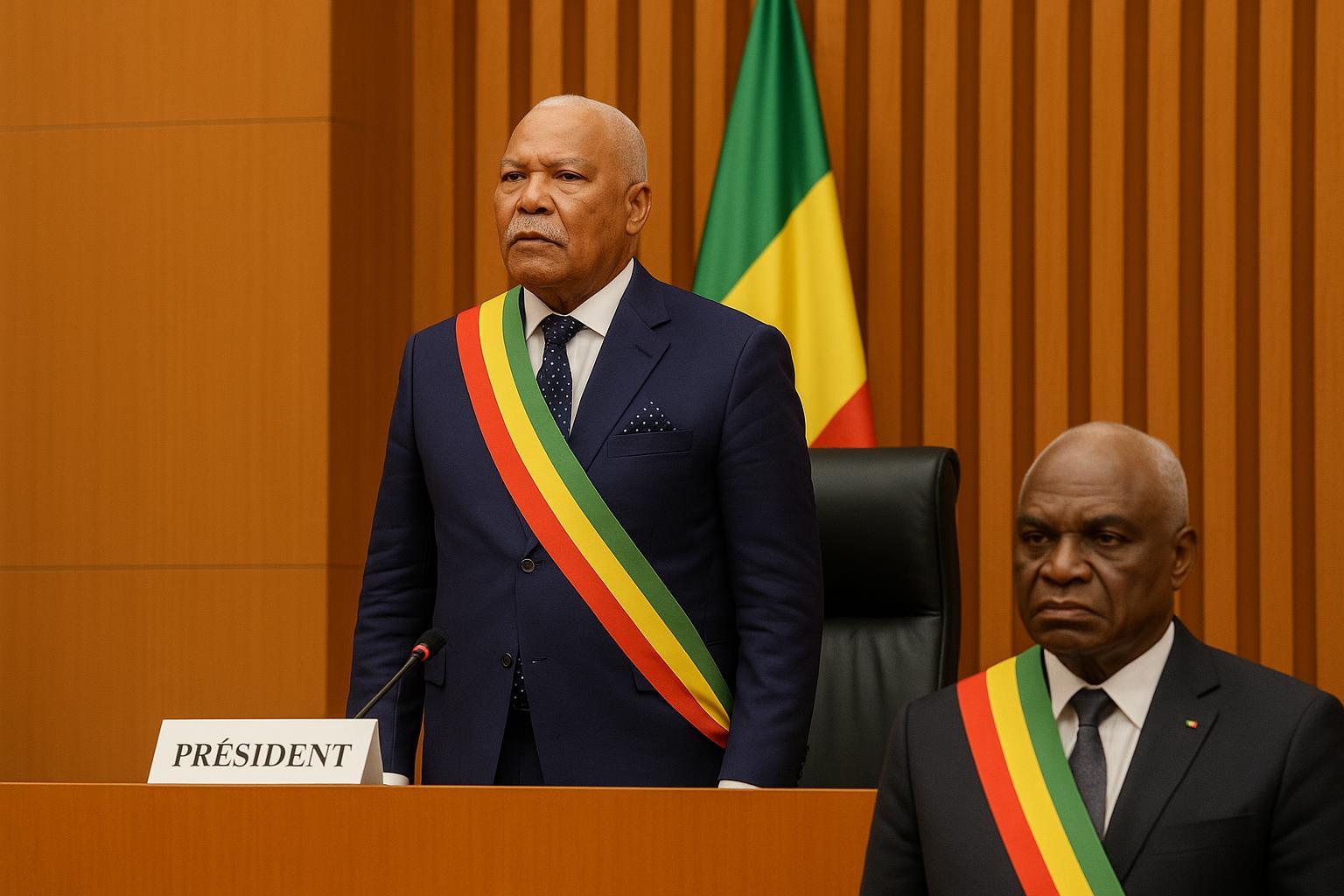
A Session of Record Productivity
With the traditional gavel-strike in Brazzaville, Speaker Isidore Mvouba closed the ninth ordinary session and praised deputies for what he called “sustained, meticulous work.” Twenty-seven of thirty-two bills were approved, a success rate rarely matched since the 2015 constitutional reform.
The tone was confident yet pragmatic. Mvouba reminded lawmakers that legislative speed must never eclipse depth, arguing that a dense docket is meaningful only if output guides policy implementation and strengthens public trust, words greeted by prolonged applause from the crowded visitors’ gallery.
Legislative Scorecard Highlights
Among the endorsed texts, three were home-grown proposals, a sign of growing parliamentary initiative. Observers note that private-member bills accounted for just one text in the previous session, suggesting that deputies are increasingly shaping the agenda rather than merely responding to cabinet drafts.
Several measures refine mining royalties, modernise company registration and align fiscal thresholds with regional norms, changes that analysts at the Brazzaville Economic Observatory say could lift Congo’s Doing Business indicators by at least four places (World Bank draft 2023).
Crucially, the finance committee shepherded a bill clarifying public debt disclosure. Economists view the move as supportive of the government’s target to keep the debt-to-GDP ratio below 70 percent by 2026, a benchmark also encouraged by the IMF Central Africa department (IMF 2024 outlook).
Oversight Priorities Echo Economic Goals
“The Assembly must mark government at the belt,” Mvouba told reporters afterward, borrowing a wrestling metaphor popular in local Lingala. His message: oversight is a partner, not an obstacle, to the presidential roadmap that emphasises macroeconomic balance and investor confidence.
Future hearings will invite ministers to detail progress on the three-year convergence plan adopted by the CEMAC heads of state last year. That programme presses members to streamline customs, digitalise revenue services and reinforce anti-money-laundering protocols.
Diplomats consulted see the Assembly’s renewed vigilance as complementary to Executive action. A senior EU envoy said discreetly that constructive scrutiny enhances credibility during negotiations over budget support, a view echoed by regional bankers who monitor Congo’s Eurobond performance.
Spotlight on Health Infrastructure
Two flagship bills establish general hospitals in Sibiti and Ouesso, areas once reliant on long referral journeys to Brazzaville or Pointe-Noire. Health specialists believe the facilities will cut response times for trauma and obstetric emergencies across Lékoumou and Sangha provinces.
Presidential aides indicate that commissioning ceremonies are planned within months, pending equipment calibration. By moving tertiary care closer to forest-zone communities, the government aligns with WHO recommendations on decentralised health coverage, a reform already praised by the African Development Bank in its latest country update (AfDB 2024).
Bilateral Tax Deal with Türkiye
Lawmakers also ratified a double-taxation convention signed in Ankara on 14 November 2024. The accord shields investors from paying income tax twice on the same earnings and introduces reciprocal information exchange between revenue authorities.
For Congo, the treaty spans personal income, corporate profits, capital gains and rental income; for Türkiye, it covers comparable categories. Business associations in Brazzaville predict that Turkish participation in construction and agri-processing could rise by 20 percent once the pact becomes operational.
Deputy Minister for Finance Prisca Elenga told the chamber that transparent rules will “create a level fiscal playing field” and help diversify away from hydrocarbons, echoing the national development plan’s call for broader manufacturing inputs.
Momentum for CEMAC-Led Reforms
The session’s economic undercurrent mirrors CEMAC’s collective bid to restore regional buffers depleted by commodity shocks. Congo has already met three of the six performance criteria tied to the 2023-2025 macroeconomic programme, according to a communiqué from the regional central bank.
Credit-rating agency Bloomfield noted this week that legislative clarity around debt statistics “substantially reduces” policy uncertainty, a factor that could influence its next sovereign outlook review. Domestic lenders equally welcome the focus on arrears clearance, anticipating quicker Treasury settlements in the second half.
Looking Ahead to the Next Session
Before adjourning, Mvouba instructed committees to prepare sectoral audits of expenditure execution, a process expected to start after the mid-year recess. Such audits, he said, will allow the Assembly to move from normative oversight to empirical assessment.
Opposition benches, though limited in number, signalled cooperation. Deputy Jean-Claude Ibata described the working climate as “firm yet respectful,” adding that shared economic stakes often blur partisan lines.
With presidential and parliamentary calendars aligned until 2027, analysts foresee continued synergy between the Executive and the Assembly. For now, the ninth session’s legislative harvest offers a concise portrait of a chamber determined to convert statutes into tangible outcomes for Congolese households.