
Legacy Broadcasters Reunite in Brazzaville
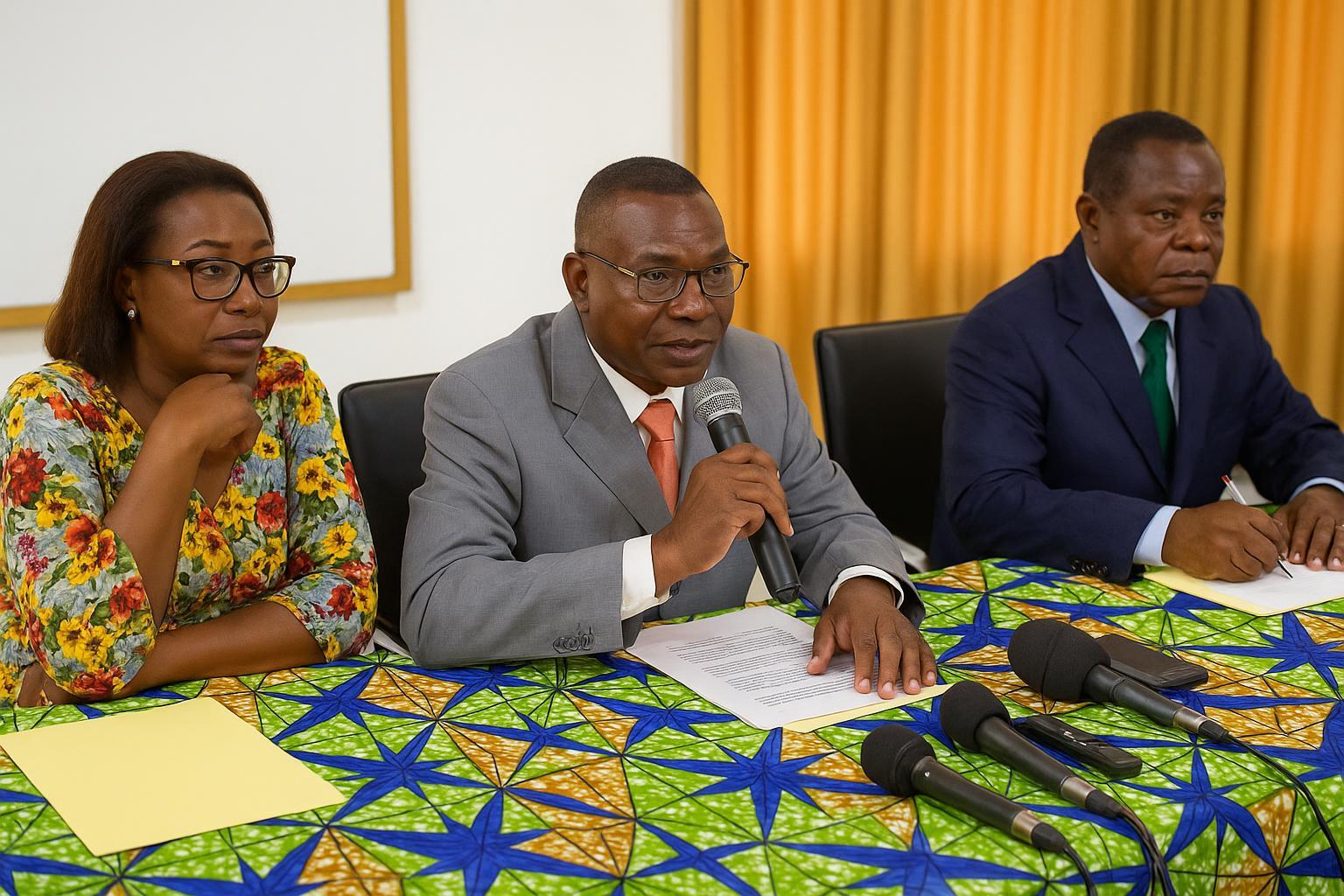
In early August, the tranquil gardens of the Centre interdiocésain des œuvres pulsed with familiar voices. More than forty former Radio Congo reporters gathered for their first statutory session, three months after legally registering the Association of Former Radio Congo Journalists, known by its French acronym AAJRC.
Chairman Michel Rudel Ngandziami opened the meeting with a pointed reminder that the network’s pioneers still hold influence. “Our story did not end with retirement,” he said, citing the national broadcaster’s six-decade heritage chronicled by delegates in the room (Les Dépêches de Brazzaville).
A Roadmap Framed by Solidarity
Delegates unanimously adopted a roadmap running through late 2026. It lists twelve priority activities, anchored in three strategic pillars: social assistance for aging members, professional training for active journalists and cultural or leisure events that showcase Radio Congo’s rich archives.
The plan reflects models used by alumni guilds in Senegal and Côte d’Ivoire, adapted to Congo’s legal environment. Organisers estimate that roughly 180 retirees could benefit from the welfare fund once membership dues and sponsorship agreements start flowing in early 2025 (AIAC data).
Social Safety Net in Practice
Many senior journalists entered retirement during the oil-price downturn of 2015-2020, leaving limited pensions. The association therefore prioritised immediate medical support and small emergency grants. A three-person welfare committee will negotiate discounted health coverage with private clinics in Brazzaville and Pointe-Noire.
“We want to avoid the tragedies of colleagues selling equipment to buy medicine,” explained board member Rosalie Ondongo, who oversaw similar schemes inside the Congolese Union of Journalists. She believes pooled bargaining could cut pharmaceutical costs by up to thirty percent.
Training the Next Generation
Beyond welfare, veterans see themselves as mentors. Starting February 2025, AAJRC plans quarterly workshops on investigative techniques, digital audio editing and ethical standards. Sessions will be free for journalism students at Marien Ngouabi University and for regional correspondents.
The National Council for Communication, contacted on Tuesday, confirmed it would accredit trainers and share its auditorium. Officials welcomed what they called “a complement to state programmes,” aligning with the government’s broader media-capacity roadmap adopted in April 2023 (Official Gazette).
Celebrating Culture and Memory
Radio Congo’s sound library, containing interviews from the country’s independence era, is a centrepiece of the cultural pillar. Archivists will curate a monthly public listening session, beginning with rare speeches by President Marien Ngouabi and early broadcasts covering the 1991 Sovereign National Conference.
Plans include a 2026 travelling exhibition featuring vintage microphones, newsroom logbooks and personal diaries. UNESCO’s Brazzaville office signalled technical assistance to digitise fragile magnetic tapes, citing similar partnerships with Cameroon’s CRTV archives.
Quest for a Permanent Headquarters
Currently, AAJRC rents a small office inside a downtown cooperative building. The roadmap sets December 2026 as the deadline for acquiring a dedicated headquarters. Fund-raising options range from a commemorative gala to corporate sponsorship from telecom operators expanding podcast platforms.
Former communication minister Serge Michel Odzocki, now a senator, urged members to “move as one block” to secure space. He argued that a visible address would enhance the group’s legitimacy among international donors and multilateral agencies supporting press freedom initiatives.
Governance and Financial Transparency
To reassure potential partners, the association adopted a charter mandating annual external audits. Membership fees are fixed at 5,000 CFA francs per month, with a sliding scale for retirees on minimal pensions. A digital ledger, updated weekly, will be accessible through a password-protected portal.
Such safeguards mirror OECD recommendations for non-profit governance in emerging economies. Analysts say transparency is essential for attracting grants from entities like the African Development Bank, which finances regional media labs across Central Africa.
Alignment with National Media Policy
Congo-Brazzaville’s 2019 information law encourages professional organisations to participate in continuing education. Government spokesperson Thierry Moungalla welcomed AAJRC’s initiative, noting it “complements the state’s commitment to reliable, responsible journalism” and supports the national strategy for human capital development.
Observers underscore that constructive collaboration between civil society and regulators strengthens the sector without compromising editorial independence. The alumni’s neutral, solutions-oriented agenda dovetails with that policy stance.
Expert Voices on Sustainability
Media economist Irène Massamba believes the association’s mix of dues, services and sponsorship is “financially realistic” if membership reaches one hundred by mid-2025. She points to comparable Algerian and Ghanaian alumni bodies that achieved solvency within two years.
Conversely, watchdog researcher David Ebina cautions that overreliance on corporate sponsorship could raise questions about influence. Ngandziami replied that a finance committee will cap any single sponsor’s contribution at twenty percent of the annual budget, maintaining plural funding sources.
Looking Toward the First Anniversary
The one-year anniversary set for May 2026 will double as a soft deadline for early deliverables. Organisers aim to present a functioning welfare fund, at least two completed training cycles and tangible progress on the headquarters search.
“If we succeed, our model can inspire similar networks for print and television veterans,” Ngandziami told reporters, his optimism echoing in the hall where Radio Congo’s chimes once signalled nightly news. For many, the renaissance feels less like nostalgia and more like renewed purpose.