
Tense build-up to FECOHAND vote
With the elective congress of the Congolese Handball Federation scheduled for Saturday, 16 August, administrators, coaches and fans are holding their breath across Brazzaville. Registration badges have been printed, hotel rooms booked, yet a single court order could still redraw the entire timetable.
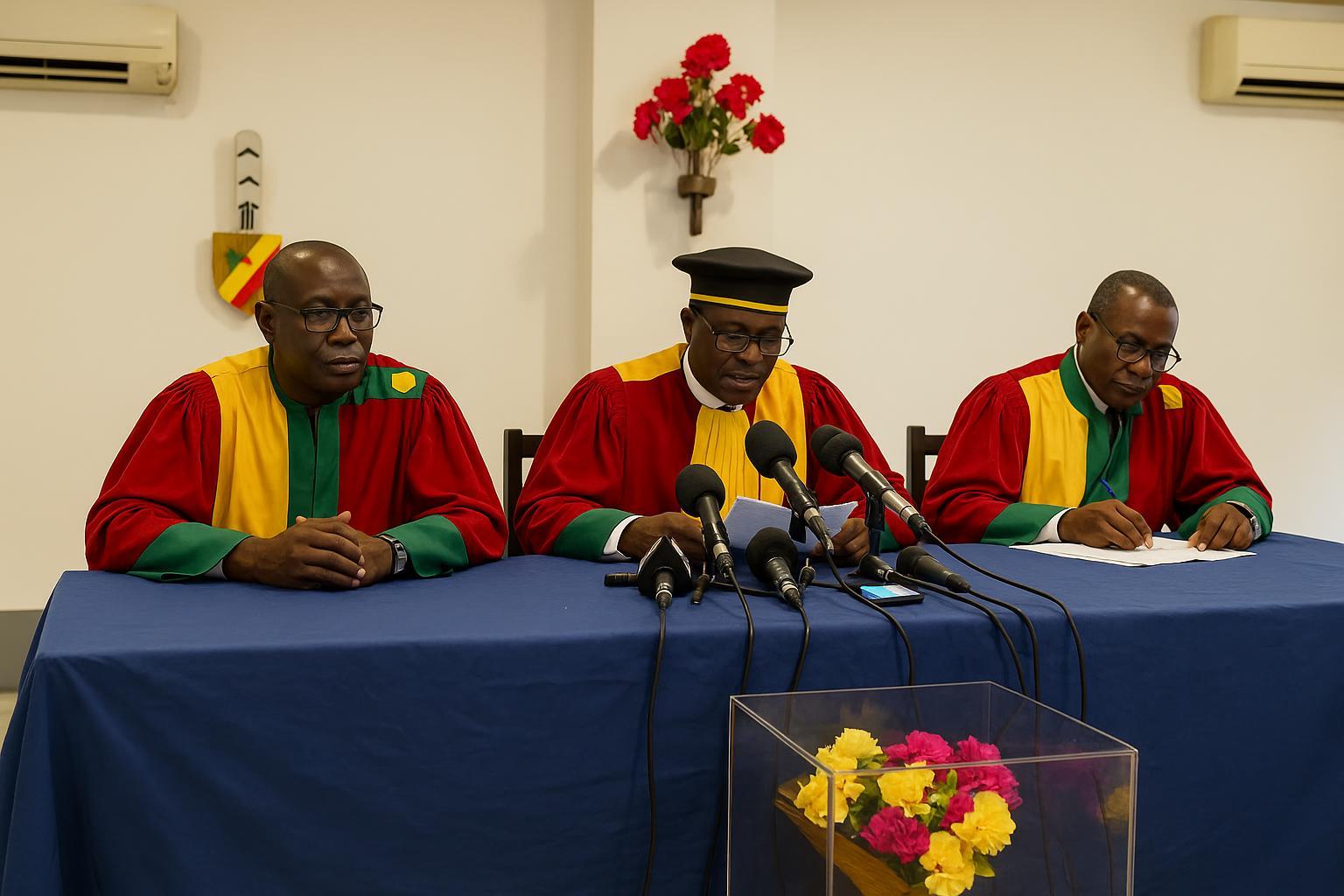
The suspense originates from the latest motion filed before the Chamber of Conciliation and Arbitration of Sport, better known by its French acronym CCAS. The panel will meet the same morning to decide whether the congress can be suspended while several procedural grievances are examined.
CCAS emergency session explained
Avicenne Nzikou, whose candidacy was invalidated on 14 August by the Independent Electoral Commission, is behind the request. Through counsel Éric Ibouanga, he argues that the commission itself was appointed in defiance of an earlier CCAS ruling issued on 13 October 2024.
CCAS judges already dismissed one petition earlier this week, inviting the plaintiff to build a stronger file. That procedural nudge seems to have worked: the follow-up brief reportedly runs over sixty pages, complete with sworn statements and audio transcripts gathered from provincial league observers.
Independent Electoral Commission questioned
At the centre of the controversy is the Independent Electoral Commission itself. Created to guarantee neutrality, the body was appointed by the National Olympic and Sports Committee of Congo, CNOSC, after consultations that certain clubs claim were hurried and selective, leaving eight of the fifteen regional associations unrepresented.
CEI president Jean-Marie Moukele maintains that every complaint was processed within statutory deadlines and that candidate disqualifications rested on clear constitutional clauses. He told reporters that the congress will start at 9 a.m. sharp unless the CCAS issues a written injunction, adding, “We cannot govern by rumour.”
Voices from the court and the pitch
From the legal side, Me Ibouanga insists the issue is urgent enough to warrant what practitioners dub a “hour-by-hour procedure”. Under Congolese sports law, CCAS panels may sit at unconventional venues, even hotel lobbies, if that prevents an irreversible decision from being taken prematurely.
Outside the courthouse, athletes seem torn between eagerness for stability and fatigue with paperwork. “Players only ask for predictable calendars,” national goalkeeper Prisca Okemba said, noting that the national championship has not started on time for three consecutive seasons due to boardroom stalemates.
Possible outcomes for Saturday
If the CCAS grants a provisional suspension, Saturday’s congress would be converted into a routine information session, with no ballots cast. That scenario could open a brief negotiation window during which disqualified lists might be rehabilitated, or the entire electoral roadmap rewritten.
Conversely, should the judges decline to intervene, the federation will elect its new leadership by early afternoon. Four slates remain in contention, featuring a mixture of seasoned administrators and rising municipal officials, all pledging to accelerate youth leagues and deepen cooperation with regional unions.
Wider stakes for Congolese sport
For government observers, the episode is a reminder that well-run federations are essential to the country’s broader sports diplomacy strategy. Brazzaville successfully hosted the 2015 All-Africa Games and is vying for future continental events, a bid that requires fully functional governing bodies.
Analysts at the Central African Sports Research Institute point out that delays in elections often translate into missed grant deadlines with the International Handball Federation, potentially affecting kit supplies and training scholarships. “Governance is not abstract; it directly influences performance,” researcher Clarisse Mavoungou observed.
Measured optimism in sporting circles
Procedurally, the CCAS decision is expected before noon, according to court clerks interviewed Friday evening. Should an appeal follow, it would have to be lodged with the civil high court, but that secondary path would not automatically freeze the outcome of the congress.
Meanwhile, candidates continue last-minute outreach. Local radio slots, WhatsApp groups and even market visits are being used to sell manifestos promising wider grassroots tournaments and transparent accounting. In the words of contender Bénédicte Diangala, “Every handshake matters, because handball begins in neighbourhood playgrounds.”
The Ministry of Sports has not taken sides, reiterating in a brief communiqué that it “respects the autonomy of federations” while encouraging all actors to uphold national statutes. That stance aligns with continental norms set by the African Union Commission on Sport.
As dawn approaches, Brazzaville’s Palais des Congrès stands ready, its handball banners fluttering in the warm river breeze. Whether delegates will cast votes or merely trade procedural notes may depend on a handful of signatures scribbled earlier in a quiet courtroom.