
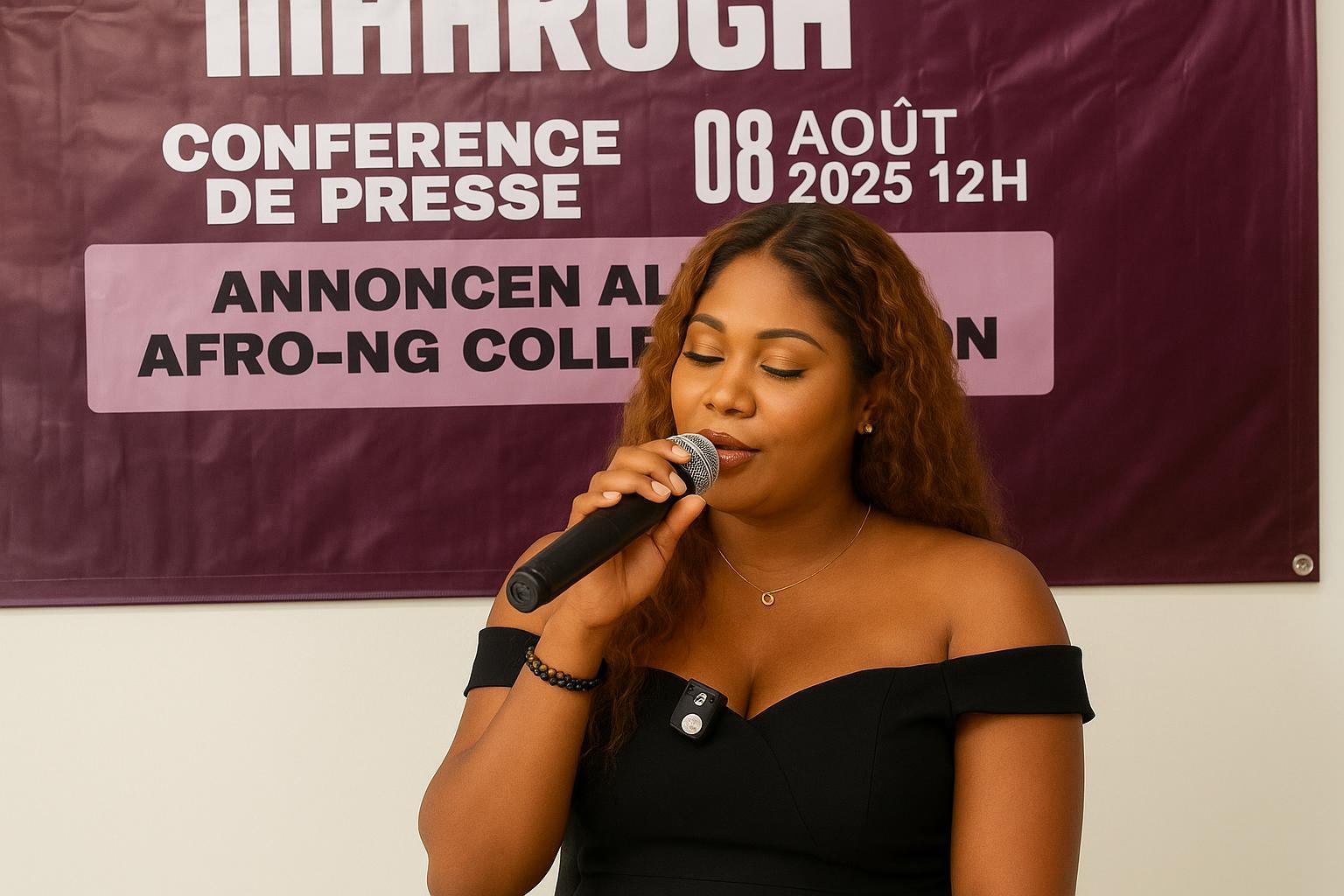
A headline-making press conference in Brazzaville
Flashes popped inside the leafy Hôtel Les Chutes du Djoué Resort on 8 August 2025 as 22-year-old vocalist Niska Soleil Reine Makoua confirmed that her first double album, “Afro-ngoli Correction,” will arrive on 20 September. Flanked by producer Perly Dambenzet and manager Jean-Patrice Mézène Passi, she spoke confidently to reporters.
Reporters from Les Dépêches de Brazzaville and Télé Congo heard Makoua explain that the project will carry eighteen to twenty tracks, each aiming to “correct certain drifts in our musical universe.” The statement, immediately shared across social media, sparked excitement among DJs and playlist curators within hours (Les Dépêches de Brazzaville, 9 Aug 2025).
Passi, former artistic director of the Pan-African Music Festival, emphasised that the launch date was chosen to coincide with a celebratory concert in the capital. “We wanted a symbolic moment,” he noted, hinting at additional showcases abroad before the month ends, subject to logistical finalisation.
Unpacking the Afro-ngoli formula
Afro-ngoli blends kingoli, a tradi-modern groove rooted in the Cuvette department, with contemporary afro-beat percussion. Musicologist Dr. Clarisse Samona says the pairing “refreshes regional folklore without sacrificing urban appeal,” comparing it to the way amapiano reframed South African house (Radio Congo Interview, 2024).
Makoua traces her creative compass back to childhood ceremonies in Makoua, where village ensembles combined likembe patterns with rumba guitars. “Afro-ngoli is my postcard from home,” she told this magazine, stressing that her objective is not nostalgia but an inclusive sonic narrative for city youths.
Lyrically, the album navigates love, resentment, hypocrisy, joy and sorrow. Sources close to the studio suggest a spoken-word interlude addressing social cohesion, mirroring themes explored by earlier Congolese icons such as Tchico Tchicaya, yet delivered through the crisp cadence of Gen-Z vernacular.
Collaborations and studio craftsmanship
Diesel Gucci contributes a rapid-fire verse on a track tentatively titled “Ekanga,” while Zérino Kassa, considered the ‘king’ of kingoli, offers a call-and-response bridge that echoes traditional ngalanga chants. Their presence, Makoua insists, “anchors the project in authenticity while pushing sonic boundaries.”
Producer Perly Dambenzet recorded brass sections in Pointe-Noire’s Studio Océan and layered them with Lagos-recorded drum loops for transnational texture. Mastering engineer Stéphane Pellerin, known for work with Angelique Kidjo, is in charge of final polish, aiming for streaming-platform loudness standards without compromising dynamic range.
Industry observers note that a double album is an audacious format in the current singles-driven market. Yet Passi argues the choice reflects audience data: “Our analytics show fans replay long projects on YouTube, increasing overall engagement.” The team therefore views length as a strategic advantage rather than a risk.
Digital momentum and youthful reach
Makoua commands more than 170 000 TikTok followers and 3.2 million likes, according to platform statistics retrieved this week. Her December 2024 single “Mon Combat” became a viral soundtrack to relationship vlogs across Francophone Africa, proving her algorithmic savvy.
The emerging star also participates in livestreamed jam sessions on Triller Afrique, a move applauded by marketing analyst Hervé Lebiga. “Digital-first visibility helps Congolese acts circumvent physical distribution constraints,” he says, pointing to growing smartphone penetration rates reported by the Post and Telecommunications Regulatory Agency.
YouTube continues to be critical. The video for “Tâ Loma,” shot in Oyo and released in July, surpassed 400 000 views in three weeks. Cinematographer Prisca Mvoula used drones to contrast river landscapes with flashy choreography, symbolising Makoua’s bridge between heritage and modern aspirations.
Tour schedule and soft-power significance
Beyond the 20 September Brazzaville show, management eyes dates in Abidjan and Paris between 20 and 30 September. Cultural attachés in both cities confirm informal discussions about venue availability, highlighting growing diplomatic interest in Congolese creative exports.
At home, a national tour is planned for October through December, touching Owando, Pointe-Noire, Dolisie and Madingou. Local promoters hope the events stimulate regional economies through hospitality and transport, aligning with wider cultural-industry goals mentioned in the 2025 National Development Plan.
Observers note that artists such as Makoua often serve as informal ambassadors, reinforcing positive narratives about the Congo. By showcasing linguistic diversity and rhythmic ingenuity, Afro-ngoli could bolster cultural diplomacy in forums like the next Fespam edition slated for 2026.
Market outlook and future possibilities
Streaming consultancy VibeTrack projects that if each track from the double album reaches only 500 000 Spotify plays, revenue before splits could exceed USD 40 000, a significant sum within Central African benchmarks. Such performance would attract brand partnerships, potentially expanding the artist’s footprint into fashion and beverage endorsements.
For now, Makoua remains focused on artistry. “I want listeners to feel seen, whether they are in Brazzaville or Brussels,” she says. With meticulous production, calculated digital engagement and a message rooted in identity, “Afro-ngoli Correction” seems poised to contribute a fresh chapter to the Congolese pop narrative.