
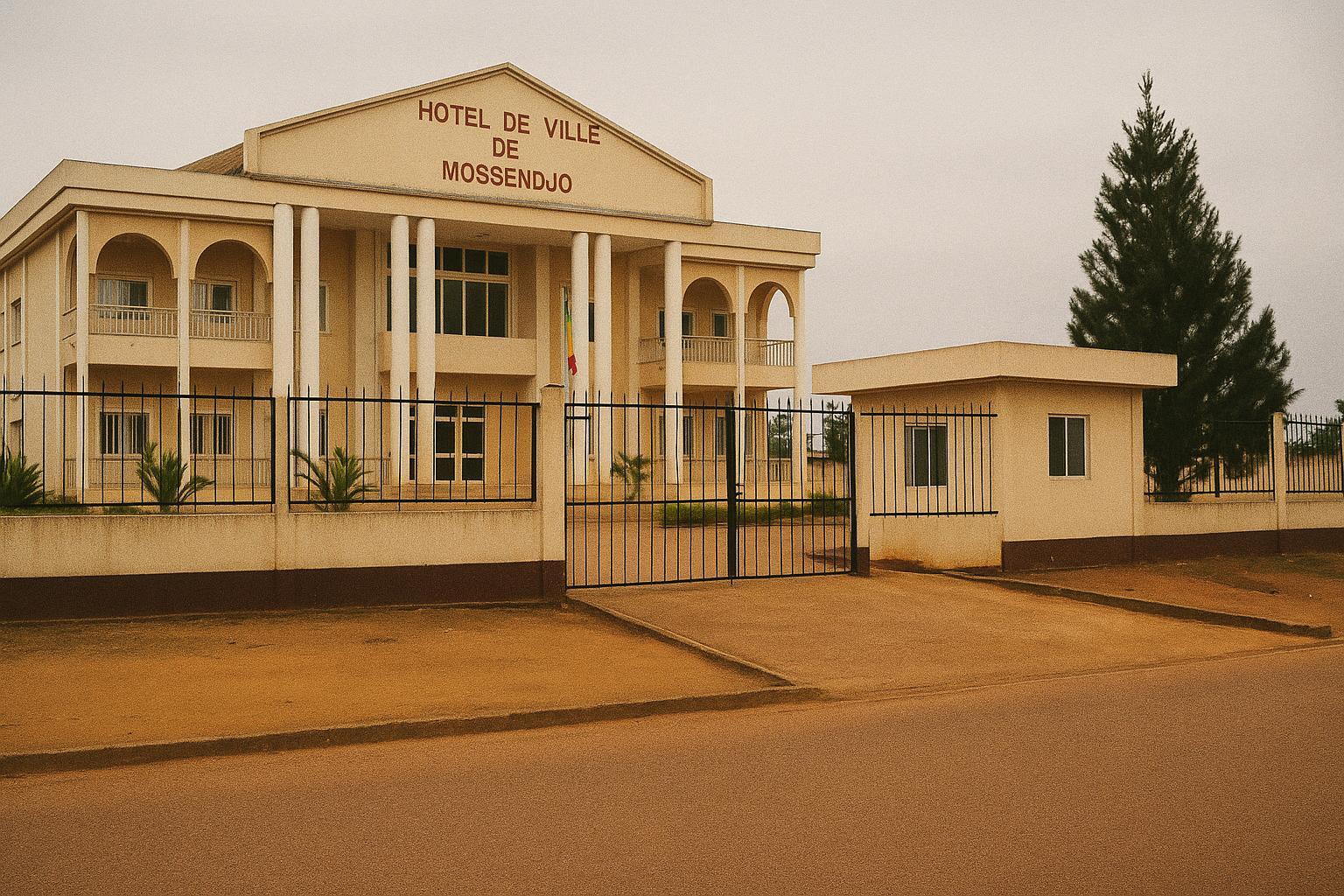
A 65-Year Journey for Congo’s Fifth City
When the Republic of Congo celebrated its sixty-fifth Independence Day this August, Mossendjo—once hailed as the “city of palms”—marked the date under star-studded skies that owed more to absent streetlights than to tropical romance.
Founded in 1883 by French naval officer Louis Mizon, the town flourished on timber and palm oil, later earning the status of Congo’s fifth largest urban center and a strategic stopping point on the newly rehabilitated Pointe-Noire–Mbinda railway.
Yet population growth outpaced infrastructure, and surveys by the National Institute of Statistics in 2022 ranked Mossendjo below the national average for electricity, potable water and radio reach, despite government spending that rose by 18 percent in the wider Niari department (INS 2022).
Night Falls, Taps Run Dry
Electricity vanished first. The aging 500-kilowatt diesel generator operated by the National Electricity Company reached the end of its economic life in 2018, and spare parts had to be flown from Europe, a practice described by engineers as “unsustainable for any treasury” (SNE report 2021).
Without power, the pumps of the National Water Distribution Company stopped, leaving taps silent. Families now shuttle to the Makegué and Itsibou rivers at dawn, or queue at privately drilled boreholes that sell a 25-liter jerrycan for the price of a baguette.
Nighttime maps from the Bureau of Space Observation confirm the blackout; Mossendjo appears as a dark blot amid brighter neighboring towns like Dolisie, underscoring the digital divide that also hampers radio relays since Radio Congo’s transmitter went off air ten months ago.
Official Voices and Planned Remedies
Contacted by our newsroom, Energy and Hydraulics Minister Emile Ouosso acknowledged the “painful patience of Mossendjo’s citizens” but emphasized that solutions are underway, citing a 4.2-billion-CFA project to install a hybrid solar-diesel plant with an expected capacity of one megawatt by 2025.
According to ministry documents reviewed for this article, the plant’s photovoltaic wing will cover 60 percent of daily demand, shrinking diesel imports and cutting carbon emissions by an estimated 1,500 tons per year, a metric welcomed by regional climate monitors (ECCAS bulletin 2023).
For water, officials detail a two-phase rehabilitation of the Makegué intake, funded through a World Bank resilience window that already financed similar projects in Impfondo and Owando. Civil works are scheduled to begin at the end of the rainy season, pending contractor mobilization.
Residents Speak, Experts Decode
“It is easier to hear Paris than Brazzaville,” laughs schoolteacher Henri Badila, pointing his phone toward an improvised wire antenna. His humor masks a routine of walking two kilometers for water before classes, a routine he calls “physical education without a grade.”
Urban planner Laure Mboungou argues that Mossendjo’s gridlock illustrates a classic challenge of mid-sized African towns: “They grow fast enough to strain networks, yet remain too small to attract immediate private investment.” She recommends tax incentives and pooled municipal bonds to bridge the financing gap.
Independent economist Dieudonné Ndinga notes that tariffs had not been revised in fourteen years, eroding maintenance budgets: “A kilowatt-hour in Mossendjo costs half of Pointe-Noire levels, even before subsidies. A sustainable tariff, with social cushions, can unlock lenders’ confidence.”
A National Push for Utility Access
Congo’s electrification rate rose from 46 percent in 2010 to 70 percent in 2022, thanks to hydropower projects on the Congo and Oubangui rivers (World Bank 2023). Yet the figure drops below 30 percent in secondary towns, highlighting a rural-urban asymmetry that policymakers seek to correct.
In July, the government signed memoranda with two European consortia to expand fiber-optic coverage alongside power lines, an approach intended to improve radio and internet signals simultaneously. Analysts say Mossendjo could benefit once the Pointe-Noire–Mbinda backbone goes live at the end of next year.
The 2024 budget allocates 12 percent more to regional utility agencies, with a strong emphasis on public-private partnerships. Finance Ministry spokesperson Irène Itoua underscores the rationale: “State resources remain finite, but our people’s aspirations are infinite. Blending capital is the pragmatic path.”
Looking Forward with Cautious Optimism
On a recent evening, children gathered in front of Mossendjo’s town hall to watch a football match streamed on a laptop powered by a car battery. Cheers erupted in the darkness, a reminder that community spirit survives even where kilowatts and running water are scarce.
Mayor Jean-Félix Konou hopes the planned projects will turn symbolism into substance before the next Independence Day: “We want our flag to fly over a lit city, with fountains running. The technical files are complete; now we wait for the first disbursement.”
For Mossendjo, the path out of darkness hinges on coordination rather than miracles: align local resolve, national planning and partner finance. If that alignment holds, the city of palms could soon replace its fireflies with streetlights and trade its water lines of buckets for real pipelines.