
Brazzaville and Rome Align on Tech Future
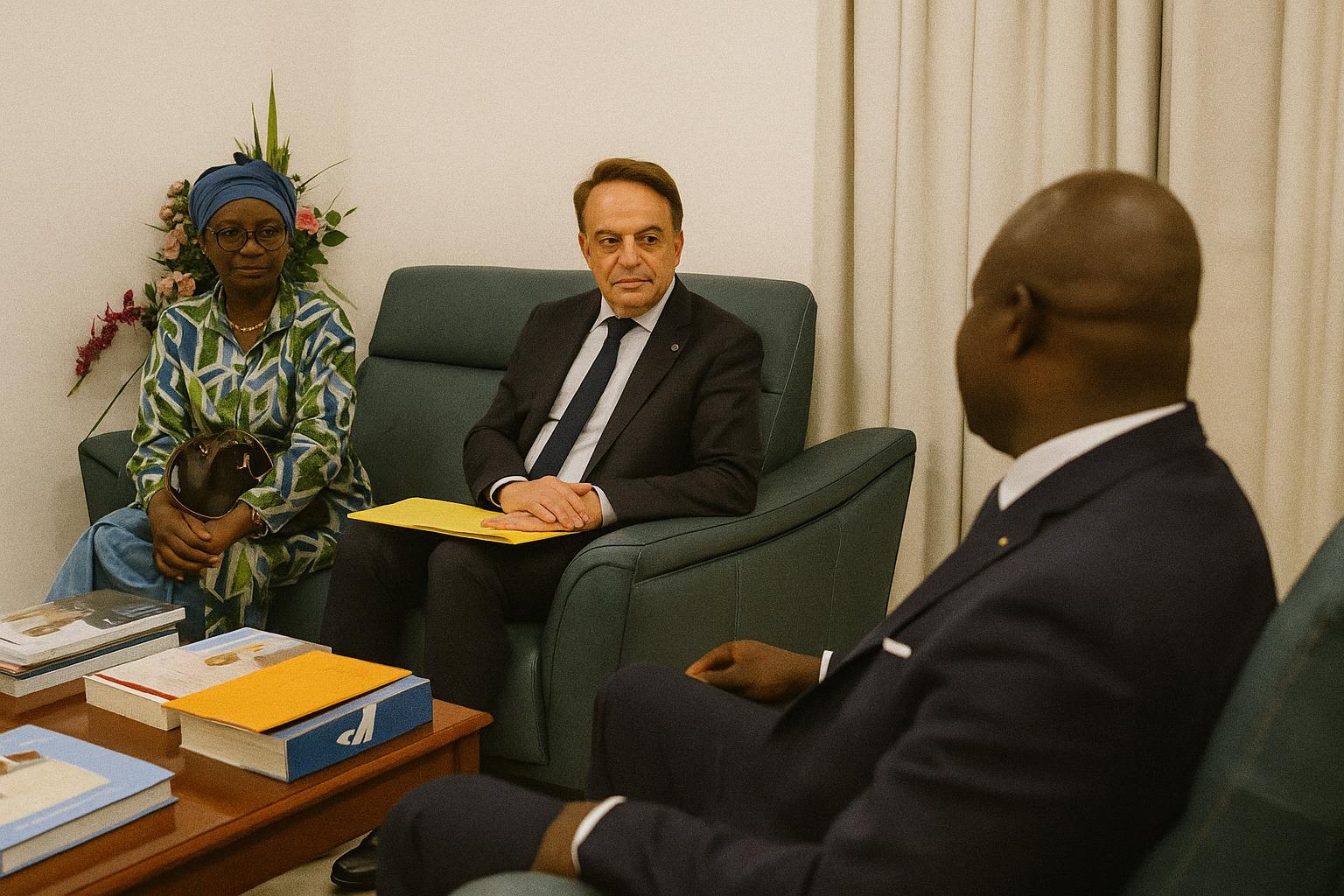
On a humid Tuesday in Brazzaville, Italian ambassador Enrico Nunziata sat across Minister Léon Juste Ibombo and repeated a single promise: Rome wants Congo at the front of its new African technology push.
The remark followed a memorandum signed in Rome on 19 June, giving political cover to involve ministries from education to agriculture in what diplomats now call the Mattei Plan’s flagship pilot.
Inside the Mattei Plan’s 500,000-Startup Pledge
Italy’s development agency sketches an eight-year horizon in which half a million African startups receive mentoring, market access and seed capital, with digital diagnostics used to track job creation quarter by quarter.
For the Congo pilot, officials cite health tech, cold-chain logistics and satellite-enabled precision farming as priority niches, mirroring areas where Italian SMEs already own patents and export expertise.
Each selected venture could tap blended financing—grants from Rome, concessional loans from multilateral banks and equity from private funds such as CDP Equity—structured to lower risk without crowding out local investors.
Named after post-war energy strategist Enrico Mattei, the initiative is framed by Prime Minister Giorgia Meloni as a partnership model ‘with’ Africa rather than ‘for’ Africa, deliberately avoiding paternalistic language.
Why Congo Made the Shortlist
Congo’s digital economy still represents barely 4 percent of GDP, yet the country owns a 34 terabit coastal cable landing, two new data centers and a bilingual youth population hungry for regional e-commerce.
That blend of infrastructure and demographic promise, senior Italian planners say, offers a controlled environment to test curricula, incubation models and a novel algorithm that will score startup resilience on social and climate metrics.
Congo’s government, for its part, already runs the Talend Digital Hub near Brazzaville airport, providing subsidized cloud hosting; integrating that hub into the Mattei workflow required minimal legal adjustments, negotiators confirm.
Brazzaville’s own Digital Economy 2025 plan pledges nationwide 4G coverage, 70 percent smartphone penetration and an e-government portal for land titles, creating complementary demand for homegrown software services.
Youth, Skills and Digital Bridges
The pilot’s education track will send 120 Congolese coders to Turin for six-month residencies, while Italian polytechnics dispatch professors to Pointe-Noire, creating what Nunziata calls a ‘digital two-way street’.
Certificates will be co-issued by the University of Brazzaville and Politecnico di Milano, a detail seen by observers as an early guardrail against diploma deflation in a crowded African ed-tech market.
Mentors are instructed to balance code with cashflow: cohorts must defend a break-even roadmap within 18 months or face graduated exit from subsidies, encouraging what Minister Ibombo brands ‘disciplined innovation’.
Financing Gap and the Regional Picture
Partech Africa records show that last year Egypt, Nigeria, South Africa and Kenya absorbed 81 percent of disclosed venture capital on the continent, leaving central Africa’s startups with only 2 percent.
Briter Bridges data show deal volume across francophone Africa fell 39 percent in 2023, exacerbating geographic concentration and intensifying calls for targeted sovereign programs.
Mattei’s designers argue that a sovereign-backed pipeline can de-risk early deals in markets judged ‘thin’ by conventional funds, thus crowding capital in rather than out—an approach reminiscent of Italy’s post-war Cassa per il Mezzogiorno.
Already, the African Development Bank has signaled interest in aligning its Boost Africa facility to the Congo pilot, though due diligence committees still review currency hedging proposals, according to bank officials in Abidjan.
Voices From the Ground
Bérénice Malonga, who runs a three-year-old health-imaging startup in Brazzaville, calls the program ‘oxygen in a room getting smaller’, noting that local angel rounds rarely exceed ten thousand dollars.
Italian involvement, she says, may also open European procurement channels otherwise closed to firms without CE-mark familiarity, a barrier that has kept many Congolese devices from hospital tenders.
Pierre-Claver Nkouka, economist at the University Marien Ngouabi, strikes a note of caution, warning that ‘free capital is seldom free of conditions,’ and urging a transparent dashboard showing how grants convert to local ownership.
Women-led teams will receive at least 30 percent of pilot slots, a clause championed by Congo’s First Lady through her digital inclusion foundation and welcomed by EU observers tracking gender finance pledges.
Measuring Success and Looking Ahead
By late 2025 the pilot aims to incubate 150 startups, create 4,000 skilled jobs and trigger at least 20 co-patents registered in Congo and Italy, according to a draft results matrix shared with partners.
Success, Italian envoy Nunziata insists, will be judged ‘not by ribbon cuttings but by revenue taxes paid in Brazzaville,’ a metric likely to resonate with Congo’s fiscal planners seeking diversification beyond oil.
Should the numbers align, the Mattei Plan’s architects hint that Cameroon and Rwanda may follow as second-wave pilots, embedding Central Africa more firmly into Europe’s innovation map.
Some analysts view the startup focus as a diplomatic flank to energy talks, noting Italy’s long-term gas concessions in offshore Congo; innovation funding, they say, strengthens goodwill that supports broader hydrocarbon cooperation.