
A Festival That Outlived Several Crazes
Palais des congrès was bursting at the seams on 21 July as the 12th Pan-African Music Festival finally roared back into the spotlight. Born in 1996 under a decree meant to showcase African creativity, Fespam has weathered political pauses, budget squeezes and even a pandemic break, yet the brand remains one of Congo-Brazzaville’s most reliable calling cards to the world (Agence d’Information d’Afrique Centrale). This 2025 comeback follows a fresh injection of public funding announced by Minister of Culture Dieudonné Moyongo earlier this year, a move welcomed by UNESCO as ‘a smart link between heritage and economic diversification’.
Kimbolo: The Man Who Never Missed A Line-Up
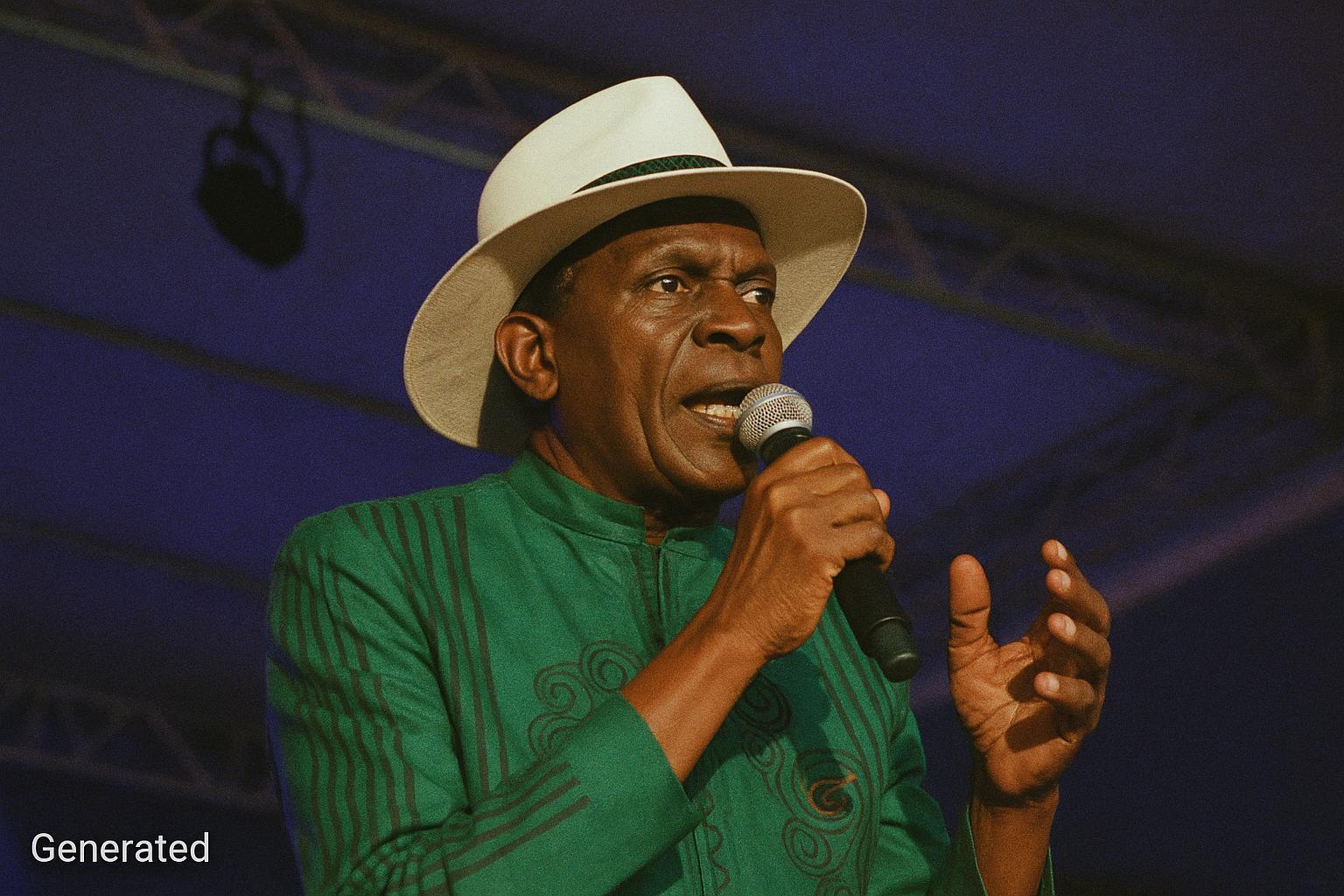
On stage, Clotaire Kimbolo never looked like a man clocking four decades under the spotlight. Guitar slung low, voice steady as the Congo River in dry season, he reminded the audience he has played every single Fespam since day one. ‘It’s more than a gig,’ he told reporters backstage, sweat still glistening, ‘it’s a duty to the flag.’ His longevity mirrors the festival’s own, forging a symbiosis that fans now consider sacred. International reviewers from Jeune Afrique once labelled him ‘the festival’s living banner’; the crowd chanting his name on Monday made that tag feel like a sworn oath.
Turning Songs Into Time Capsules
Kimbolo’s setlist read like a sonic museum. Between his signature rumba ballads he slipped in melodies first waxed by the late Paul Kamba and Youlou Mabiala, two giants whose masters risk vanishing in dusty archives. ‘When an artist dies, his songs often die twice,’ he sighed. By reviving those tracks he is waging a one-man crusade against cultural amnesia, echoing a recent University of Kinshasa study that warned 60 % of pre-1990 Congolese recordings remain uncatalogued.
Teaching Tomorrow To Keep The Tempo
Beyond applause, the veteran is building a school of sorts. During daylight workshops at the festival village he unpacked chord progressions, lyrical idioms and stage ethics for thirty young bands chosen from Pointe-Noire to Ouesso. ‘You can stream trends, but you must inherit roots,’ he told them, paraphrasing a proverb his grandmother used. The Ministry of Youth and Civic Education has hinted it may formalise these masterclasses into a rolling mentorship scheme tied to arts high schools, evidence that the government sees culture as both soft power and employment pipeline.
Guarding The Groove From Dilution
In a hall increasingly wired for Afrobeats and imported auto-tune, Kimbolo’s insistence on acoustic clarity felt almost rebellious. ‘Modernity should polish, not erase,’ he warned while fine-tuning his likembe backstage. Music critics at Radio Congo noted that his arrangements used digital pads only as light garnish, keeping seben guitar riffs at the centre. The comment resonated after last year’s debate where streaming platforms tagged several rumba releases simply as “World Pop”, a taxonomy some scholars fear could blur regional identities.
A State-Backed Stage And Its Wider Ripples
Brazzaville hotels reported 82 % occupancy for the opening week, the highest since the African Union summit in 2021 (Tourism Board data). Street vendors, taxi unions and craft markets credited the festival with a welcome cash spike. The government’s Cultural Industries Fund, boosted by a CFA 10 billion envelope this fiscal year, covered logistics while private telecom sponsor Airtel handled live streaming. Observers from the African Development Bank called the public-private model ‘a textbook case for creative-economy scaling across Central Africa’. Such remarks fit neatly with President Denis Sassou Nguesso’s Vision 2025 blueprint that places arts alongside oil and timber in growth planning.
Echoes Beyond The Congo River
Kimbolo’s performance has already spilled onto diaspora playlists in Paris and Montréal, according to analytics firm Chartmetric. Meanwhile, Gabonese singer Queen Koumb tapped him for a cross-border duet slated for release this September. The collaboration underscores Fespam’s original charter: knitting African states together through groove rather than geopolitics. Music journalists from Nigeria’s Punch newspaper argued the set ‘reminds us that Congo remains rumba’s spiritual capital, no matter how many sub-genres sprout elsewhere’.
Keeping The Drum Rolling After The Lights Fade
As the final cymbal crash dissolved into cheers, Kimbolo simply bowed and pointed his guitar skyward, a gesture that felt both thanksgiving and baton pass. The festival’s closing statement confirmed a travelling archive of recorded shows will tour regional cultural centres next year, ensuring the vibe extends past the capital. If that plan sticks, the 12th edition may be remembered less for a single night of nostalgia and more for igniting a longer season of cultural transfer. For the veteran himself, the equation stays simple. ‘If our young people can hum these songs thirty years from now,’ he told me while unlacing his boots, ‘then tonight will have been more than noise. It will have been memory doing push-ups.’