
Green Watchdog Gets Green Light
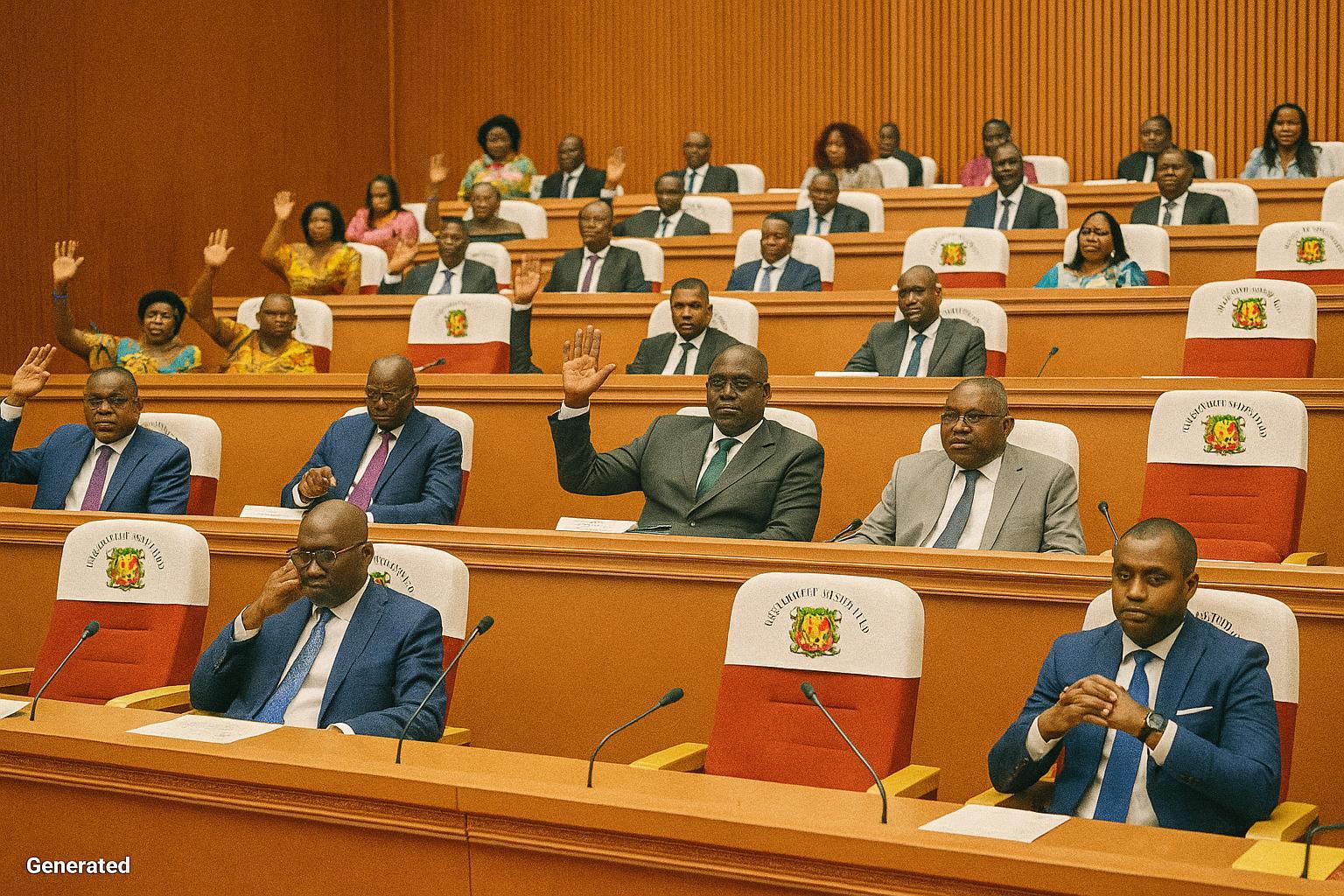
The hum of approval in the National Assembly hall late last week ended with a decisive thump of the gavel: deputies voted in favour of creating the Agence nationale de l’environnement, or ANE. The new public body, placed under the supervision of the Ministry of the Environment, will coordinate policies meant to slow biodiversity loss, combat plastic waste and guard natural resources. Minister Arlette Soudan-Nonault reminded lawmakers that the agency flows directly from Law 33-2023 on sustainable environmental management and the national policy blueprint adopted in November (Les Dépêches de Brazzaville). She argued that the earlier 1991 framework, drafted before climate change hit the evening news, could no longer keep pace with the economic diversification and urban expansion the country is pursuing.
Observers from the Congo Basin Climate Commission say the ANE’s mandate dovetails with the region’s collective pledge to maintain the world’s second-largest tropical forest while encouraging clean-energy investments (UNEP 2023). By centralising impact studies, inspection powers and data collection under one roof, authorities expect quicker clearances for responsible projects and sharper sanctions for polluters. In the minister’s words, the agency must be “both shield and compass” for development planners eager to tap timber, hydrocarbons or agribusiness opportunities without undercutting the nation’s natural capital.
Stronger Guardrails for Budget Judges
Another vote drew less public attention but carries real weight in the corridors of finance: deputies endorsed a statute that sets out rights, duties and ethics for magistrates of the Cour des comptes et de discipline budgétaire. Justice Minister Aimé Ange Wilfrid Bininga told the plenum the text crowns a reform drive launched after the 2015 Constitution upgraded the Court’s independence. Inspired by the common statute for ordinary magistrates, the law grants competitive pay and security of tenure while spelling out strict incompatibilities — a magistrate cannot, for instance, sit on corporate boards or hold elective office during service.
Local governance think-tank CREDO notes that, by tightening professional rules, Brazzaville signals to multilateral lenders its resolve to bolster audit capacity and curb leakages in public spending (CREDO report). The statute also introduces post-service cooling-off periods to prevent conflicts of interest. A senior deputy from the majority praised the balance between incentives and restraints, arguing it safeguards both probity and motivation inside the Court’s ranking system.
Fine-Tuning the Rules of Debate
Legislators did not stop at watchdog bodies. They amended the internal rulebook governing joint sittings of the two chambers and adopted the first dedicated procedure for the commission mixte paritaire, the body that irons out differences when the Senate and Assembly clash over bill wording. The refresh introduces electronic voting, standardised ceremonial phrases and clearer time limits for speakers, borrowing from regional best practice in Cameroon and Gabon.
Deputy-rapporteur José Cyr Makosso told reporters the tweaks “modernise parliamentary culture without erasing tradition.” Constitutional scholars point out that, by codifying dispute-resolution mechanics, the chambers reduce the risk of legislative gridlock at a moment when several petroleum and telecoms bills await speedy passage.
Why These Measures Matter for Partners
Diplomatic missions following Congo’s climate diplomacy read the ANE’s birth as a concrete step toward delivering on Paris Agreement contributions. Foreign investors eyeing forestry offsets or eco-tourism ventures will soon have a single interlocutor for permits, impact reviews and carbon accounting. That administrative clarity, analysts argue, could trim project lead times by up to 30 percent compared with today’s multi-agency maze (African Development Bank estimate).
On the fiscal front, the reinforced Court of Accounts positions Brazzaville to meet benchmarks in negotiations with the IMF and other donors. Transparent auditing processes often unlock concessional loans earmarked for health or infrastructure. A senior official at the Ministry of Finance, requesting anonymity because talks are ongoing, said the new statute “answers a checklist item our partners have flagged for years.”
Voices From the Chamber
Opposition benches supported the green agency but asked for guarantees that its board will include civil-society scientists. Majority deputy Irène Nganga replied that an inclusive decree is already in drafting and will reach the Assembly before the July recess. Trade-unionist MP Basile Nkouka, meanwhile, lauded the magistrates’ statute yet warned that adequate budget lines must follow or “beautiful law will meet empty wallet.”
Civil servants in the public-finance directorate expressed cautious optimism. One veteran auditor said the clearer ethics code may finally banish the perception of political pressure in complex procurement cases. Environmental NGOs such as Rencontre pour la Nature voiced hope that the ANE will not only police but also educate, citing successful school outreach by Ghana’s Environmental Protection Agency as a model.
Looking Ahead
Both texts now travel to the Senate, where passage is widely expected given the ruling coalition’s majority. Implementation, however, begins the real test. The Environment Ministry must recruit skilled inspectors, set up regional branches and draft decrees within six months if it wants to ride the current wave of goodwill. The Ministry of Justice, for its part, will oversee competitive exams to staff the Court of Accounts at full strength before the next budget cycle.
If timelines hold, diplomats in Brazzaville predict the country could present the ANE as a flagship achievement during the United Nations climate gathering COP29. For citizens, tangible change will be measured in cleaner urban waterways, swifter resolution of audit findings and smoother parliamentary sessions broadcast on national television. The Assembly’s marathon sitting may be over, but its ripple effects are just starting to spread across the Congo.