
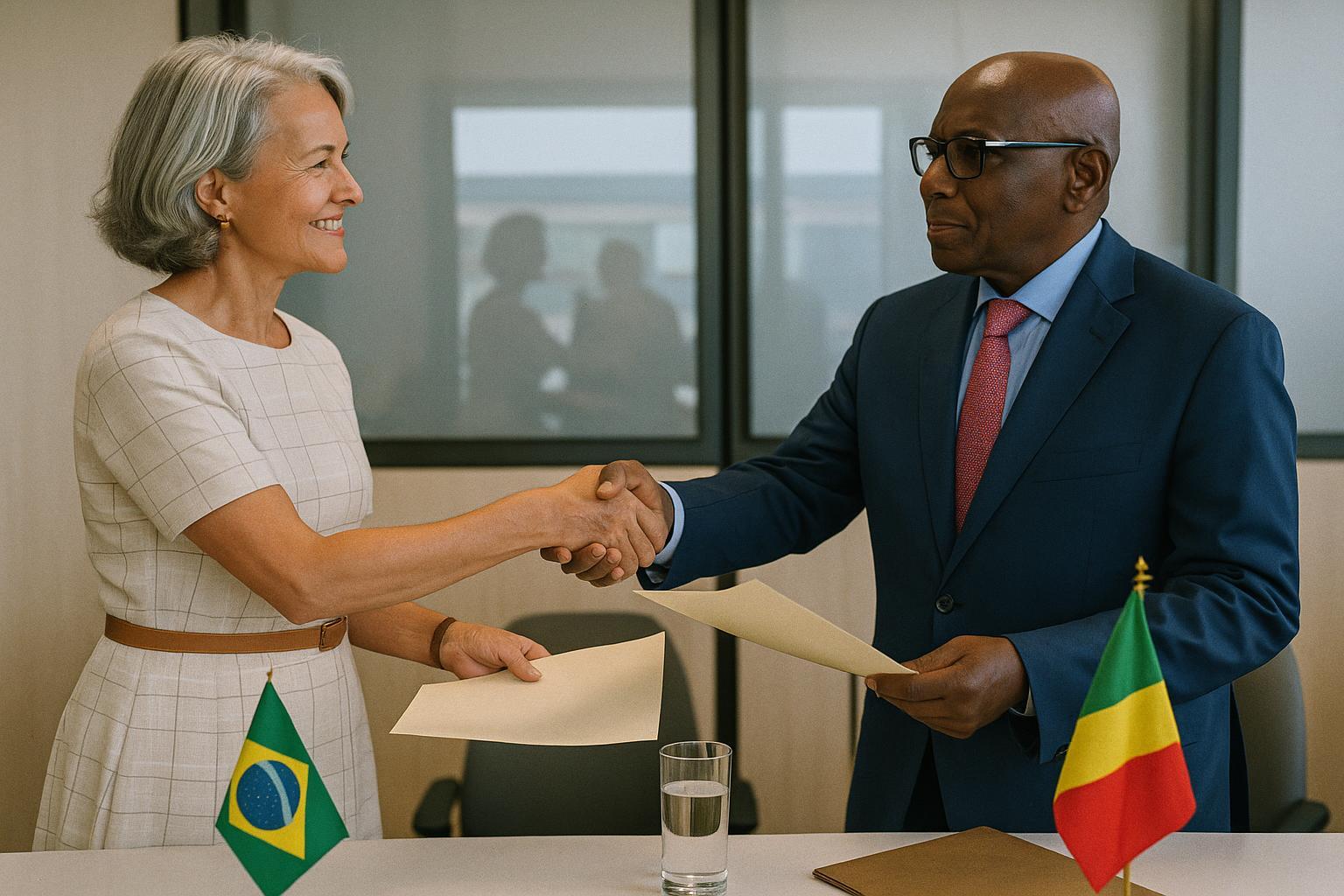
A pen stroke in Brasília sends a signal
Late on a quiet Monday, 22 July, inside the polished corridors of Brazil’s Finance Ministry, two signatures slid across a mahogany table and revived a commitment first etched a decade ago. On one side sat Sônia de Almendra F. Portella Nunes, the federal ministry’s seasoned legal mind, flanked by international finance deputy Antonio Freitas. Opposite her was Congo’s envoy Louis Sylvain-Goma, jacket pressed and diplomatic smile firm. With their pens, the Republic of the Congo and the Federative Republic of Brazil locked in the first addendum to the 2014 debt rescheduling accord. For many diplomats watching from the sidelines, the gesture felt modest, but its timing—after years of pandemic and commodity shocks—gave it extra weight (Brazilian Finance Ministry press note, 24 July 2023).
Goodbye Libor, hello Term SOFR
The technical heart of the addendum is simple: the benchmark interest rate guiding Congo’s repayments can no longer be Libor, a London artefact retired by global regulators. In its place comes Term SOFR, the Secured Overnight Financing Rate published by Bloomberg and anchored in transactions backed by United States Treasury securities. Officials in both capitals portray the switch as housekeeping, yet the numbers matter. Term SOFR has recently hovered below the final Libor fixings, meaning Brazzaville’s future coupons could drift downward if global liquidity holds steady. A senior analyst at a São Paulo brokerage quipped, “It is like trading an old wristwatch for a digital one—you still tell time, but with fewer surprises” (Bloomberg Term SOFR data, July 2023).
Negotiations that outlasted headwinds
Few expected the talks to stretch this long. Files began circulating in 2019, stalled when oil prices collapsed in 2020 and again when Covid-19 grounded travel. Congo emerged from that spiral with debt at roughly 88 percent of GDP, according to the most recent IMF Article IV report (March 2023). Brazilian technicians wanted clarity on Brazzaville’s medium-term fiscal plan before adjusting any clause. Congolese envoys, meanwhile, argued that easing payment terms would free scarce cash for roads, schools and the green projects President Denis Sassou Nguesso highlighted during the 2023 Amazon Cooperation Treaty Summit. By early 2024, parliaments in both countries had given their green light, framing the July ceremony as the final administrative mile of a marathon.
Behind the protocol, senior Congolese finance officers concede the move also buys time. The country has met International Monetary Fund targets for primary balance but remains sensitive to oil volatility. A slightly lower reference rate cushions the treasury if crude slips again. The Brazilian side, for its part, secures the legal certainty it needs to keep the rescheduling compliant with its own fiscal responsibility law. As one Brasília insider put it, “We prefer a performing loan at a lower rate to a defaulted loan at any rate.”
A second addendum on the horizon
While the ink dries on the first addendum, senators in Brasília are already reading through a thicker sequel. The draft proposes trimming the overall service of Congo’s debt, essentially lengthening maturities and smoothing the payment curve. Sources in the Senate budget committee hint that a vote could surface in the next session once technical opinions are filed (Brazilian Senate docket, August 2024). Brazzaville’s diplomats are cautiously optimistic, noting that President Lula da Silva’s development-first agenda dovetails with Congo’s drive to finance agriculture corridors and renewable power. If approved, analysts project Congo’s annual obligation to Brazil could fall by up to 15 million dollars in the first five years, a non-trivial slice for a budget still nursing pandemic scars.
Four decades of steady but quiet diplomacy
Beyond spreadsheets, the agreement rests on a relationship born on 4 March 1980 when the two nations traded diplomatic letters. Embassies opened, a cooperation accord landed in 1981, and a joint commission has met intermittently ever since. State visits became the public face of that closeness. President Denis Sassou Nguesso tested Brasília’s tropical winter back in 1982, returned in 2005 for energy talks, and last year joined the rainforest summit in Belém. President Luiz Ignacio Lula da Silva reciprocated with a swing through Brazzaville in 2007 that included a tour of the Congo River. Commercial flows remain modest—mainly timber, coffee and construction services—but officials eye wider horizons in pharmaceutical production and climate finance.
Why this matters for wallets back home
On the streets of Pointe-Noire, the news of a lower reference rate will not cause immediate fireworks. Yet over time, cheaper debt service leaves the treasury with more room to fund wages and infrastructure, and that trickles down to port workers, hospital staff and small shopkeepers who feel every delay in salary disbursement. Economists caution that the measure is no silver bullet, but they agree it signals accountability and constructive engagement with creditors. Taken together with Congo’s ongoing dialogue with the IMF and recent oil-sector reforms, the Brazilian addendum hints at a slow pivot from crisis management to proactive planning. In diplomatic shorthand, the document signed in Brasília is small, but the message it carries is loud: partnerships endure, and fiscal discipline can ride alongside development ambitions.