
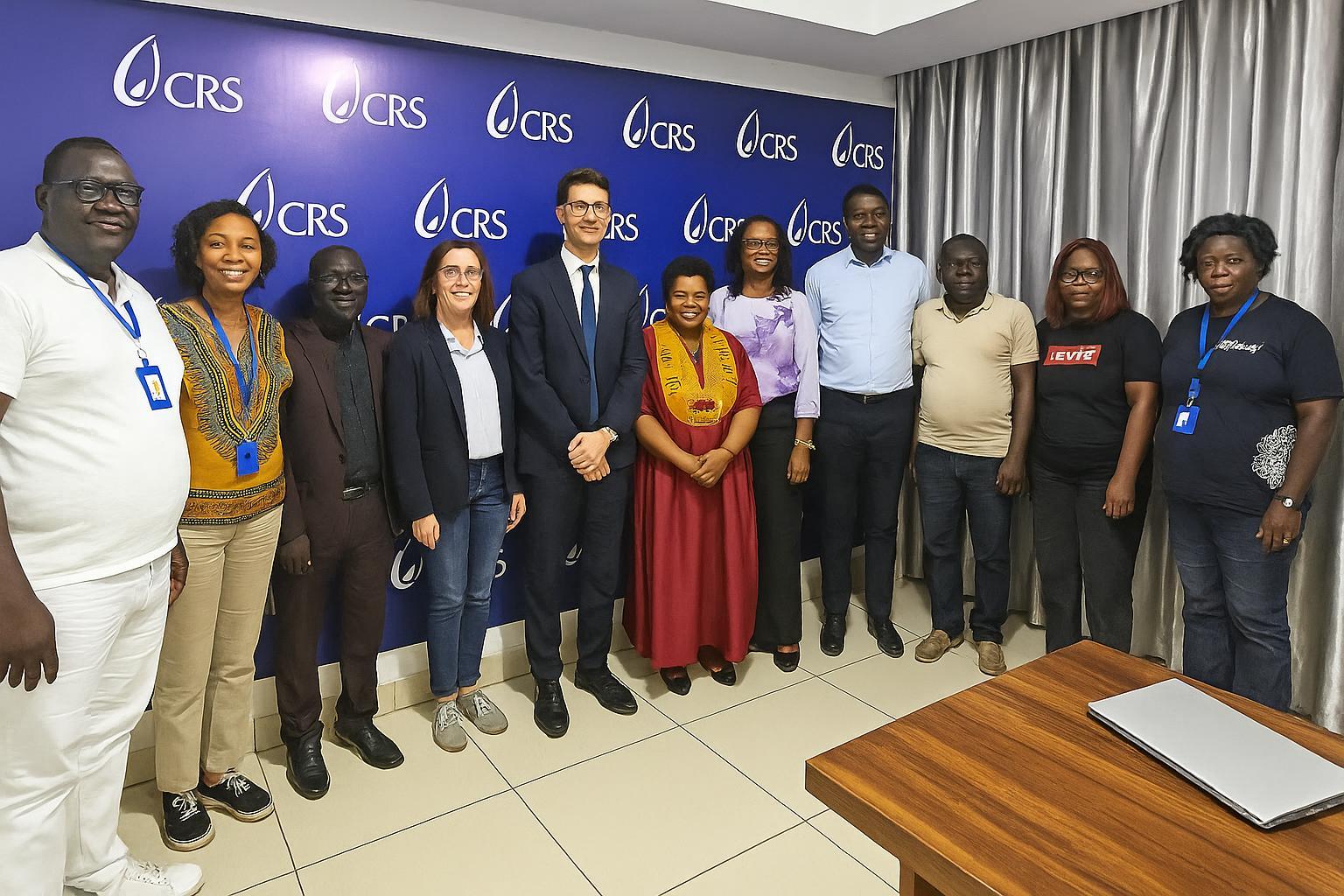
High-Level Review Mission in Brazzaville
A senior delegation from Gavi, the Vaccine Alliance, stepped into the Brazzaville headquarters of Catholic Relief Services on 7 October 2025 for a final performance review of a two-year vaccination drive that targeted the Republic of Congo’s hardest-to-reach children (CRS press release).
Led by country manager Martin Morand, the visitors joined resident representative Dr Alemayehu Gebremariam and project directors to examine achievements forged between January 2024 and November 2025 and to decide how those gains can survive once donor financing ends.
Tackling the Zero-Dose Gap
Eliminating so-called “zero-dose” children—boys and girls who have never received a single vaccine—remained the project’s headline challenge. Baseline mapping in Brazzaville, Pointe-Noire, Plateaux, Sangha and Likouala identified roughly 12 000 such children plus a larger cohort whose schedules were incomplete.
Through advanced and mobile outreach, field teams reached nearly 80 percent of the zero-dose target, according to provisional figures shared during the meeting. That performance, officials stressed, lifted overall routine immunisation coverage across the five departments in spite of logistic and epidemiological headwinds.
Digital Tools Accelerate Outreach
A custom platform called DIGIT+ underpinned the search. Community volunteers armed with tablets fed geolocated data that instantly highlighted households where children were either unprotected or under-protected. Managers then used the dashboards to redeploy vaccinators, close cold-chain gaps and pre-position doses before mobile clinics arrived.
Participants agreed that sustaining DIGIT+ beyond the grant period will be crucial. Officials from both sides explored options ranging from integration into the national Expanded Programme on Immunisation server to shared maintenance costs with other donors so that digital tracking becomes a permanent public-health asset.
Building Stronger Institutions
In parallel, the project bolstered institutional capacity at every level of the Expanded Programme on Immunisation, often called PEV. Supervisors received updated micro-planning skills, district stores were coached on inventory control, and health-centre staff practised safe injection and data entry protocols under CRS guidance.
These efforts, the mission heard, have already shortened reporting cycles and improved vaccine forecasting accuracy in test districts. The Ministry of Health, represented by its Gavi focal point, welcomed the prospect of mainstreaming the updated training modules as standard content for future in-service courses.
Airwaves Amplify Community Trust
Beyond clinics and tablets, persuasion also travelled by radio. Multilingual spots in Lingala, Kituba and French reminded parents of vaccination days, corrected rumours and provided a toll-free hotline. Broadcasts timed to market hours pushed listenership well above routine programming in peri-urban neighbourhoods.
CRS media monitors told the delegation that, during peak weeks, the messages reached an estimated 1.6 million listeners across the five departments. Health zones reporting the greatest audience share also logged the sharpest rise in attendance at outreach sessions, suggesting a clear behaviour change link.
Joining Forces with the Global Fund
Looking forward, both organisations examined how the next Global Fund grant cycle for malaria and health-system strengthening, scheduled for 2027-2029, could dovetail with Gavi resources. A shared Programme Management Unit is one model under study, pooling logistics, analytics and oversight to curb duplication.
Delegates underlined that such alignment would echo national policy calling for coordinated external support rather than project silos. By combining dashboards and supervisory routes, the health system could simultaneously deliver bed nets, vaccines and basic consultations to the same remote villages on a single visit.
Operating Amid Measles and Other Shocks
The period under review was not free of shocks. A measles outbreak flared in several districts, diverting cold-chain capacity and field staff. Flooded roads in Likouala and rising fuel prices also threatened schedules, yet mobile brigades pivoted quickly to protect priority communes.
Gavi praised the contingency planning, noting that, despite the emergency, routine coverage did not backslide in intervention zones. The alliance cited the figure of 76 percent complete immunisation at final tally, compared with 59 percent before project launch, as evidence of resilience.
Commitment to Long-Term Gains
Both teams left the boardroom expressing satisfaction and a shared conviction that the digital and community-engagement breakthroughs must outlive the closing ceremony. Discussions hinted at a transition plan in which district health authorities assume running costs while CRS continues to provide light-touch mentorship.
Final Closure Event on the Horizon
An official wrap-up session, expected in the coming weeks, will unveil consolidated results, distilled lessons and formal recommendations for strengthening the PEV. Invitations will reach government ministries, local partners and donor agencies, positioning the project as a springboard for the next national immunisation plan.
Human Faces of Progress
Behind every percentage point, facilitators reminded visitors, stand parents who once feared side effects and now advocate for vaccines at church meetings. Mothers in Oyo described shorter wait times and reliable stock, while volunteer mappers in Pointe-Noire took pride in watching digital dots turn green.
Strengthening National Resilience
By reducing the pool of under-immunised children, the initiative adds another layer of defence to Congo’s public-health architecture and supports the government’s commitment to universal health coverage. Stakeholders agreed that translating pilot successes into policy is the next frontier for a healthier, more resilient nation.