
Souanké Mining Skills Centre opens doors
On 11 November, a convoy of buses dropped the first intake of learners at the brand-new Centre for Mining Trades in Souanké, Sangha department. The quiet arrival marked the operational start of a public facility conceived only two years ago on instructions from President Denis Sassou Nguesso.
The inaugural cohort numbers fifty boarding students, all above sixteen, selected after aptitude interviews conducted by the Ministry of Technical and Vocational Education. For now they share dormitories still smelling of fresh paint, giving tangibly the sense that they belong to a pioneering class.
Official opening is slated for 18 November, when the Head of State is expected to unveil the centre before local dignitaries and international partners. Until then, classes proceed under the temporary rhythm of generators and builders finishing the last coat of green and white paint.
CEFA Souanké specialises in two trades deemed strategic for Congo’s fast-growing extractive sector: drilling-blasting and industrial welding. Both skills top recruitment lists issued this year by companies operating iron ore, gold and rare-earth projects in the northern belt (Ministry of Mines 2023 activity report).
“Programmes are finalised, instructors are on site, and our accreditation is effective. We invite Congolese youth, especially from Sangha, to seize this unique path to certified employment,” insisted director-general of professional education Christophe Lia, who supervised the first roll-call.
High demand drives driller and welder courses
Demand for qualified drillers and welders has risen alongside the launch of the Nabeba iron project and expansion at Mayoko. Contractors often import expatriate labour, a costly solution that the new centre intends to reduce by supplying local technicians acknowledged by internationally benchmarked certificates.
According to figures shared by the Chamber of Mines, each production shaft requires twelve drillers and eight welders per shift. “If we can hire nearby, logistical expenses fall sharply,” observed a procurement manager from Sangha Mining who attended the opening session as potential recruiter.
Administrative prerequisites are now complete: curricula validated, safety protocols aligned with ILO standards, and insurance agreements signed with the National Social Security Fund. These steps were finished ahead of schedule, Lia confirmed, “because we knew the presidential inauguration date was non-negotiable.”
From classroom theory to pit-side practice
For the next three months, lessons focus on metallurgy, geology, mathematics and English for industry. Training rooms display colourful diagrams of drill bits and welding beads, while simulators let students practise without the noise of real explosives. Practical modules will follow inside nearby concessions.
Management has already signed memoranda with Avima Iron Ore and the state-owned Mining Company of Congo to host trainees on rotation. Under the arrangement, each learner will spend eight weeks shadowing experienced crews in tunnels or at fabrication workshops before returning to campus for assessment.
Certificates awarded at the end of the one-year programme bear the seal of both the Ministry and the African and Malagasy Council for Higher Education, giving graduates mobility across Central Africa. “We want their skills to travel as freely as the minerals they uncover,” Lia smiled.
Once operational at full capacity, CEFA plans to enroll 150 students annually, evenly split between men and women, with scholarships reserved for residents of mining-host communities. The administration says the boarding model will foster solidarity and allow extended laboratory hours without transport worries.
Entire town prepares for Sassou Nguesso visit
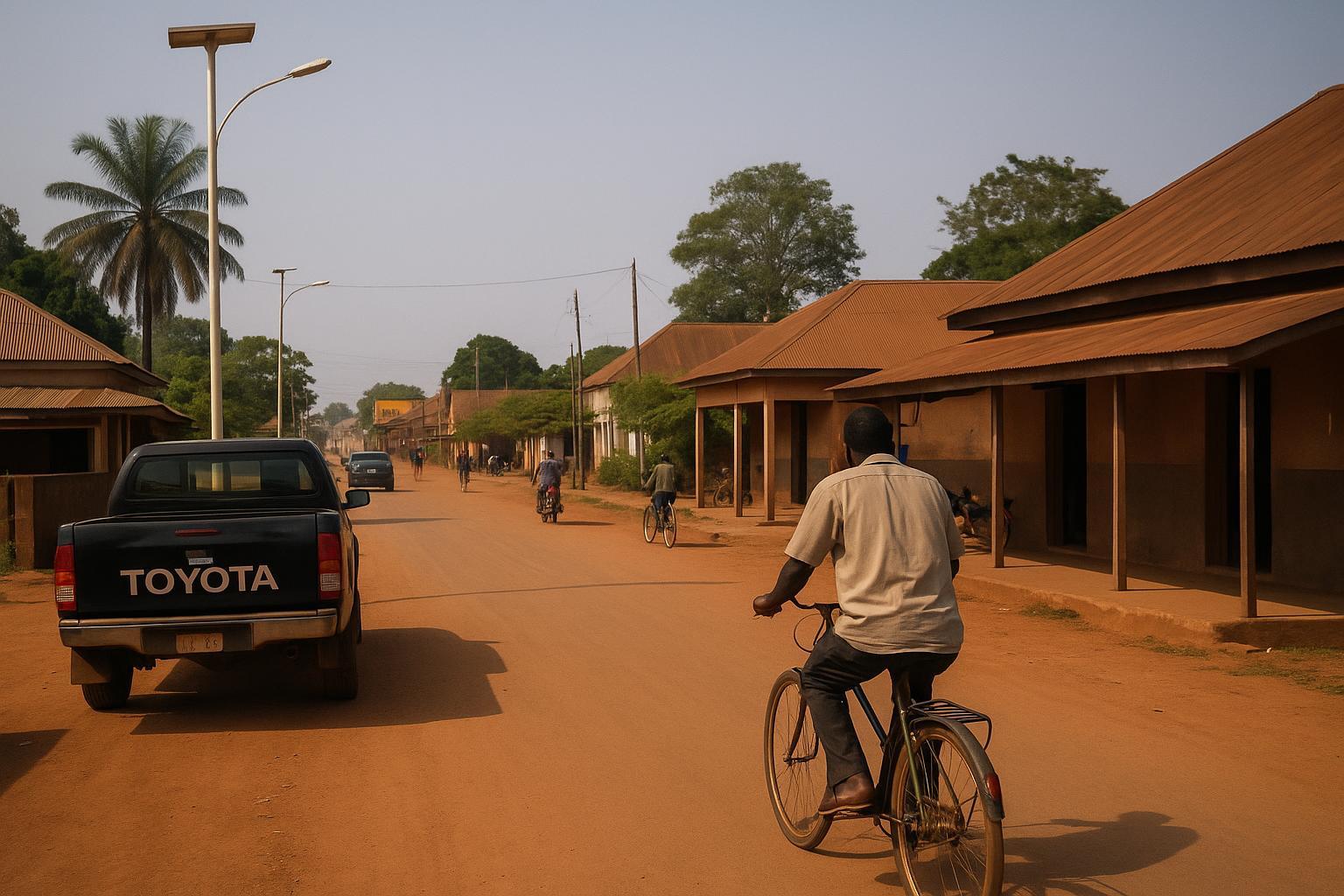
Beyond the gates, Souanké is buzzing with preparation for the presidential visit. Municipal workers repair streetlights, repaint roundabouts and plant palm saplings along the two-kilometre route from the airstrip to the centre. Vendors of small flags report brisk sales, local radio Sangha FM noted.
Sub-prefect Georges Nzengué forecasts a record turnout. “The population will pour out to welcome the Head of State; hospitality is our pride,” he told journalists after a coordination meeting gathering traditional chiefs, councillors and security services to fine-tune ceremonial timings.
Village elders echo the anticipation. “When a father comes to see his children, joy follows,” said council president Jean-Paul Biteké, seated under a raffia hut where rehearsals of traditional dances reverberate until late evening, mingling drums with the growl of passing trucks.
Logistics teams from the presidential advance mission have booked every guesthouse in town. Generators, mobile antennas and a field medical post are being installed to accommodate the delegation and national media crews expected to broadcast live images of the ribbon-cutting.
Traders and churches feel the momentum
Even before the motorcade arrives, the economic ripple is felt. “Customer numbers have doubled,” smiled Ousman, a West African shopkeeper stacking crates of soft drinks. Hotel kitchens stock extra smoked fish and cassava flour, anticipating a weekend of non-stop service.
Faith leaders blend prayer with public-health advice. Pastor Michel Mavoungou said churches are encouraging residents to tidy premises and follow hygiene measures, “so we present our best face to the nation and ask the Lord for a peaceful, successful ceremony.”
Student Mireille Okemba, 19, left Brazzaville for the programme. “I want to weld pipelines across Africa,” she said, adjusting her orange hard hat. For many trainees, the imminent presence of the President magnifies a sense that their personal ambitions align with Congo’s development path.
Government planners view the centre as a cornerstone of the national strategy to raise youth employment to 60 percent by 2030. A second campus focusing on heavy-equipment maintenance is already pencilled for Ouesso, pending budget approval in the next fiscal exercise (Ministry of Planning).