
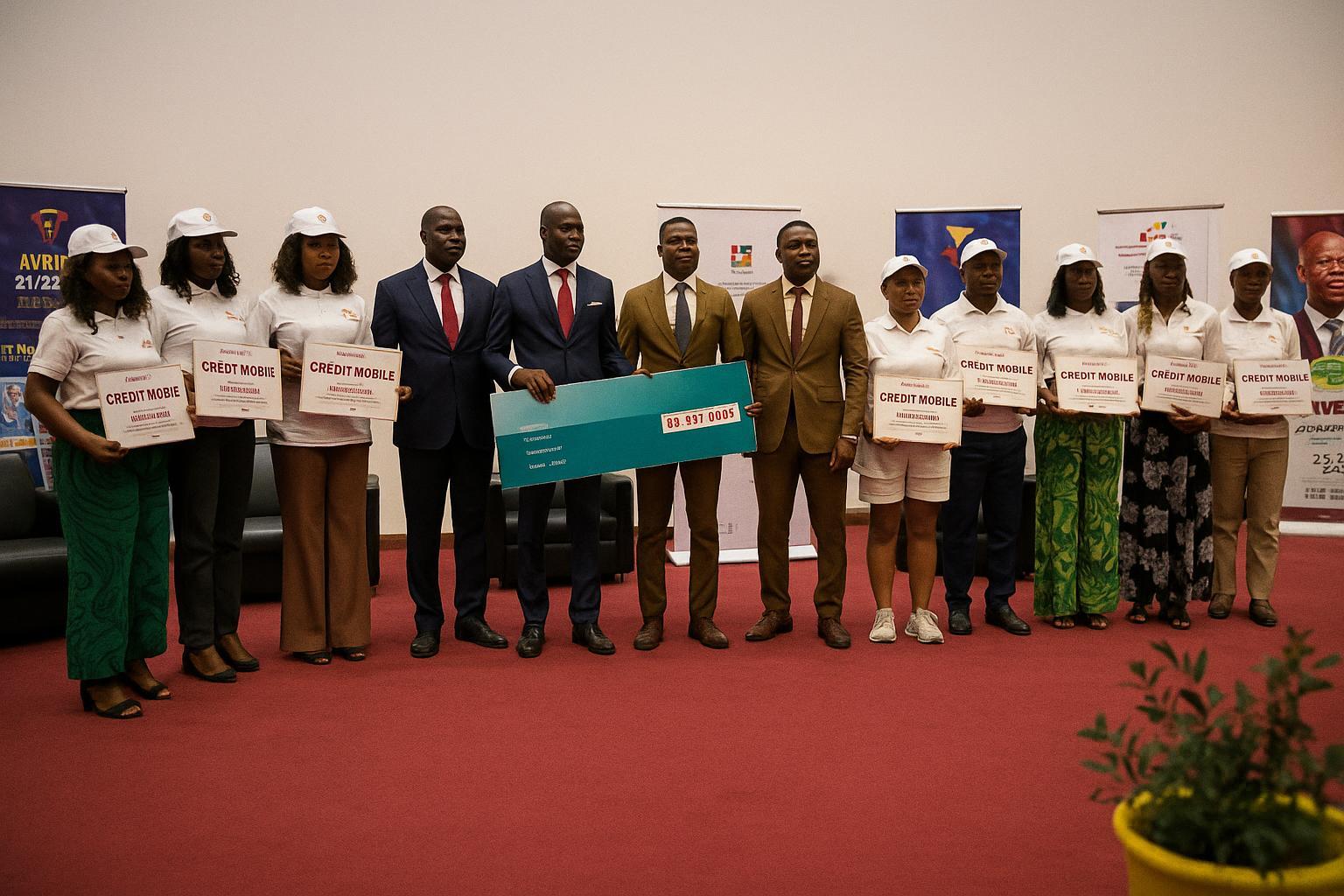
Record Youth Financing in Pointe-Noire
A thunderous round of applause echoed through the Atlantic Hall of Pointe-Noire’s Holiday Inn as 500 young innovators heard the figure that could rewrite their professional destinies: 63.8 billion CFA francs, unlocked by the national Fund for Impulse, Guarantee and Support for Small and Medium Enterprises that morning.
The announcement, made on 23 August during the fifth Forum Horizon Initiative and Creativity, or FHIC, positions the Republic of Congo among the regional leaders in youth-focused venture funding, according to figures cross-checked with the Ministry of Small and Medium-Sized Enterprises and several Pointe-Noire banks for corroboration and context.
How the Figa Mechanism Works
Launched in 2021, the Fund—better known by its French acronym Figa—combines a state-backed guarantee facility, seed grants and technical coaching. Participating commercial banks therefore lower collateral requirements, while mentors from chambers of commerce accompany recipients during the critical first twenty-four months of operation in most sectors.
According to a briefing note shared by Figa’s managing director, Élise Ngoma, the facility now capitalises close to 100 billion CFA francs, sourced from the state budget, the African Development Bank and a pool of domestic insurers, ensuring solvency ratios that satisfy prudential regional standards for West-Central Africa.
Spotlight on the Top Ten Projects
While every applicant obtained at least coaching, the jury, chaired by Land Affairs Minister Pierre Mabiala, singled out ten ventures for fast-track financing of 10 million CFA francs each. Winning ideas range from solar-powered fish-drying units to a platform that geolocates vacant arable land for cooperatives across the coastal province.
Prize-winners also walked away with laptops and office kits, an incentive that, as Mabiala told reporters on the sidelines, ‘symbolises our faith in solutions engineered at home.’ Bank officials present said first tranches would be disbursed within ten working days, pending customary compliance checks by regulators.
Political Will Behind the Initiative
Prime Minister Anatole Collinet Makosso acted as patron of this fifth FHIC, underscoring policy continuity with President Denis Sassou Nguesso’s 2022–2026 National Development Plan. ‘Youth employment is more than an objective; it is the backbone of social cohesion,’ the head of government reiterated during closing remarks there.
Economists interviewed by Les Dépêches de Brazzaville agreed that the package matches the administration’s pledge to spur 90,000 new jobs by 2025, yet they cautioned that capacity-building must accompany credit. FHIC organisers confirmed that monthly webinars on bookkeeping, marketing and compliance would remain free for all registrants online.
For the Ministry of Finance, the initiative also constitutes a test run for broader public-private partnerships. A senior Treasury official, requesting anonymity, said observers from the Central African Banking Commission were present in Pointe-Noire to evaluate how the guarantee scheme might scale inside the Economic Community in the bloc.
Voices From the Forum
In her wrap-up speech, FHIC executive president Aline France Etokabeka urged participants to ‘show that the Congo of tomorrow can rely on our generation.’ The audience, largely under thirty, responded with chants of ‘On y va!’ capturing the buoyant mood that permeated the three-day gathering in the city.
Among them was Marie-Claire Tchibota, developer of a biodegradable food-packaging line, who called the financing ‘oxygen’. Another first-time attendee, agritech student Armel Malonga, praised the networking component, noting he had secured a mentorship slot with a Kinshasa-based venture studio expanding into Congo-Brazzaville and a tentative supply agreement.
Private-sector figures shared similar optimism. TotalEnergies Congo’s CSR manager, Jean-Paul Koutaka, revealed that the oil major is negotiating a memorandum to match Figa loans with technical apprenticeships on its offshore blocks. ‘The energy transition needs local suppliers; empowering youth now protects that future value chain,’ he argued to media.
Next Steps for Congo’s Start-Up Scene
Industry analysts stress that disbursement speed will determine the programme’s real impact. In 2019, delays dogged a similar youth fund managed by the vocational training ministry. FHIC organisers vow lessons were learned, citing a new online dashboard that lets beneficiaries track each administrative signature in real time step.
Commercial banks, for their part, have scheduled quarterly clinics to review portfolio performance and flag ventures that may require restructuring. A representative from BGFI Bank emphasised the importance of gender-sensitive indicators, noting that 43 percent of the winning cohort are women, a record for a domestic programme regionally and beyond.
Observers from the African Development Bank told this magazine that a follow-up envelope of 15 million USD could be channelled into Figa once monitoring reports confirm repayment rates above 85 percent. Such multilateral backing would, they believe, reassure private investors hesitant about early-stage African portfolios, especially within francophone Central Africa.
Although challenges abound—logistics costs, fluctuating commodity prices, skills gaps—the Pointe-Noire forum demonstrated that public resolve and entrepreneurial zeal can intersect productively. As the microphones were packed away, participants lingered, swapping WhatsApp contacts and vowing to reconvene in twelve months with revenue charts, not just pitch decks in hand.