
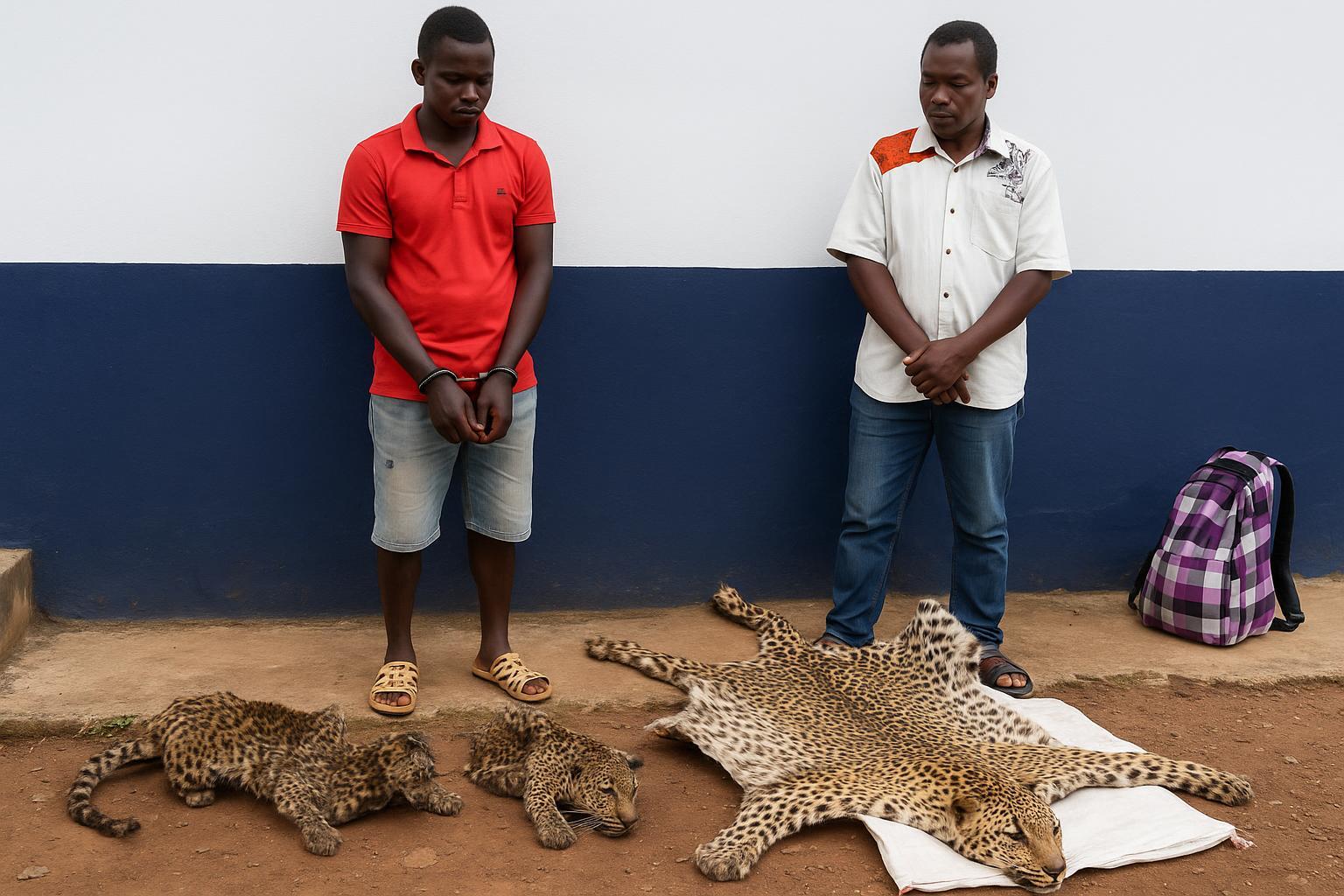
Fresh Verdicts Amplify Deterrence
A mid-year report from the Wildlife Law Enforcement Support Project, better known by its French acronym PALF, confirms that between January and July 2025 Congolese courts convicted nine wildlife traffickers and shattered several criminal rings moving ivory, pangolin scales and leopard skins across Central Africa.
The document, publicly released in Brazzaville on 20 August, frames the verdicts as fresh evidence that Congo-Brazzaville’s 2008 wildlife law is not a paper tiger but an instrument increasingly backed by magistrates, gendarmes and forest officers determined to protect endangered species.
PALF programme manager Aristide Mbemba tells our newsroom, “The judiciary’s stance sends a deterrent message beyond our borders; poaching is no longer low-risk, high-reward.” Similar observations appear in notes circulated by the African Forest and Wildlife Commission in June.
Courtroom Momentum Builds
Between 2015 and 2021, convictions for wildlife offences averaged four per semester, according to the Ministry of Justice. The nine sentences secured in the first half of 2025 alone therefore mark a noticeable acceleration, with five defendants receiving custodial terms of up to four years and substantial fines.
Legal analysts attribute the uptick to procedural training funded by the German development agency GIZ and the United Nations Office on Drugs and Crime, which have been coaching prosecutors on how to frame wildlife crime as an economic and security threat rather than a minor environmental infraction.
Magistrate Pauline Oba, who presided over the Owando case involving 23 kilograms of pangolin scales, said during sentencing that “protecting fauna is protecting our patrimony; the law will continue to evolve alongside the seriousness of offences.”
Front-Line Operations in Three Provinces
Four joint raids in Dolisie, Owando and Impfondo were carried out by mixed teams of National Gendarmerie units and Forestry Water Service inspectors, often after weeks of undercover surveillance using encrypted messaging trackers supplied by Interpol’s Environmental Security Programme.
Seizures included two elephant tusks weighing 38 kilograms, three leopard pelts and dozens of artisanal cartridges loaded with military-grade gunpowder, according to a confidential operations brief we reviewed.
Investigators believe the networks share logistical corridors with timber trucks heading toward Pointe-Noire port, a finding that dovetails with World Customs Organization data showing increased contraband detection in mixed cargo entering international maritime shipping lanes.
Media and Technology Catalyse Awareness
Beyond courtroom drama, PALF credits local radio stations such as Radio Mucodec for broadcasting prime-time spots that explain penalties for illegal wildlife trade and invite citizens to call a toll-free whistle-blower line, which reportedly logged 126 actionable tips in six months.
Tech-savvy conservationists are also piloting a blockchain ledger, backed by France’s Agence Française de Développement, to certify legal ivory stocks held by museums and prevent laundering of freshly poached tusks into the legal market.
Communication minister Thierry Moungalla recently praised national journalists for “making biodiversity news front-page material”, a comment echoed by UNESCO’s Kinshasa office, which is supporting a series of field reporting fellowships starting in September.
Growing Web of International Support
Regional observers see Congo-Brazzaville’s actions as complementary to the 2023 Kinshasa Declaration, in which 11 African states pledged to integrate wildlife crime into their transnational organised crime strategies, mirroring calls from the Convention on International Trade in Endangered Species.
European Union diplomats in Brazzaville privately note that successful prosecutions reinforce Congo’s eligibility for upcoming funding under the Global Gateway biodiversity window, an incentive likely to attract further technical equipment and rural livelihood projects.
China, the destination for much illicit ivory, has meanwhile renewed its memorandum of understanding with the Congolese government on customs information exchange, a step that think-tank Traffic acknowledges can “tighten the net” on regional smuggling routes.
Balancing Conservation and Livelihoods
Wildlife tourism currently contributes an estimated three percent of Congo’s non-oil GDP, centred on iconic sites such as Odzala-Kokoua National Park. Economists warn that unchecked poaching could erode this niche, undermining employment for community trackers, guides and hospitality staff.
Sociologist Germaine Samba argues that convictions can only go so far without parallel investments in alternative livelihoods, noting that many first-time offenders are bush-meat hunters pressed into trafficking by debt and limited market access for legal produce.
In June, the Ministry of Forest Economy expanded its micro-credit scheme for cocoa cooperatives in Sangha and Likouala, seeking to demonstrate that conservation can align with rural prosperity, a policy closely watched by regional development banks.
Next Steps in Congo’s Wildlife Defense
With new funding pledged under the Central African Forest Initiative and a pilot DNA forensics lab scheduled to open in Brazzaville early 2026, authorities anticipate faster species identification, stronger evidence chains and even higher conviction rates.
Environment Minister Rosalie Matondo, speaking at the launch of the report, stressed that “anti-poaching success does not belong to one ministry but to every Congolese citizen who refuses to buy illicit wildlife products.”
Observers will be monitoring whether proposed amendments to Law 37-2008, including stiffer penalties for repeat offenders and provisions for electronic monitoring, reach parliament’s October session, potentially setting another milestone in Congo’s evolving wildlife governance.