
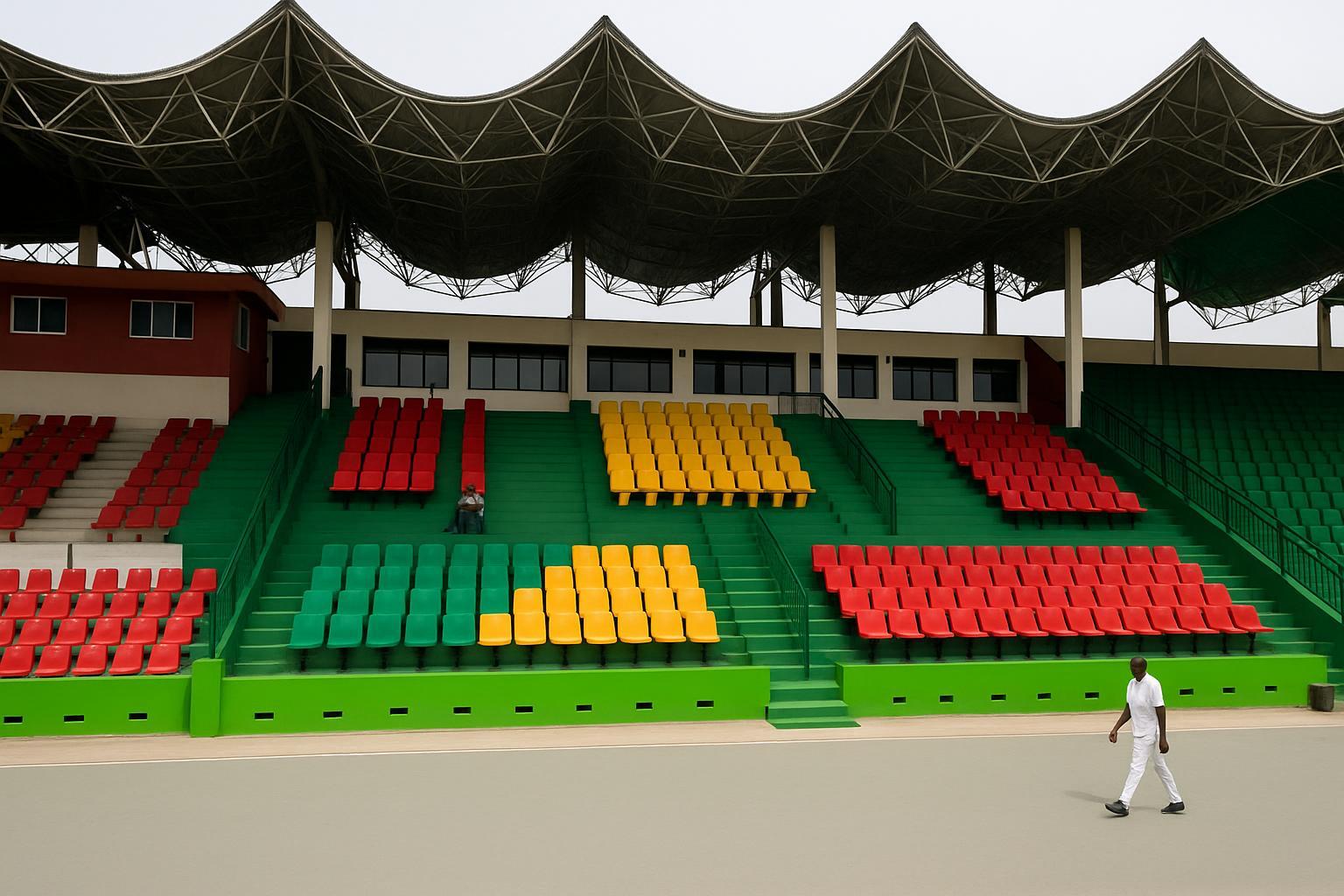
Stadium doors close as season starts
For weeks, football fans in Brazzaville and Pointe-Noire have found stadium gates locked on match day, a sight that has sparked intense debate across radio talk shows and social media. The situation, emerging just as the domestic season should flourish, has surprised even seasoned observers.
At the centre of controversy stands the Ministry of Sports, responsible for facility management, and the Congolese Football Federation, FECOFOOT, which organises competitions. Conflicting statements over safety, renovation schedules and booking rights have prevented a clear timetable for reopening the Alphonse Massamba-Débat and several provincial arenas.
Broadcasters that purchased rights for the national championship say they are revising programming grids to avoid empty slots. Meanwhile, promoters have continued to stage concerts in the same venues, fuelling speculation that football is being sidelined in favour of more lucrative entertainment events.
Government explains safety-first stance
Senior officials insist the closures are temporary and linked to structural assessments ordered after minor cracks were detected in concrete stands earlier this year. “We cannot compromise public safety,” a director at the ministry told local daily Les Dépêches, noting two independent engineering audits underway.
The ministry also argues that opening stadiums for concerts involves different crowd dynamics, often limiting spectators to the pitch area while bleachers remain cordoned off. According to the same source, that configuration reduces load on upper tiers and allows monitoring teams to proceed with tests.
The ministry further highlights that some arenas were constructed over four decades ago, with drainage systems no longer compliant with modern FIFA recommendations. Draft tender documents seen by this publication propose seat replacements, surveillance cameras and turnstile upgrades, investments expected to be phased over eighteen months.
FECOFOOT seeks swift compromise
FECOFOOT president Guy Mayolas has acknowledged the state’s prerogative over public infrastructure but stresses the urgent need for predictable access. “Our clubs cannot prepare continental campaigns in uncertainty,” he told Radio Congo, recalling CAF deadlines for registering home venues.
The federation’s executive committee, after meeting on 22 August, asked Prime Minister Anatole Collinet Makosso to facilitate a round-table. Sources close to the cabinet suggest an inter-agency task-force could be announced, bringing together Interior, Sports, Finance and Urban Planning ministries with FECOFOOT technical staff.
Clubs and supporters feel economic pinch
Racing Club de Brazzaville and Association Sportive Ponténégrine, due to contest promotion playoffs, estimate combined losses of CFA 18 million in ticket revenue after two postponements. Team managers also report extra hotel costs for players already camped in Dolisie, a city awaiting clearance for municipal field use.
Beyond gate receipts, informal vendors who rely on match-day crowds voice frustration. “Football weekends pay my children’s school fees,” says Jeannette Mboumba, a Brazzaville snack seller who now shifts her tray to music shows but earns, by her account, barely half the usual takings.
Infrastructure plan gains new urgency
Congo-Brazzaville has earmarked over CFA 45 billion for sports facilities in the 2024-2027 Public Investment Program, focusing on drainage, lighting and digital ticketing. Officials point to ongoing works at Kintélé Olympic Complex, financed partly through a concessional loan from China’s Exim Bank, as proof of commitment.
The Ministry of Economy says modernising venues will eventually allow hosting sub-regional tournaments, boosting tourism receipts. Analysts at the Central African Economic and Monetary Community predict sports events could add 0.4 percent to GDP annually if logistical bottlenecks are resolved and a stable events calendar is maintained.
Lessons from neighbours
Observers note that Cameroon briefly closed the Ahmadou Ahidjo Stadium ahead of the 2022 AFCON, reopening only after joint inspections by CAF and the government. Gabon followed a similar protocol in Libreville this year. Both cases underline the importance of transparent timelines and joint communication strategies.
CAF spokesperson Héctor Ndlovu notes that federations maintaining open dialogue with public works departments rarely face disciplinary action, a reminder that procedure can be as crucial as infrastructure itself.
Sports sociologist Dr. Albert Beni of the University of Kinshasa argues that stakeholder committees operating under parliamentary oversight helped reduce mistrust in those countries. He suggests Congo-Brazzaville could replicate that model, preserving governmental authority while granting clubs and citizens greater visibility over infrastructure decisions.
Next steps on the political agenda
Parliament resumes in October with an oral-question session already scheduled on public infrastructure. Several deputies contacted by this magazine confirm they will solicit detailed timelines from the Sports Minister, seeking clarity without casting blame, in line with the chamber’s broad consensus-driven approach.
Presidential adviser on youth and sports, Sarah Olinga, tells us the head of state awaits a consolidated report “so that decisions are data-based and forward-looking.” She emphasises that enhancing sports aligns with national cohesion objectives outlined in the Development Plan 2022-2026.
While fans yearn for the roar of crowds, officials, lawmakers and FECOFOOT appear committed to a negotiated solution that balances safety, economic vitality and the country’s sporting ambitions. A firm reopening date would not only revive domestic leagues but also project a confident image regionally.