
A time-honoured televised ritual
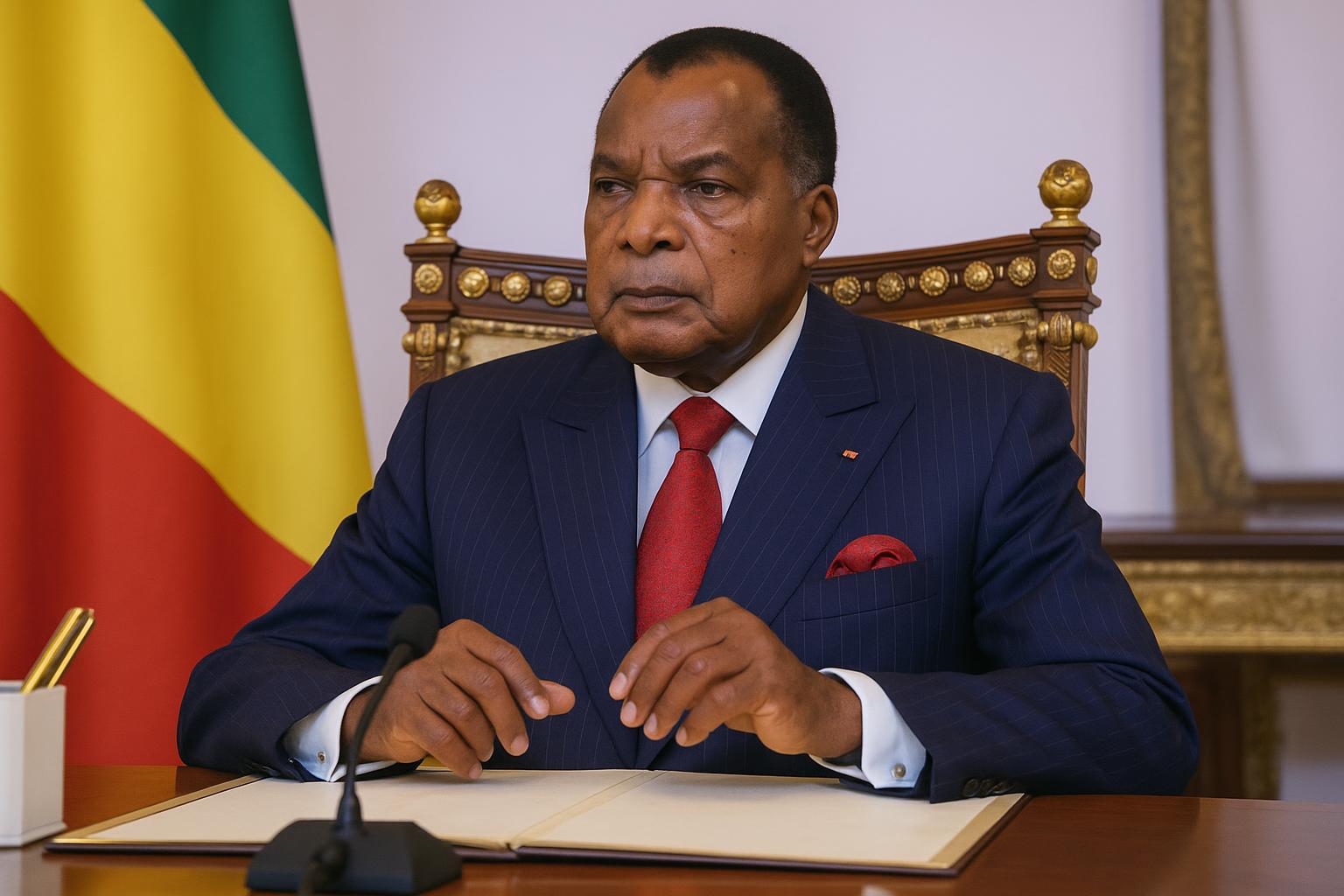
Congolese families gathered around radios and screens as the head of state delivered his New Year’s message shortly before midnight. The speech, recorded at the Brazzaville palace, set the tone for an election season that officially begins this January.
For more than four decades President Denis Sassou N’Guesso has used this ritual to outline priorities, blending reflection and projection. In 2026, his appeal centred on one goal he repeated three times: “peaceful, peaceful, peaceful ballots”.
Calm ballots in March 2026
Congo heads to the polls in March to elect a president. Without announcing his own plans, the incumbent urged voters to view the exercise as a civic celebration, not a clash, and assured that security services will safeguard tranquillity nationwide.
“Every Congolese voice matters to our collective ambition of a united, free and prosperous nation,” he declared, calling on parties to respect rules, on candidates to avoid incendiary language and on supporters to accept results. The National Independent Electoral Commission welcomed the message.
Political scientist Jean-Charles Mabiala notes that the appeal arrives while party bases are mobilising: “Setting a non-violent frame early can discourage hardliners.” Civil society groups such as the Peace Observatory say they will deploy 2,000 volunteers to monitor rhetoric both online and offline.
Vote as a hard-won civic duty
Sassou N’Guesso devoted a third of his address to the history of suffrage, reminding listeners that many societies fought long battles to obtain the right. “Voting honours those millions who struggled for this privilege,” he said, quoting liberation leaders without naming them.
He framed the ballot as both a right and a moral duty, a wording constitutional lawyers link to article 14 of the 2015 Basic Law, which encourages participation. Past turnout figures above 60 percent suggest his rhetoric resonates with a majority.
Appeal for global and continental peace
Turning outward, the president lamented conflicts stretching from the Sahel to Eastern Europe. He argued that resources spent on armaments would serve humanity better if redirected toward food security, education and health, echoing positions he has voiced at African Union summits.
“In 2026 we shall redouble our diplomatic engagement,” he promised, referencing Congo’s mediation role in regional talks on Sudan and Central African Republic. Foreign Minister Jean-Claude Gakosso later told reporters that Brazzaville will soon host a series of quiet-diplomacy workshops.
Assessing 2025: successes and shortcomings
Before looking ahead, Sassou N’Guesso reviewed 2025, echoing themes from his November address to Parliament. He cited encouraging macro-economic indicators, including 4.1 percent growth and single-digit inflation, but also acknowledged electricity outages and post-flood reconstruction delays that “tested our resilience”.
Remembering those lost
As tradition dictates, the president paused to honour compatriots who passed away in 2025, from cultural icons to health workers. He expressed “deep compassion” for bereaved families and for citizens battling illness or economic hardship.
Dr. Gisèle Ibata, head of the Brazzaville Teaching Hospital, told our newsroom that her staff felt “seen” by the acknowledgement after a demanding year dominated by malaria spikes. “Recognition boosts morale,” she added, while calling for continued investment in primary care.
Optimism and shared responsibility for 2026
Sassou N’Guesso concluded with a wish for “health, longevity and prosperity” for all residents, Congolese and foreigners alike. He urged citizens to greet 2026 “with optimism”, a tone government spokesperson Thierry Moungalla later described as “both realistic and mobilising”.
In Brazzaville’s Plateau quarter fireworks erupted minutes after the address, mingling with church bells. Street vendor Mathilde Moukassa said the words on peace “felt reassuring” amid rumours of political tension. “If leaders and opposition both stay calm, we can sell, study and travel safely.”
Key dates on the electoral calendar
According to the Ministry of Territorial Administration, voter registration updates close on 31 January, provisional candidate lists will be published mid-February and official campaigns run from 6 to 20 March. The Constitutional Court is scheduled to confirm final results by 10 April.
Security officials say 18,000 personnel will be mobilised nationwide, backed by local peace committees. The United Nations regional office indicated it is “ready to provide technical support if requested,” although authorities maintain the country’s own institutions are fully prepared to manage the process.
What next for the head of state?
Speculation over Sassou N’Guesso’s possible candidacy persists. Allies in the Congolese Labour Party have urged him to run, yet he kept observers guessing. Analysts believe his silence preserves institutional neutrality until the official nomination window opens in February.
For now, the president’s message appears to have struck a balance between continuity and caution. Whether he steps forward or not, his insistence on calm sets a benchmark by which all contenders will likely be judged in the weeks ahead.
As the country lights up festive streets and looks towards the March ballot, citizens, institutions and observers share one widely echoed hope: that the spirit of quiet urged in the final minutes of 2025 guides every act of democracy in 2026.