
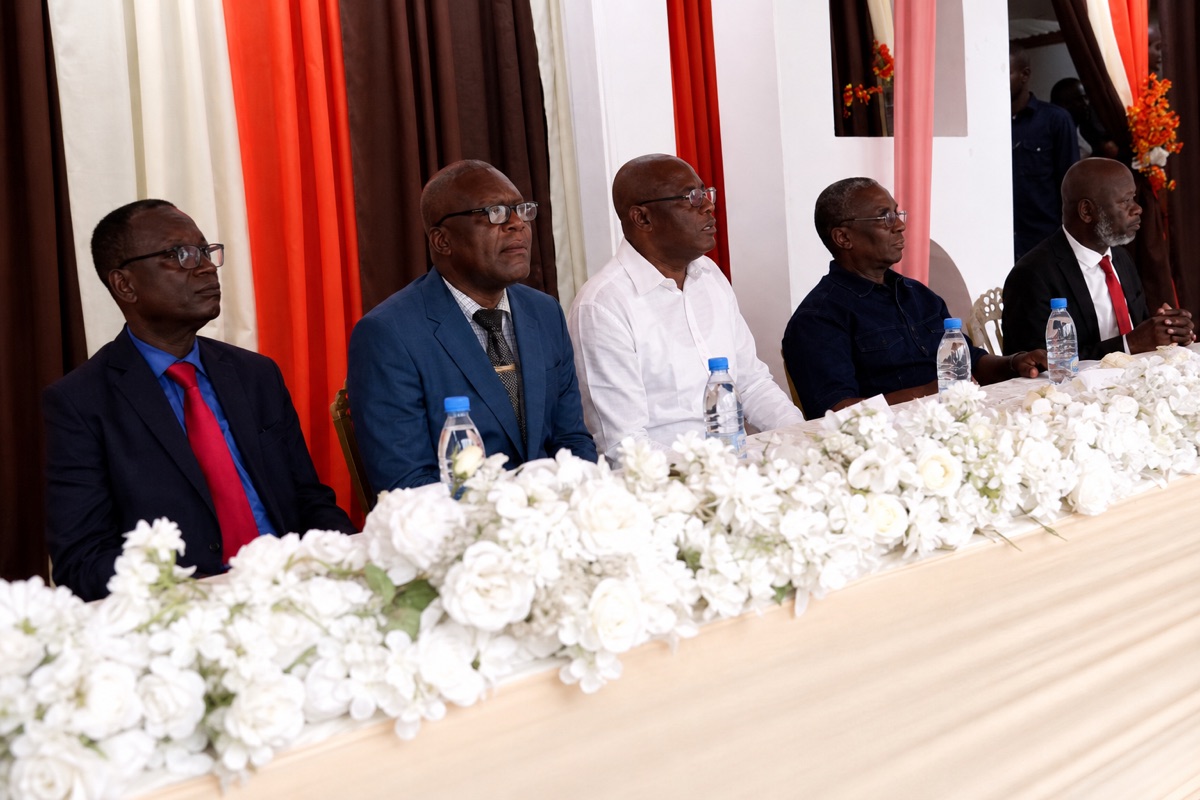
On May 1, 2026, as Brazzaville marked the 140th edition of Workers’ Day, the higher-education teachers’ union turned a public holiday into a balance sheet. Its message: real gains have been won, but the work is far from finished.
A salary lever pulled higher at Marien Ngouabi
The headline claim belongs to SYNESUP, the union representing teaching staff at Marien Ngouabi University, the Republic of Congo’s flagship public institution in Brazzaville. Its leaders framed the day as a moment to take stock.
At the center sits the index point, the multiplier that converts a civil servant’s grade into an actual paycheck. According to the union, that figure climbed from 350 to 450 for the university’s staff, a mechanical lift that touches every salary line.
Jean Didier Mbelé, SYNESUP’s secretary general, presented the increase as the signature achievement of his mandate. In a system where pay scales rarely move, a hundred-point jump is the kind of number members notice at the end of the month.
Why the index point matters so much
To readers outside the public sector, the index point can feel abstract. In practice, it is the quiet engine of Congolese state pay. Raise it, and thousands of salaries rise together, without renegotiating each individual contract or grade.
That is precisely why unions fight over it. A bump from 350 to 450 is not a bonus or a one-off payment. It is structural, baked into the formula, and it compounds across an entire payroll of lecturers and academic staff.
For a university that has long wrestled with funding strains, the change signals that collective bargaining can still shift the needle. The union clearly intends voters among its members to read it that way.
Old promises finally honored
The index point did not arrive alone. SYNESUP also pointed to the full application of the 2019 protocol agreement signed with the government, a document that had lingered as unfinished business between the union and the state for years.
Among the tangible results, the union cited the recovery of four months of unpaid salaries and two years of overtime, sums that had previously slipped through the cracks. For households running on a single teaching income, back pay of that scale is rarely symbolic.
The leadership added that vacant positions within the university presidency were filled, restoring a measure of administrative order. Staffing gaps at the top can stall decisions that trickle down to ordinary lecturers and their working conditions.
Retirement rules brought into line
A further win concerns the end of careers rather than the start. A 2024 decree, the union said, aligned the retirement age of university staff with that of other public servants, closing a gap that had set academics apart from the broader civil service.
Such alignment matters for planning. It tells lecturers how long they may serve and when their pensions begin, reducing the uncertainty that often surrounds late-career decisions in the public sector. The union counts it among its concrete deliverables.
Taken together, these points sketch a mandate that Mbelé wants remembered for delivery, not declarations. The framing is deliberate, designed to show members that patient negotiation can convert paper agreements into pay and protections.
The unfinished file
Yet the secretary general was careful not to declare victory. He used the same platform to spell out demands that remain firmly on the table, signaling that the union’s pressure will continue well past the holiday speeches.
Top of the list is the regular payment of salaries, a recurring strain for staff who cannot always count on money arriving on schedule. Alongside it sits the clearing of arrears stretching back several months, a backlog the union wants settled rather than rolled forward.
Mbelé also pressed for payment of various hours owed to teaching staff, together with the so-called overcrowding allowance tied to oversized classes. In a packed public university, that allowance speaks directly to the daily reality of lecturers facing swollen lecture halls.
Bricks still missing
Money is not the only outstanding item. The union renewed its call for the completion of university infrastructure, the buildings and facilities that shape whether reforms on paper translate into usable classrooms and offices on the ground.
The juxtaposition is telling. On one side, a salary lever pulled higher and old debts partly repaid. On the other, a list of promises still waiting, from steady paychecks to finished construction sites across the campus.
For now, SYNESUP presents itself as a union that has moved the index point and recovered lost wages, while keeping a watchful eye on what comes next. The 140th Workers’ Day, in its telling, marked progress measured, not a contest closed.