
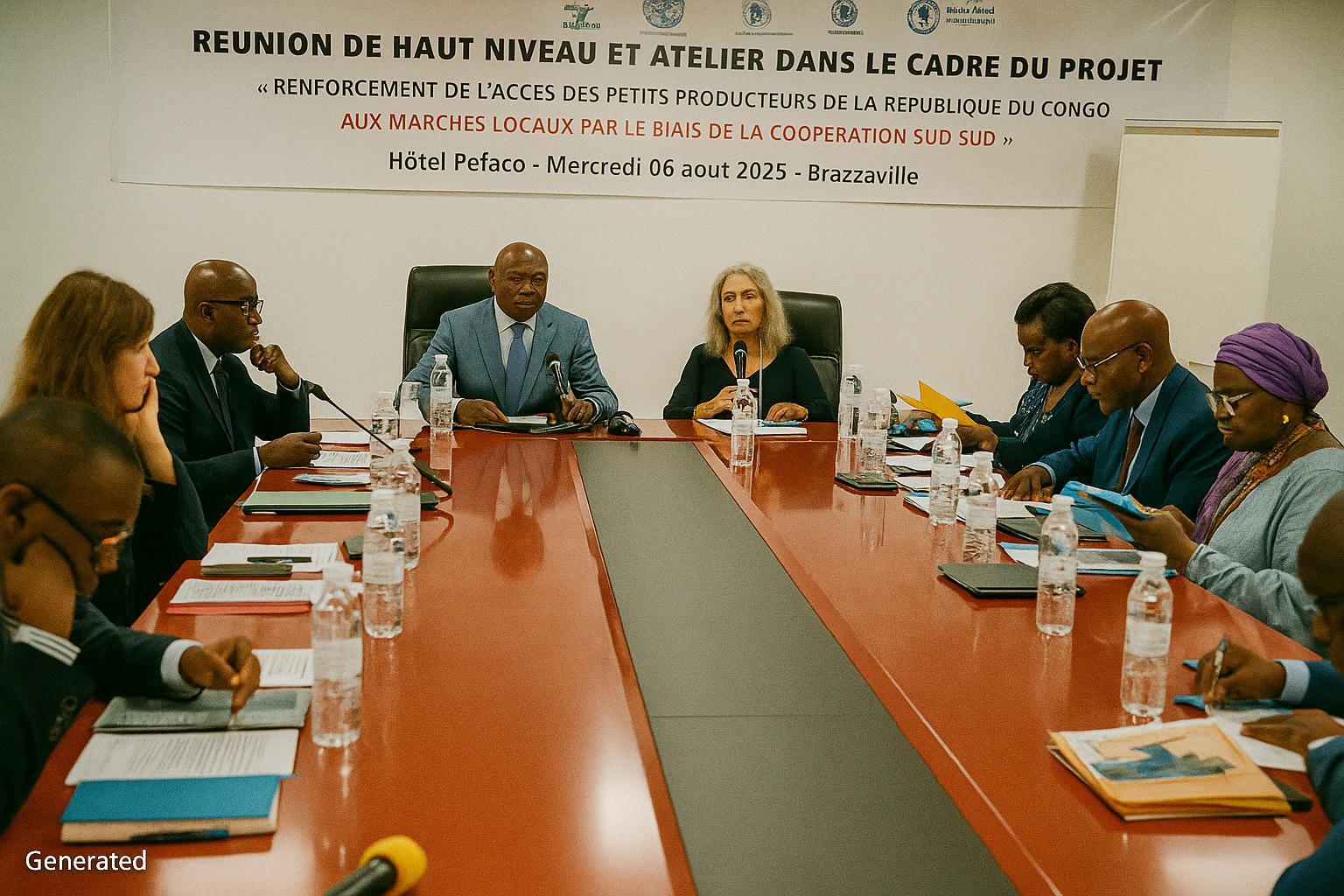
Government sets the table for national school meals
In a packed meeting room at the Ministry of Education this week, World Food Programme country chief Gon Myers spoke without notes. “The hand-over has started,” he summed up, announcing that Brazzaville wants a formal National School Feeding Policy adopted before the end of 2025. Since the first emergency lunches after the 1997 conflict, most canteens have run on donor cash. Now, officials insist the programme will be written into the state budget, a signal that the Republic aims to feed nearly two million pupils with its own resources (WFP Congo 2024).
Behind the microphones, technicians finalised the draft policy. It bundles nutrition standards, farmer contracts and a timetable for gradual takeover of costs. Education Minister Jean-Luc Mouthou called the text “a cornerstone for human capital,” pointing to studies linking a warm plate at noon to higher attendance and exam scores (UNESCO Institute 2023).
Brazilian know-how spices up local fields
Congo is not reinventing the wheel. Through the South-South initiative “Semence d’Avenir”, Brazil’s National Fund for Education Development shared two decades of experience converting family farming surpluses into balanced menus. Visiting envoy Ana Suza praised the Congolese choice of local staples like cassava leaves with smoked fish, joking that the dish would “sell out in Rio.”
During eighteen months of joint workshops, agronomists trained ten cooperatives on crop calendars, post-harvest storage and the tricky paperwork required for public procurement contracts. The practical guides handed to ministries this week distil that training into four slim manuals, ready for classroom use as well as district offices. Maria Giulia of Brazil’s Centre of Excellence Against Hunger called the hand-over “a cookbook and a business plan rolled into one.”
From pilot to plate: lessons from 25 schools
Twenty-five primary schools across Brazzaville, Plateaux and Kouilou already serve lunches entirely sourced within a 50-kilometre radius. Head teacher Thérèse Mvoula in Gamboma says her canteen opens at 11:30 sharp—no longer at noon—because pupils stopped skipping morning classes once the aroma of groundnut stew drifted through the windows. Attendance is up eight percentage points since January, according to district records.
The pilots have also revealed snags. Some cooperatives struggled to deliver during the long rains when feeder roads flooded. Project officers added tarpaulins and community storage sheds to the budget, a fix noted for the national scale-up. Nutritionists balanced menus so that each child receives roughly 700 kilocalories, with vitamin-rich moringa powder compensating for scarce meat.
Financing the future and keeping plates full
WFP figures put the annual cost of a nationwide programme at around 0.3 percent of GDP, a level considered affordable by the Ministry of Finance, especially if purchases cycle back to domestic farmers. Oil revenues, now buffered by the Debt Reduction and Development Contract signed with France, could create a dedicated budget line as early as the 2026 fiscal law (MinFin draft note, July 2024).
International partners will not disappear overnight. The hand-over agreement stipulates that WFP cushions food price shocks for three more years while local supply chains mature. The private sector is also tasting the opportunity. A poultry cooperative near Pointe-Noire is expanding hatcheries, banking on steady demand for eggs once every public school has a breakfast component.
Civil society groups welcome the ambition. “Local farmers are ready; they just need predictable buyers,” says agronomist Lucie Akouala of the NGO Terre Verte. She cautions, however, that transparent tendering and prompt payments will decide whether smallholders, rather than large wholesalers, reap the benefits.
For now, the final recipe looks promising: a pinch of Brazilian expertise, a ladle of UN logistics and a dollop of Congolese political will. If the draft policy clears cabinet later this year, the youngest citizens of Congo-Brazzaville may soon find a guaranteed hot lunch waiting for them, cooked from the harvests of their own communities.