
A Sunday Trip That Spoke Volumes for Central Africa
When Denis Sassou N’Guesso boarded a flight out of Brazzaville on Sunday 3 May 2026, the journey was short but the message carried weight. The Congolese head of state was heading to Libreville at the personal invitation of his Gabonese counterpart, Brice Clotaire Oligui Nguema.
The occasion was the inauguration of a new congress hall in the Gabonese capital, an event that brought together political and diplomatic figures from across the sub-region. For two neighbours bound by geography and history, the moment was as symbolic as it was ceremonial.
A Building Named After Omar Bongo Ondimba
The centrepiece of the day was the congress hall itself, named in tribute to Omar Bongo Ondimba, the late Gabonese president whose long tenure shaped much of the country’s modern political identity. Naming the venue after him gave the ceremony an unmistakable historical resonance.
Gabonese officials presented the structure as a modern facility designed to project the country’s energy and ambition. The intention, as conveyed during the event, is to strengthen Gabon’s appeal on the international stage and to give Libreville a flagship venue worthy of major gatherings.
For a nation working to redefine its image, a purpose-built congress hall is more than concrete and glass. It signals an aspiration to host conferences, summits and exchanges that place Gabon at the centre of regional conversation rather than at its edge.
Why Sassou N’Guesso’s Presence Mattered
Heads of state do not travel for ribbon-cutting alone. By making the trip in person, Sassou N’Guesso underlined the value Brazzaville places on its relationship with Libreville. His attendance was, in effect, a diplomatic statement delivered without the need for a lengthy communiqué.
The Congolese president used the occasion to reaffirm what he described as the historic and fraternal ties linking Congo and Gabon. These are two countries that share a border, overlapping cultural threads and a long record of cooperation within Central Africa.
His presence also reflected an attachment to regional cooperation and to sub-regional integration, themes that have featured consistently in Congolese diplomacy. In a part of the continent where neighbourly relations can shift quickly, such gestures help keep channels open and trust intact.
Two Capitals, One Shared History
The bond between Brazzaville and Libreville is not new. The two capitals have long maintained close exchanges, and the inauguration offered a fresh setting in which that closeness could be displayed in front of regional peers.
The visit was framed as part of a wider effort to consolidate strategic partnerships between the two governments. Rather than a one-off courtesy call, it fits within a continuing dynamic of dialogue that both sides appear keen to nurture and sustain.
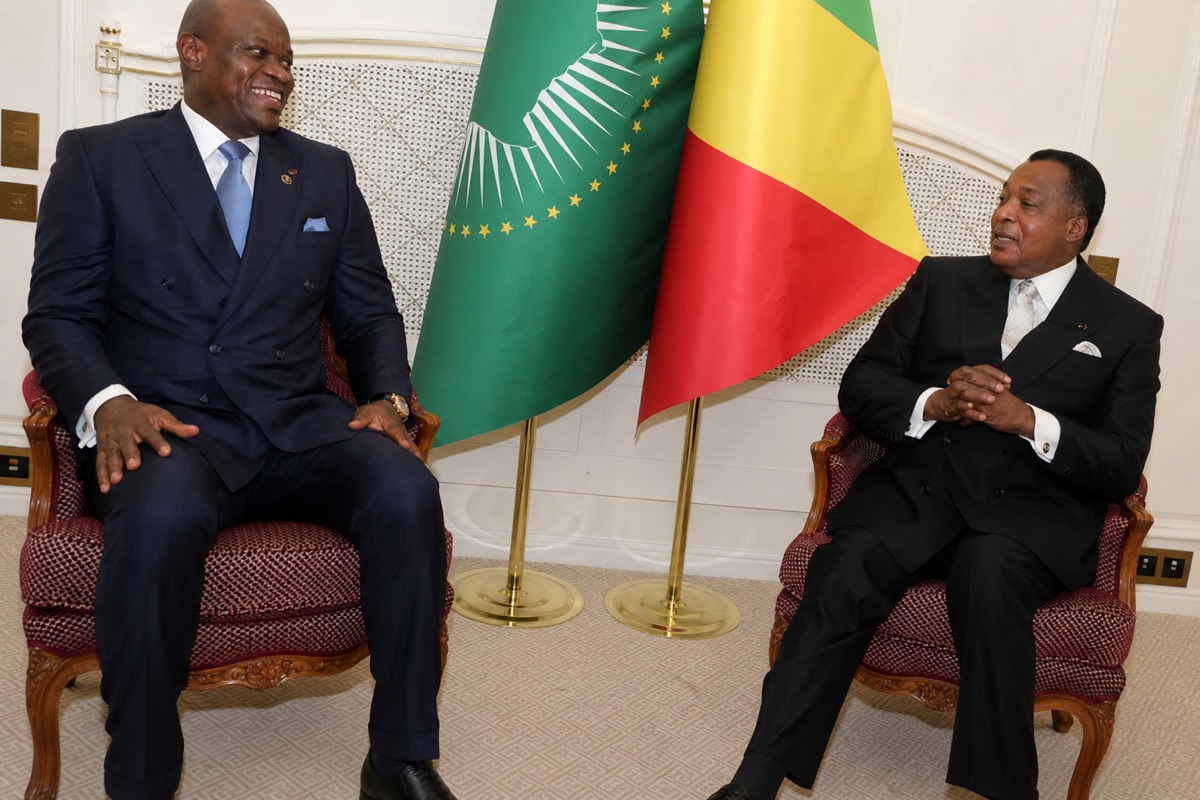
For observers across Central Africa, the image of the two leaders standing together carried its own quiet significance. It suggested continuity at a time when the sub-region is navigating questions of stability, development and shared economic interests.
A Gathering of the Sub-Region
The ceremony drew an audience that extended well beyond the host country. Political personalities and diplomats from neighbouring states attended, turning the inauguration into a moment of collective presence rather than a purely Gabonese affair.
Such gatherings serve a practical function alongside their symbolic one. They create informal space for conversation, allowing leaders and envoys to take stock of relationships and reaffirm commitments away from the formality of scheduled summits.
The presence of figures from across the sub-region also reinforced the idea that the new venue is meant to serve a regional audience. A congress hall, after all, draws its meaning from the gatherings it is built to host.
What the Visit Signals Going Forward
Read carefully, the Libreville trip is a small window onto a larger pattern. Central African states continue to invest in the language of cooperation, even as each pursues its own domestic priorities and its own path of political renewal.
For Congo-Brazzaville, the visit reinforced a familiar posture: an emphasis on fraternal ties, regional integration and steady engagement with neighbours. For Gabon, it offered an opportunity to showcase ambition and to host a regional moment on its own terms.
Neither government framed the day as the start of anything dramatically new. Instead, it read as the renewal of a relationship already in motion, anchored in history and pointed, at least rhetorically, toward closer partnership.
In the end, a Sunday flight and a newly opened hall combined to tell a modest but telling story. Two neighbours chose to mark a shared occasion together, and in doing so reminded the sub-region that the ties between Brazzaville and Libreville remain, for now, firmly intact.