
A New Minister Steps Into a Strategic Brief
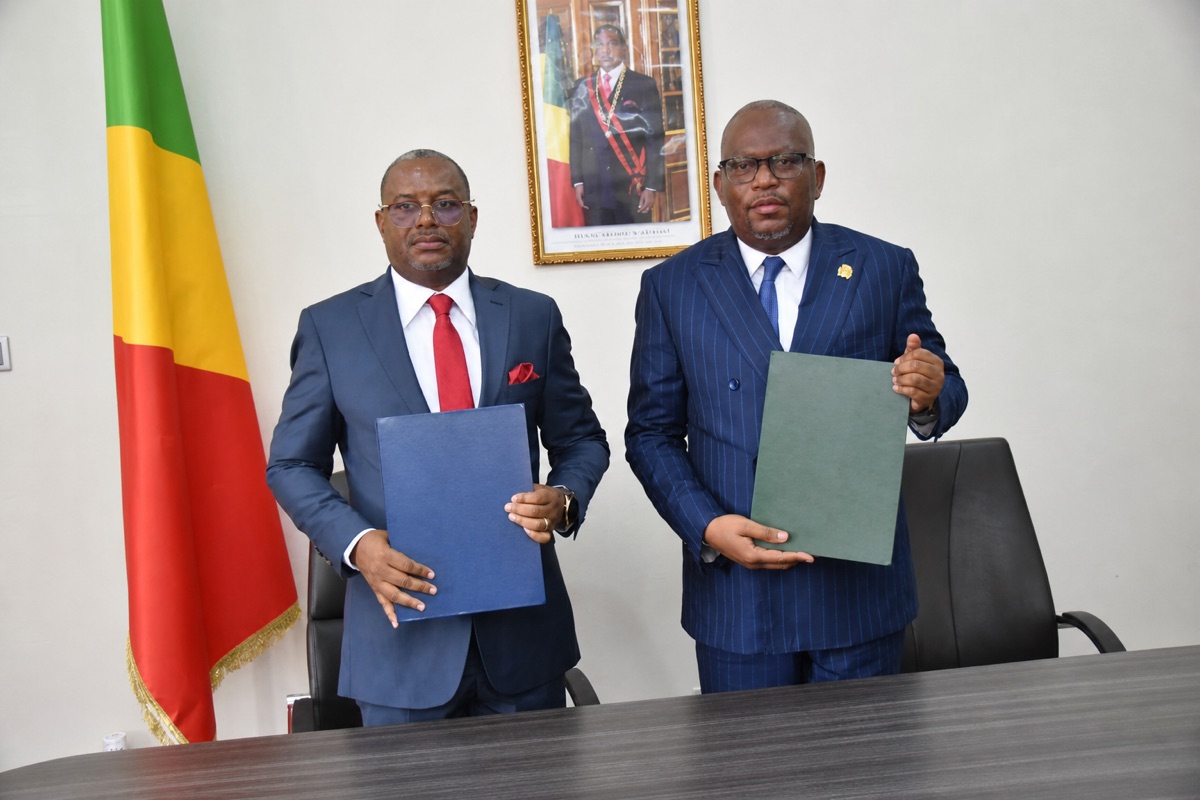
Gustave Fulgence René Adicolle Goum has taken the helm of Congo-Brazzaville’s Ministry of Technical and Vocational Education. The handover ceremony, held on 28 April in Brazzaville, formally passed authority from his predecessor, Ghislain Thierry Maguessa Ebomé.
Speaking before officials and ministry staff, the incoming minister pledged to serve “with loyalty, rigour and availability” to reach the results the country expects. His words set a measured, businesslike tone for a portfolio many here see as central to youth opportunity.
Years Inside the House Before Leading It
Adicolle Goum is no stranger to the building he now runs. He spent several years working alongside Maguessa Ebomé, a stretch that gave him close familiarity with the department’s files, its routines and its pending reforms.
“Public action is a work of continuity and is built over time,” he told the audience, framing his arrival as steady progression rather than a sharp break. The remark, delivered plainly, signalled an intent to extend ongoing efforts rather than rewrite them overnight.
Turning Training Into a Job Engine
The mandate handed to the new minister is ambitious in scope. He has been tasked with making technical and vocational education a powerful lever for socio-professional integration, competitiveness and social equity, with the country’s young people placed firmly at the centre.
In practical terms, that mission rests on several pillars. The plan involves widening the school map, lifting teaching quality and modernising the curriculum so it tracks the skills employers actually seek across Congo-Brazzaville’s economy.
It also leans on stronger training infrastructure, continuous development for instructors, and partnerships with the private sector. Together these threads point toward a system designed less around diplomas alone and more around employability for graduates entering a competitive labour market.
A Sector Tied to Youth and Livelihoods
The emphasis on insertion carries weight in a country where many young people, particularly in Brazzaville and Pointe-Noire, weigh their prospects against scarce formal jobs. Technical pathways offer a route into trades, services and industry without long academic detours.
By tying his agenda to equity and competitiveness, the minister echoed a broader regional conversation. Across Central Africa, governments increasingly treat vocational training as a hedge against youth unemployment and a quiet driver of local enterprise and household income.
The Outgoing Minister’s Parting Requests
Maguessa Ebomé, now called to other duties, did not leave quietly on the substance. He pledged his support to his successor and used the occasion to flag institutions he hopes will keep receiving attention through the transition.
He singled out the Congolese School of Optics and the Congolese School for Ambulance Workers, two specialised establishments that train scarce, practical skills. His message was clear: niche schools matter as much as flagship programmes in a balanced national system.
He also urged continued focus on works underway at the paramedical school in Owando, the wood-trades training centre in Enyélé, and the technical lycée in Pokola. The list reflected a deliberately decentralised vision, with capacity spread beyond the capital into the departments.
Who Is Gustave Fulgence René Adicolle Goum
Born on 19 September 1970 in Brazzaville, the new minister is an engineer by training. His academic path blends technical and planning credentials, a mix that fits a brief sitting at the crossroads of education policy and economic development.
He holds a master’s degree in plant production from Marien-Ngouabi University, earned in 2014. He later obtained a certificate as a vocational education planner from Unesco’s IIPE in Dakar in 2024, sharpening his grasp of how training systems are designed and steered.
His administrative record runs through the ministry itself. Among other roles, he served as director general of administration and human resources, a position that placed him close to the machinery of staffing, budgets and day-to-day management.
Continuity Now, Results Later
The ceremony, reported by Adiac Congo, framed the change at the top as orderly rather than disruptive. There was little drama, and much talk of carrying forward work already begun under the previous leadership.
What remains untested is delivery. Reforms to the school map, curriculum and instructor training take years to register, and their success will be judged by whether young Congolese find real footholds in work.
For now, Adicolle Goum has set the marker himself. He framed his appointment as a promise of loyalty and steady effort, leaving the harder verdict — measurable improvement in jobs and skills — to be written over the months ahead.