
A renewed alliance for vulnerable pupils
After three years off the radar, Rotary Club Brazzaville Djoué Doyen has rekindled its charitable flame with Caritas. The agreement signed on 6 October 2025 supplies fresh funding to the Catholic charity’s “Éducation en milieu ouvert” project, focused on children facing acute social and financial hardship.
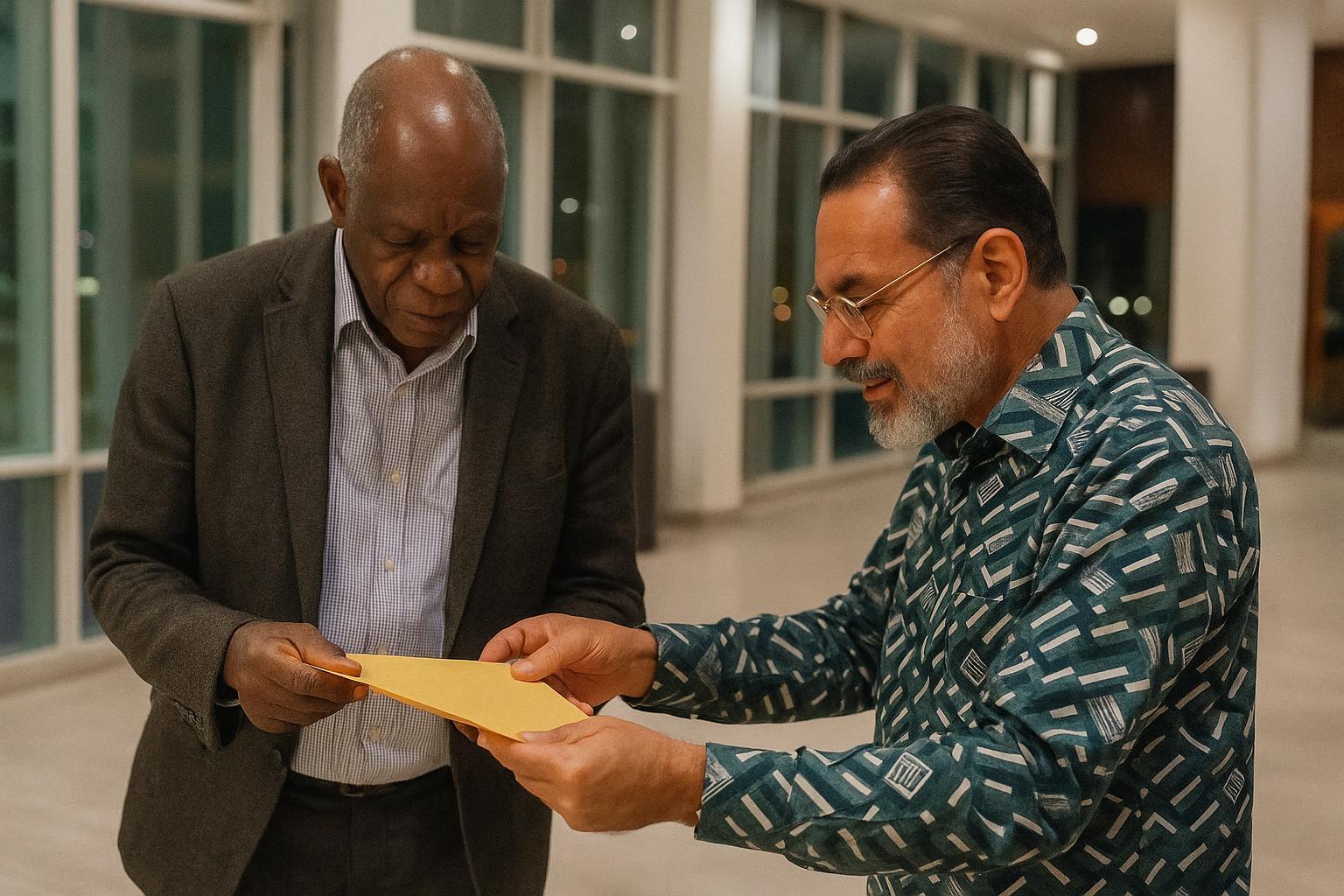
Club president Patrick Mpoussa offered the cheque during a brief but warm ceremony in the capital. Across the table, project supervisor Ferdinand Malonga welcomed the gesture, underlining that every coin now committed will echo in classrooms where poverty often mutes potential.
The handshake symbolised more than money. It revived a collaboration that, before its hiatus, had already placed several vulnerable pupils on the road to diplomas. Both partners now intend to make continuity their trademark, replacing one-off donations with predictable academic backing.
Inside the open environment education plan
Caritas created the open-environment approach to reach children who drift between households, markets or street corners, yet still hunger for blackboards and textbooks. Educators attached to local parishes map their trajectories, then enrol them in public schools that agree to regular follow-up.
Once admitted, each youngster receives guidance beyond the timetable. Volunteers check attendance records, liaise with teachers and alert social workers if a family setback threatens progress. The method requires modest budgets but constant presence, a combination non-state actors often struggle to maintain alone.
The Rotary injection therefore fills a strategic gap. It pays registration fees, buys uniforms and funds after-school tutoring known locally as travaux dirigés, or TD. In doing so, it converts administrative hurdles into open doors, allowing educators to focus on mentoring.
Thirty seats secured for 2025-2026 classrooms
For the current academic cycle, Caritas has identified thirty children who meet the programme’s criteria. Fifteen begin or continue primary school, ten attend collège and five enter lycée. Each placement reflects weeks of appraisal by parish teams familiar with neighbourhood realities.
Five primary-level pupils will sit the first public milestone, the CEPE, this year. At the next rung, three collégiens will attempt the BEPC exam, while two lycée candidates prepare for the baccalaureate. Success in these tests can redefine family narratives.
Beyond paying exam fees, Rotary’s envelope covers photocopies of past papers, weekend revision sessions and the small transport stipends that often decide whether a candidate reaches the exam hall rested rather than exhausted. Stakeholders insist these practical details anchor the scheme in reality.
Growing the programme toward fifty learners
President Mpoussa already eyes expansion. If this pilot phase stays on schedule, he says the club could back fifty pupils in 2026-2027. The incremental formula mirrors Rotary culture: test, measure, then scale. It also respects Caritas capacity, avoiding sudden burdens on field educators.
Future growth would maintain the full cycle concept. Pupils entering primary now would keep their seat through secondary, provided they meet attendance and conduct standards. The club believes such stability builds confidence, while allowing donors to track long-term outcomes with tangible indicators.
Outstanding performers may even access overseas scholarships. Mpoussa floated the possibility of partnering with sister clubs abroad to secure places in technical institutes or universities. For beneficiaries, that prospect transforms the project from emergency aid into a springboard for professional trajectories.
Families and educators see hopeful ripple effects
In Ngamaba parish, a mother of three told us the funding arrived like ‘rain after a long dry season’. Her eldest, now in troisième, nearly left school to sell fruit when uniform costs doubled. The fee waiver resets her daughter’s ambitions.
Teachers also feel the difference. A Brazzaville collège principal noted that students under the Caritas-Rotary umbrella rarely miss assessments. He attributes the punctuality to the weekly counselling sessions baked into the project, a practice he wishes could extend to all learners.
Community workers observe ancillary benefits. When a child spends afternoons in supervised TD, exposure to street risks such as petty crime drops. Though anecdotal, this pattern reinforces confidence among parents who previously questioned the value of formal schooling under tight finances.
Strong governance underlines the partnership
Both organisations insist that clear reporting will keep donors, clergy and educators aligned. Caritas will submit termly ledgers detailing every CFA franc spent, while the club’s audit committee plans spot checks in schools to verify material deliveries and attendance records.
A joint steering group, chaired in rotation by Mpoussa and Malonga, meets every quarter to review progress. Minutes logged at archdiocese headquarters will be circulated to parish teams, ensuring transparency cascades from boardroom to blackboard without administrative bottlenecks.
By knitting accountability to compassion, the partners hope their revived alliance endures far beyond the current academic year. For now, thirty children hold admission slips that might have remained an impossible dream. Their journey could well chart the next chapter of this civic solidarity story.