
Oil highs, budget lows: the dependence dilemma
Every fiscal year in Brazzaville starts with the same question whispered along ministerial corridors: how much will Brent barrel prices spare the treasury this time around? With crude exports feeding roughly two-thirds of public revenue according to the Ministry of Finance’s 2023 bulletin, any wobble on world markets travels straight to public payrolls and village clinics. The International Monetary Fund’s April 2024 assessment places Congo-Brazzaville among the five most oil-exposed economies on the continent, a ranking no policymaker boasts about. That uneasy backdrop explains why the Rencontre pour la paix et les droits de l’homme (RPDH) gathered more than a hundred officials, businesspeople and activists in Pointe-Noire in June, then in Brazzaville in July 2025, to answer a blunt question: what happens after the last well runs dry?
Roundtables craft a first draft of tomorrow
Hosted under the banner Prepare the After-Petroleum in Congo, the twin meetings benefited from the moral backing of the Ministry of Environment, the technical coaching of Energy Transition Fund and seed money from the Rockefeller Foundation. Participants debated into the night, producing a forty-page roadmap that advocates boosting renewable power to 35 % of the national mix by 2035, nurturing agro-processing clusters around Ouesso and Dolisie, and encouraging small hydropower schemes along the Bouenza River. The document, seen by our newsroom, also presses for a sovereign green fund to cushion oil revenue shocks, echoing the Norwegian model often cited by regional economists (African Development Bank 2024).
Government walks a tightrope of realism
Officials at the Environment Ministry insist the roadmap dovetails with the National Development Plan 2022-2026, which already earmarks 180 billion CFA francs for clean energy ventures. “The transition is not an option, it is survival,” argues Résine Olga Ossombo Mayela, director-general for sustainable development, pointing to coastal erosion nibbling at Pointe-Noire’s suburbs. At the same time, Brazzaville cannot slam the door on its main cash cow overnight. Energy Minister Bruno Jean-Richard Itoua recently told the National Assembly that new offshore blocks will keep flowing until at least 2040, granting the country what he called “a bridge of revenue” to bankroll diversification. The stance reflects a broader African conversation, summed up by the African Union’s Common Position on Energy Access adopted in Nairobi last year.
Money talks: donors and investors enter the chat
Transition plans live or die on financing, and the Pointe-Noire roundtable did not shy away from that reality. Representatives from the World Bank’s International Finance Corporation signalled interest in portfolio guarantees for solar mini-grids in rural districts. Meanwhile, local lender BGFI Bank Congo floated the idea of a concessional credit line for cassava-to-starch factories, one of the agro-transformations flagged in the roadmap. On the aid front, the European Union’s Global Gateway has already approved a 30 million-euro envelope for the expansion of the Imboulou hydro station, according to a senior EU delegate in attendance. Still, participants acknowledged that tapping such money requires tighter procurement rules and quicker land-title procedures, two sticking points often cited by Transparency International (TI Africa 2023).
Local voices call for an inclusive roll-out
Beyond conference halls, communities that live next to oil rigs or forest concessions want a seat at the table. In Makola, a village twenty kilometres from TotalEnergies’ Moho Nord platform, chief Jean-Baptiste Mavoungou told our reporter he welcomes talk of solar pumps for farmland, “but only if young people get the jobs, not outsiders with city diplomas.” His concern resonated in Brazzaville, where civil-society coordinator Christian Mounzéo reminded delegates that any green shift has to integrate Indigenous rights and gender parity clauses, or risk fuelling new grievances. The argument aligns with the United Nations Development Programme’s 2022 guidance on just transitions, which stresses early community buy-in as a guarantor of lasting reforms.
Early pilots hint at practical hurdles
Congo already hosts pockets of success worth scaling. A 12-megawatt solar farm outside Oyo cut diesel imports for the surrounding district hospital by half in 2023, official data show. Yet engineers complain of bureaucratic delays at customs, where imported inverters sometimes sit for weeks. Similarly, a bamboo charcoal cooperative in Sibiti doubled local household fuel options, but struggles to access micro-credit. Observers at the roundtables drew a clear lesson: legislation must catch up with the speed of start-ups if the post-oil vision is to gain traction. The Ministry of Small and Medium Enterprises says a new decree simplifying green-business registration is under review and could be signed before year’s end.
Cautious hopes moving forward
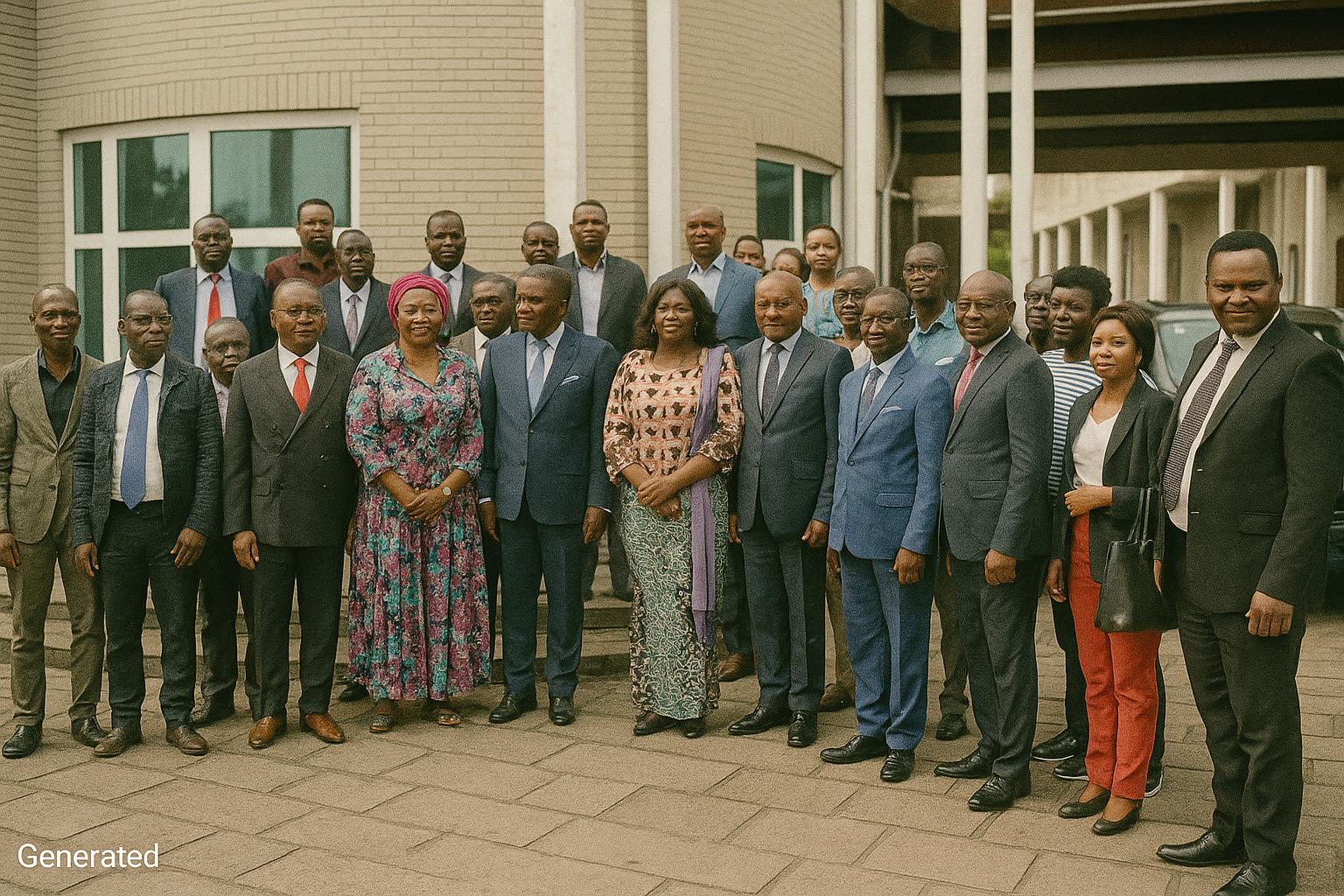
The twin consultations closed with applause and the customary group photo, yet the real test starts now. RPDH plans a follow-up audit in mid-2026 to measure policy uptake, while parliamentarians prepare to debate the draft Climate and Energy Bill next session. For ordinary employees scanning supermarket shelves where imported goods still dominate, talk of agro-industrial zones feels remote. But veteran economist Françoise Okabé strikes a note of pragmatism: “The first barrel funded our highways; the last barrel must finance our children’s coding classes.” Her quip sums up a public mood that blends impatience with guarded optimism. If Congo can convert today’s dialogues into tomorrow’s deliverables, the country may yet turn its farewell to oil into a down payment on wider prosperity.