
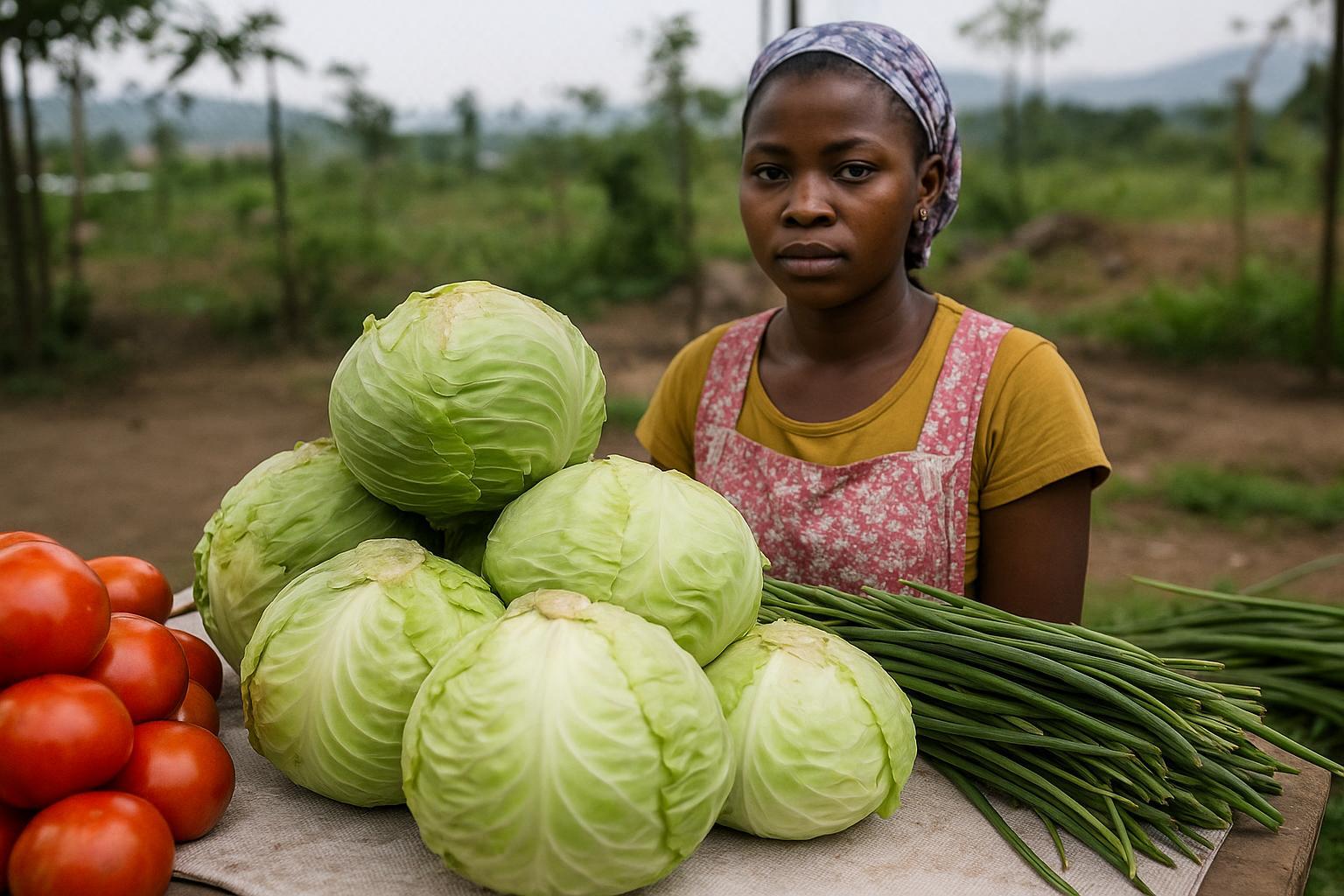
Quiet milestone at Nganga Lingolo agro site
Early this week, the modest plateau of Nganga Lingolo, thirty kilometres south of downtown Brazzaville, welcomed 126 market gardeners to a newly prepared agroecological site designed for intensive yet sustainable vegetable production.
The figure, announced by local coordinators on the ground, marks the official hand-over of plots, irrigation points and shared equipment after several months of terracing, composting and training.
For many of these growers, some displaced by past river floods, the move offers a first real land security and technical support package in years, giving fresh hope to households reliant on vegetables as their main income.
Neighbours interviewed on site said they expect shorter supply routes to Brazzaville markets, meaning quicker deliveries, less post-harvest loss and perhaps lower prices for leafy staples such as amaranth, cabbage and eggplant.
Agroecological methods in action
The newly inaugurated perimeter has intentionally avoided synthetic fertilisers and chemical pesticides, organisers say, opting instead for crop rotation, organic manure and natural pest barriers.
Raised beds are mulched with harvested grass from the plateau, retaining moisture during the hot season while limiting evaporation.
Small reservoirs dug alongside the plots capture rainwater, allowing drip lines to deliver measured doses directly to the plant root, a technique praised for saving up to half the water usually consumed by overhead sprinklers.
Composting stations receive crop residues and kitchen waste from nearby settlements, turning what was once discarded into nutrient-rich humus ready for the next planting cycle.
Farmers voice early impressions
Franck Koubemba, one of the youngest beneficiaries at 24, told our reporter that he had been renting unstable strips along the Madzia road, losing yields each rainy season.
Here I feel I can plan for three or four harvests without the fear of my garden being washed away, he explained, holding a handful of seedling trays he had just received.
Several older growers also highlighted the collective dimension of the programme, noting that shared storage sheds and packaging tables would help them meet urban customers’ standards.
We can coordinate varieties so everyone finds a market instead of competing on the same crop at the same time, said Mama Odette, who has decades of tomato experience.
Expected benefits for city consumers
Observers note that urban demand for vegetables can outpace nearby supply during certain seasons, leading to noticeable volatility in street market prices.
By boosting output only a short drive from the capital, the Nganga Lingolo site is expected to cushion such peaks and shorten delivery chains, cutting fuel costs per crate.
Balanced diets rely on steady supplies of fresh vegetables, and any initiative increasing availability is therefore welcomed by many families.
For now, the 126 market gardeners focus on transplanting their first seedlings, while technicians monitor soil moisture and record baseline yields that will serve as reference for future expansion.
Training that anchors the project
Before setting foot on their plots, each participant completed a concise forty-hour course delivered on site by agronomy instructors, covering seed selection, compost turnover and record keeping.
The sessions mixed theory under a shade hall with hands-on drills in the field, which many trainees said helped translate laboratory recommendations into everyday gestures like correct spacing or early aphid scouting.
Special attention was paid to young graduates from nearby vocational schools, invited to pair up with experienced growers, forging what facilitators describe as inter-generational mentorship.
Social inclusion shaping the fields
Women represent nearly half of the beneficiaries, a ratio the field team attributes to the historical role mothers play in supplying household meals and trading surplus at street markets.
Planting calendars were discussed alongside family obligations so that caring for crops does not conflict with school runs or caregiving, reinforcing the programme’s social sensitivity.
Looking ahead, extension officers argue that agroecological practices increase resilience to erratic rainfall patterns by building organic matter, which in turn improves water retention and reduces erosion.
The data gathered from these first 126 plots will feed a living dashboard that planners intend to use before opening the next perimeter, possibly in Kintélé or Ignié, though no official location has been confirmed yet.
Market linkage and digital coordination
A small cluster of vendors operating pick-up vans visited the site during the inauguration, scouting best access routes and agreeing tentative collection hours to avoid peak traffic on the national road Number One.
Growers and buyers jointly emphasised the value of uniform crates that stack safely, reducing bruises and keeping leaves crisp until they reach plateaux de Makélékélé or Talangaï stalls.
Several participants expressed interest in using an existing messaging group to post real-time pictures of harvests, enabling restaurateurs in the capital to reserve boxes before trucks depart, a system already tested informally during previous tomato gluts.
Looking ahead for a replicable model
Once a bare hillside, the area now grows promise, and many will watch to see if Nganga Lingolo becomes a food-security model.