
Nationwide socio-economic survey kicks off
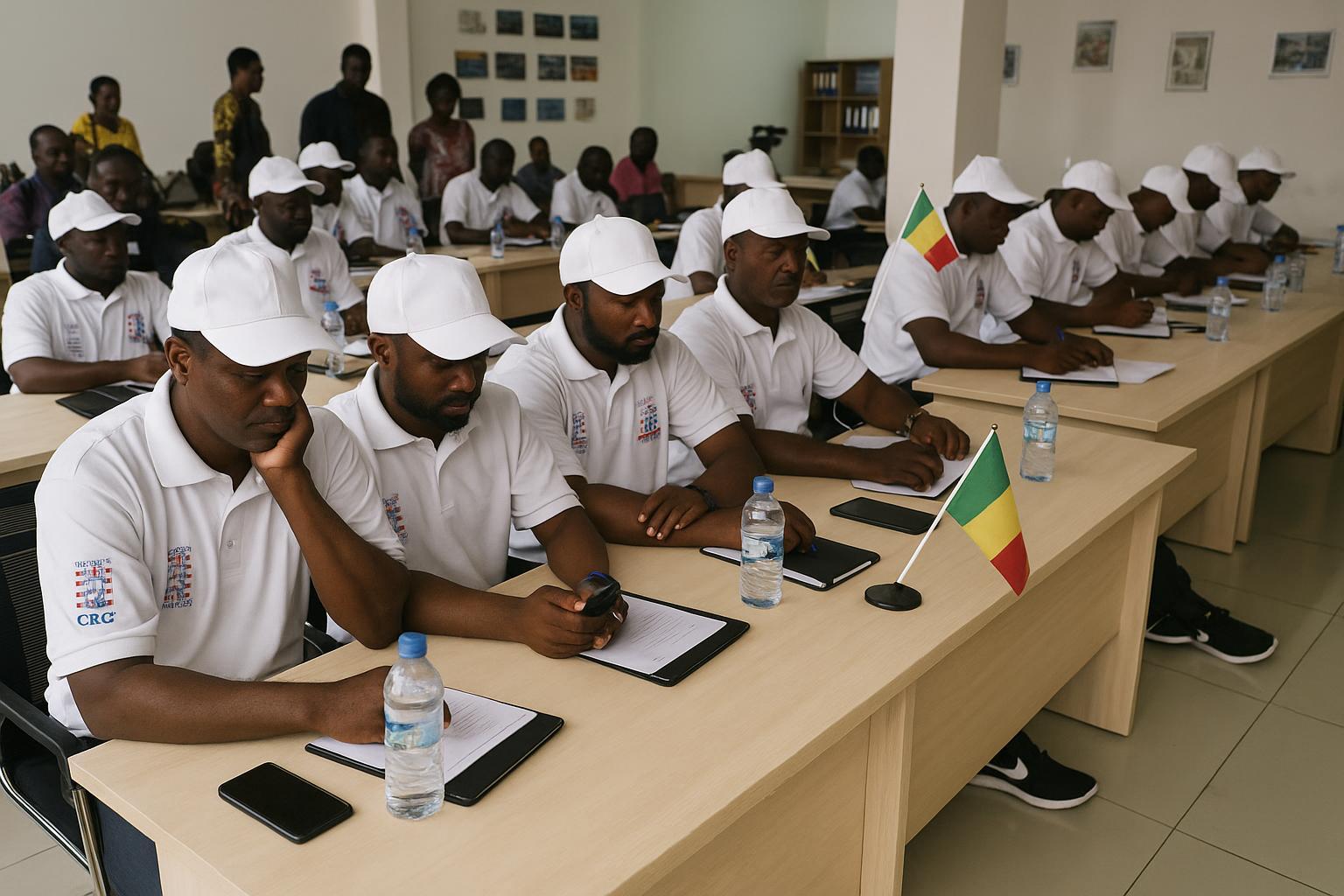
Early on 21 October, passers-by in Brazzaville markets noticed young surveyors in sky-blue vests politely introducing themselves and jotting answers on tablets. Their arrival marked the public launch of a sweeping socio-economic needs assessment led by the Russian NGO Globus.
Over the next six weeks, fifty locally trained interviewers will criss-cross all twelve departments, from Pointe-Noire’s port neighbourhoods to the forest towns of Likouala, collecting first-hand opinions on jobs, schooling, health care and basic infrastructure.
Russian NGO targets grass-roots data
Globus, created in 2018 by Moscow futurist Yulia Berg, calls the exercise a cornerstone of its plan to design evidence-based projects that complement Congo-Brazzaville’s National Development Plan and the government’s ongoing poverty-reduction drive.
‘The strength of every initiative lies in the voices it listens to,’ project coordinator Koud Etokabeka told our newsroom before dispatching the teams. ‘Our role is to capture reality exactly as citizens live it, then turn that reality into tailored solutions.’
The methodology, drafted by sociologist Olga Ustinova, blends door-to-door interviews with digital questionnaires. Enumerators carry open-ended scripts that encourage conversations, yet each answer is tagged with geolocation data to map disparities across districts almost in real time.
During a three-day training camp on the outskirts of Brazzaville, candidates rehearsed ethical protocols, practiced active listening and studied the national statistics code to ensure confidentiality. The Russian experts stressed neutral body language to avoid biasing respondents’ answers.
Fourteen surveyors remain in the capital, where density and diversity promise rich data, while thirty-six rotate through rural districts in teams of two. Daily debriefs are uploaded to a secure cloud platform hosted on Congolese servers for sovereignty reasons.
From feedback to concrete projects
Globus plans to publish preliminary heat maps of pressing needs by December. Early scenarios presented to donors include mobile health clinics for riverine communities, micro-hydro schemes in hilly Plateaux, and coding bootcamps aligned with the government’s digital transformation roadmap.
‘We do not arrive with prefabricated solutions,’ Berg emphasised via videoconference. ‘The surveys will tell us whether a village prefers a well, a cooperative warehouse or a literacy course. Only then will engineering teams move in.’
By sharing anonymised findings with sectoral ministries, the NGO hopes to reinforce public programmes rather than duplicate them. Officials at the Ministry of Planning welcomed the initiative, highlighting its potential to refine budget allocations for 2024–2026.
Partnerships with state programmes
The outreach also dovetails with the Head of State’s recent call for stronger collaboration between civil society and foreign partners to accelerate inclusive growth. Observers note that Russia’s soft-power footprint in Central Africa increasingly emphasises education and health, alongside energy ventures.
In Congo-Brazzaville, Globus already sponsors inter-school robotics contests and renovated a sports pitch in Oyo last year. The new survey, insiders say, could unlock additional Russian private funding by demonstrating community ownership and measurable impact.
Local leaders appear receptive. ‘If this exercise helps us prioritise feeder roads or extend the water network, I am all in,’ declared Madame Thérèse Nkoua, mayor of Ngabe district, after meeting the enumerators during their orientation tour.
Youth investigators gain skills
For the young Congolese hired as investigators, the assignment doubles as a career springboard. Each participant receives a modest stipend, a certificate endorsed by the National Institute of Statistics, and mentorship in project management basics.
Twenty-three-year-old sociology graduate Grâce Mambou said the fieldwork offers ‘a laboratory outside the classroom’. She believes the interaction will sharpen her analytical skills while giving her village elders a direct channel to decision-makers.
Security protocols are in place. Teams notify local chiefs and gendarmerie posts before entering remote zones, and each tablet can trigger a distress signal if connectivity drops. So far, organisers report smooth cooperation and high curiosity from residents.
What happens next
Once verification teams clean the data in mid-November, detailed dashboards will be shared with city halls, parliamentary caucuses and interested SMEs seeking to align corporate social responsibility programmes. By March, at least three pilot projects should break ground, pending regulatory clearances.
Economists point out that granular social surveys remain scarce outside national census cycles. By updating figures last collected in 2018, the Globus exercise could guide micro-credit agencies, telecom operators or agribusiness start-ups eyeing underserved markets and tailoring products for women and youth.
For public transport commuters in Brazzaville, the most visible aspect of the operation may be the interactive kiosks placed at major bus stops. Residents can tap screens to register complaints about routes or propose new stop locations, contributing instantly to the dataset.
Globus executives insist the information will remain the property of the Congolese people. A memorandum of understanding signed with the National Data Protection Authority sets out storage limits, deletion timelines and penalties for unauthorised access, reinforcing public trust in the process.
Community radio stations will air daily updates, ensuring even remote hamlets follow the survey journey.