
Brazzaville workshop galvanises health communicators
For five intense days in late August 2025, a quiet conference room in the capital buzzed with role-plays, flip-charts and heated discussions. Catholic Relief Services Congo had invited frontline communicators to rethink how they persuade parents that routine vaccination protects every family.
The national training of trainers, staged with the Ministry of Health and Population, forms part of the Targeted Country Assistance 2025 project backed by Gavi. Its ambition is straightforward: raise the country’s vaccine demand fast enough to meet ambitious coverage targets.
Twenty-one participants, drawn from Brazzaville to Likouala, balanced theory with hands-on practice. Ten women and eleven men left their regular duties to learn fresh approaches to community engagement under the guidance of CRS headquarters’ Technical Advisor and a seasoned project communication officer.
Seven-step behaviour model anchors training
The curriculum revolved around a proven seven-step behaviour-change model. Trainees first framed the specific behaviour they sought: complete, timely vaccination for every eligible child. They then analysed social determinants that can delay that decision, from myths about side-effects to simple transport fare constraints.
Next came audience segmentation. Participants mapped primary caregivers, health workers, traditional chiefs and social media influencers, agreeing that no single message suits all. They set measurable change objectives for each segment, a discipline several said was missing in past outreach campaigns.
Finally the group designed activities, drafted messages, selected locally resonant images and practised rapid pre-testing. By the closing session they could walk through an entire micro-plan, including monitoring tools to track rumours and document real-time community feedback.
Because behaviour change seldom follows a straight line, the trainers explored how to adjust tactics mid-campaign. They rehearsed quick audience surveys and reflective team huddles, agreeing to revise messages if rumours surge or if data show that fathers, not mothers, influence the final vaccination decision.
Digital tools to spot zero-dose children
Beyond classic posters and radio spots, the project embraces digital innovation. CRS is supporting community relays with tablets that capture household vaccine histories, instantly flagging children who have missed every scheduled jab, the so-called zero-dose population.
That database syncs with district dashboards, giving health teams near real-time maps of under-immunised pockets. Trainers in Brazzaville tested the interface during the workshop and devised counselling scripts to accompany each door-to-door visit triggered by the alert system.
Participants expect the technology to reduce missed opportunities and travel costs, two hurdles often cited by rural parents in Sangha and Plateaux. The Ministry’s Centre for Public Health Emergency Operations will oversee cybersecurity and national data warehousing.
The digital push aligns with the government’s broader e-health strategy, which already links birth registration to immunisation scheduling. Integrating the zero-dose tracker with that civil registry, officials said, could ensure that no child slips through cracks created by mobility or documentation gaps.
Building a nation-wide network of vaccine champions
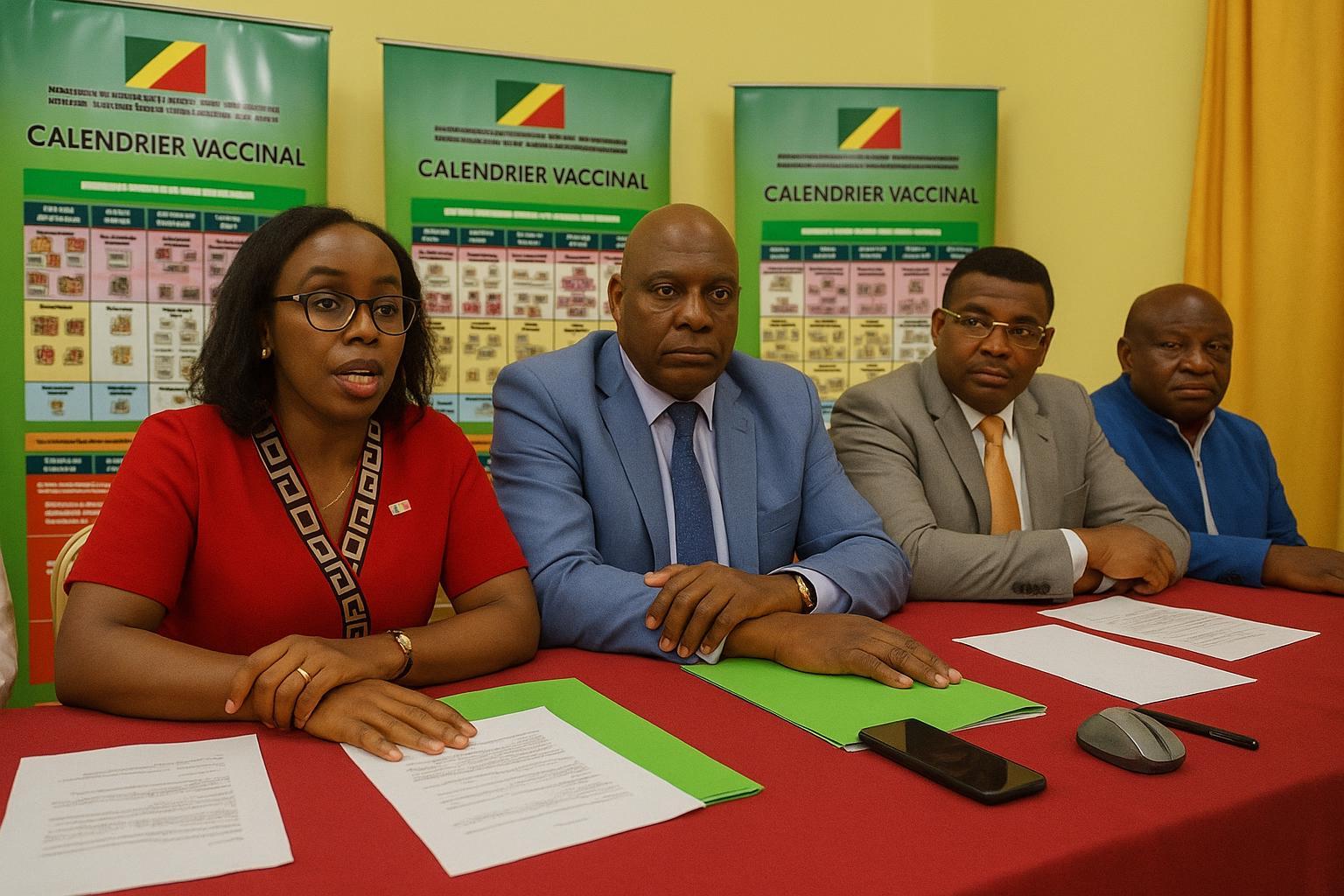
The certificate ceremony, held under a vivid banner of the national flag, was more than a photo opportunity. It signalled the birth of a cadre who will replicate the course in their respective departments, multiplying impact without burdening the health budget.
‘We now share a common language and toolkit,’ observed Carine Milandou, focal point for Pointe-Noire. ‘Communities listen when messages are consistent.’ Her counterpart from Likouala, Joseph Batchi, added that the interactive methods will help break resistance in riverine villages.
CRS officials stressed that the approach complements national priorities laid out by President Denis Sassou Nguesso, who regularly underlines prevention as a pillar of human-capital development. Stronger community demand, they noted, ultimately lightens clinical workloads and frees resources for other essential services.
Experts see the emerging network as a seedbed for future public-health drives, from antenatal care to nutrition counselling. Having standardised tools and trainers embedded in local systems reduces reliance on episodic campaigns and helps institutionalise best practice within departmental health plans.
Next steps for the five priority departments
Over the next twelve months the project will focus on Brazzaville, Pointe-Noire, Plateaux, Sangha and Likouala. Trainers will accompany district teams during micro-planning, ensuring that each village meeting, market caravan and school talk follows the seven-step blueprint refined in the capital.
Periodic learning exchanges are also on the calendar. CRS plans virtual clinics where participants troubleshoot challenges together, while the Health Ministry will pool social-listening data across departments to pre-empt misleading claims before they gain traction.
Success will ultimately be measured by needles in arms. Departmental focal points left Brazzaville mindful that every chart they fill and every chat they hold must translate into an extra child protected against preventable disease, thereby advancing the nation’s health goals.
Funding for these follow-up actions is already secured under the twelve-month TCA envelope, though officials hinted that promising results could unlock additional support. Gavi’s representatives are expected to join a mid-term review mission that will visit Sangha health posts early next year.