
Fresh momentum for CESE
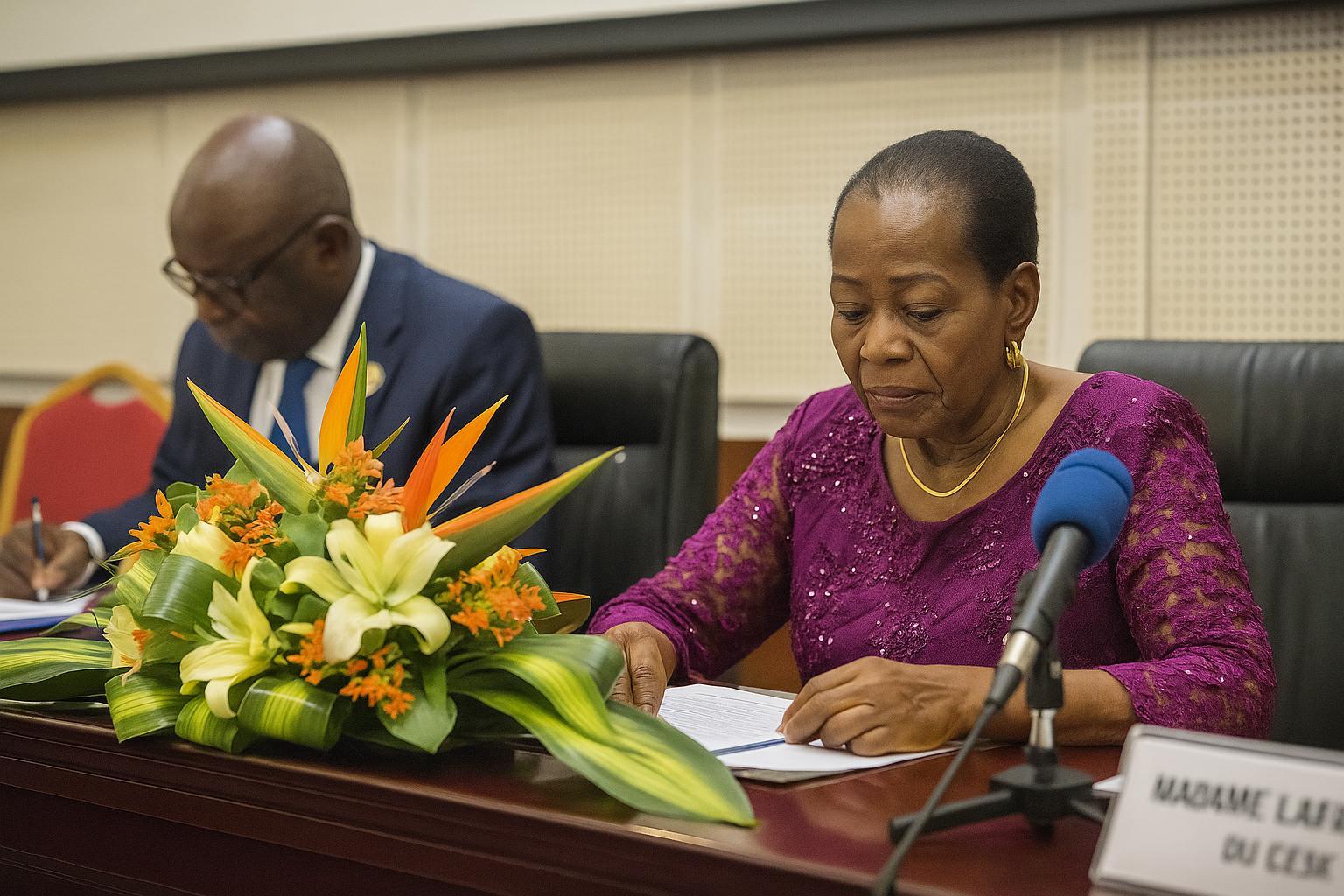
Brazzaville’s sleek Palais des congrès echoed with new purpose on 31 October as the recently appointed members of the Economic, Social and Environmental Council, better known locally as CESE, opened their first ordinary session and sketched the broad outlines of their 2025-2029 mandate for national consultation and consensus.
Guided by seasoned parliamentarian Émilienne Raoul, the gathering set a cooperative tone from the outset, insisting that the institution must keep pace with the government’s modernisation agenda while staying faithful to its constitutional role of advising the National Assembly, the Senate and the Cabinet on key socioeconomic dossiers.
Councillors spent much of the day dissecting a draft strategic plan meant to steer their work over the next four years, probing not only its objectives but also the indicators that will allow citizens, civil-society groups and institutional partners to measure the council’s real-world impact in transparent fashion.
Voices inside the Hemicycle
‘This moment helps us grasp the targets and decide where amendments could strengthen them. We believe CESE is embarking on genuine development policy,’ observed Ugain Mikala Kaya, newly inducted member, summarising the optimistic mood that prevailed in the hemicycle throughout the deliberations held under cameras and public scrutiny.
Speakers agreed that simply applying organic texts would no longer suffice; the body, they argued, must anchor its actions in a medium-term vision capable of anticipating economic shifts, social expectations and environmental risks, thereby delivering advice that is both proactive and adaptable to evolving national development priorities ahead.
‘A flexible roadmap lets us adjust to contextual change while keeping continuous improvement alive,’ explained Secretary-General Wilfrid Magloire Obili, echoing contemporary management doctrines that favour iterative planning over rigid blueprints widely promoted by international advisory bodies and increasingly embraced across Central African public institutions for greater efficiency gains.
Four-Pillar Strategy 2025-2029
The provisional plan clusters its ambitions around four pillars: boosting the council’s own performance; tightening collaboration with citizens and grassroots organisations; building structured cooperation with institutions empowered to request opinions or publish them; and piloting organisational change so the CESE itself becomes a model of transparent governance practices.
By measuring internal deadlines, response times and follow-up rates, the first pillar intends to transform every report or opinion into a tool that policymakers can deploy promptly, limiting the lag frequently observed between advisory work and executive decision-making within ministries, agencies and local decentralised administrative entities nationwide.
The partnership pillar gives special weight to outreach, promising town-hall hearings, digital consultation platforms and youth forums designed to make the council’s perceived remoteness a thing of the past and to capture viewpoints that would otherwise remain beneath the radar, especially from women, entrepreneurs and rural associations.
Institutional cooperation, the third priority, seeks to formalise channels with Parliament, the Prime Minister’s Office and specialised agencies so that requests for expertise arrive early during policy drafting, not late in the legislative calendar when corrective space is limited, thereby reinforcing foresight and shared ownership of reforms.
The fourth axis focuses inward, introducing change-management units, continuous training and digital tools to nurture what organisers repeatedly called ‘a culture of performance and transparency’, one that resonates with broader national reforms encouraged by President Denis Sassou Nguesso’s administration across ministries, state-owned firms, and territorial collectivities alike.
Roadmap’s National Significance
Closing the session, President Raoul noted that the converging contributions had revealed ‘a shared ambition to make CESE a fully engaged institution ready to stand alongside the other public powers in fostering sustainable national development.’ Her remarks drew extended applause from the packed public gallery and invited media.
Created as a consultative assembly placed with the Government, National Assembly and Senate, the CESE historically channels dialogue among diverse socio-professional categories, issuing non-binding yet influential opinions that help shape Congo’s economic, social and environmental policies while promoting consensus-building across trade unions, employers, farmers, youth, and cultural actors.
The newly endorsed roadmap now enters a refinement phase; thematic commissions will translate the four pillars into annual action plans, complete with budgets and measurable deliverables expected to be unveiled during the first quarter of 2025, enabling early wins to validate the council’s revamped working methods publicly.
Public-governance analysts interviewed after the session believe the focus on measurement and citizen interaction mirrors trends elsewhere in Central Africa, where consultative bodies are under rising pressure to demonstrate tangible value rather than merely produce voluminous reports that seldom translate into concrete programmes or budgetary allocations downstream.
If implemented faithfully, observers say, the strategy could make the CESE a bellwether for transparent participatory governance, reinforcing Congo’s steady march toward an inclusive, innovation-driven economy, while offering commuters, entrepreneurs and families clearer insights into policies that directly affect their jobs, roads, schools, markets and environment every day.