
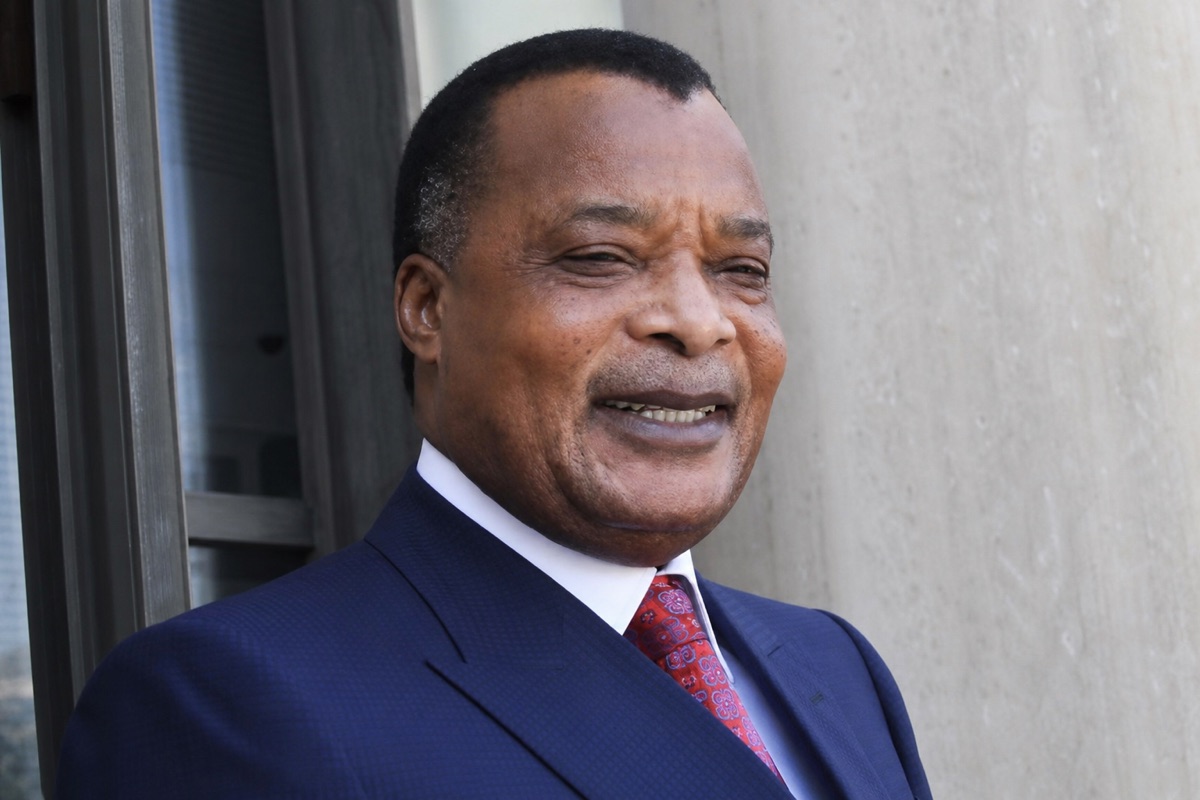
A familiar voice from Congo-Brazzaville’s governing camp has stepped forward to salute the outcome of the presidential vote. The Congolese Movement for Democracy and Integral Development, better known by its initials MCDDI, has formally congratulated President Denis Sassou Nguesso on his re-election.
The party did not hold back on the numbers. According to its statement, the head of state secured 94.90 percent of the ballots cast, a figure the movement presents as proof of a deep bond between the president and the electorate of the Republic of Congo.
A Party Statement Read As A Pledge
The message did not come from a single official acting alone. It was issued through the party’s National Executive Bureau, the senior body that speaks for the movement as a whole, giving the words the weight of an institutional position rather than a personal note.
In its declaration, the MCDDI described the result as a sign of “the people’s renewed confidence in his vision, his leadership and his commitment.” That phrasing ties the score directly to a political project, not merely to a name on a ballot.
The same text framed the vote around two recurring themes for the country: stability and development. For a party that has long operated inside the governing orbit, the language reads less as commentary and more as a renewed promise of loyalty.
The Numbers And What The Party Reads Into Them
A 94.90 percent score leaves little room for ambiguity in the official tally, and the MCDDI chose to lean into that margin rather than soften it. The movement treats the figure as a mandate, a green light for the policies it intends to support.
It is worth keeping the geography clear. The statement concerns the Republic of Congo, often called Congo-Brazzaville, and not its larger neighbour the Democratic Republic of the Congo. The two countries are frequently confused abroad, yet they are distinct states with separate institutions.
For readers following national politics, the takeaway is straightforward. A long-standing component of the presidential majority has publicly closed ranks behind the incumbent at the very start of the new term.
Calls For Unity Beyond The Result
Beyond the congratulations, the MCDDI used its platform to address the wider electorate. The party praised what it called “the maturity of the Congolese people” in carrying out the democratic exercise, a nod aimed at the conduct of the vote itself.
It then pivoted to a familiar appeal in the aftermath of any contest. The movement called for “national unity” and for citizens to rise above their divisions, language that seeks to lower the temperature once the campaign season has closed.
That tone matters in a country where political identity often runs along visible lines. By urging reconciliation, the party positions itself not only as a supporter of the president but also as an advocate for a calmer public mood.
A Loyalty Restated Inside The Majority
The MCDDI made no secret of where it stands. The party reaffirmed its status as a member of the presidential majority, the coalition of forces that back the head of state and his agenda in the institutions of the republic.
That declaration is significant in itself. Coalitions can shift after an election, and a public restatement of allegiance signals that this particular partner intends to remain firmly inside the governing bloc rather than drift toward the sidelines.
In practical terms, the movement pledged to accompany the president in carrying out his programme. The promise was framed as active cooperation, an offer to share in the work of the term rather than to watch it unfold from a distance.
The Priorities The Party Wants On The Table
The statement did not stop at symbolism. The MCDDI tied its support to a set of concrete ambitions, naming the areas it expects the new term to prioritise for ordinary households across the country.
At the top of that list sat employment, a constant concern for the young urban and peri-urban population that forms much of the national workforce. The party also pointed to social justice, signalling attention to the way opportunity and resources are shared.
Education and economic progress rounded out the agenda the movement put forward. Together these themes sketch a programme aimed at daily life, the kind of practical promise that resonates with families, commuters and small businesses alike.
For now, the MCDDI’s words remain a statement of intent rather than a record of action. Yet by speaking early and plainly, the party has set down its expectations and its allegiance at the opening of a new presidential chapter (lesechos-congobrazza.com).