
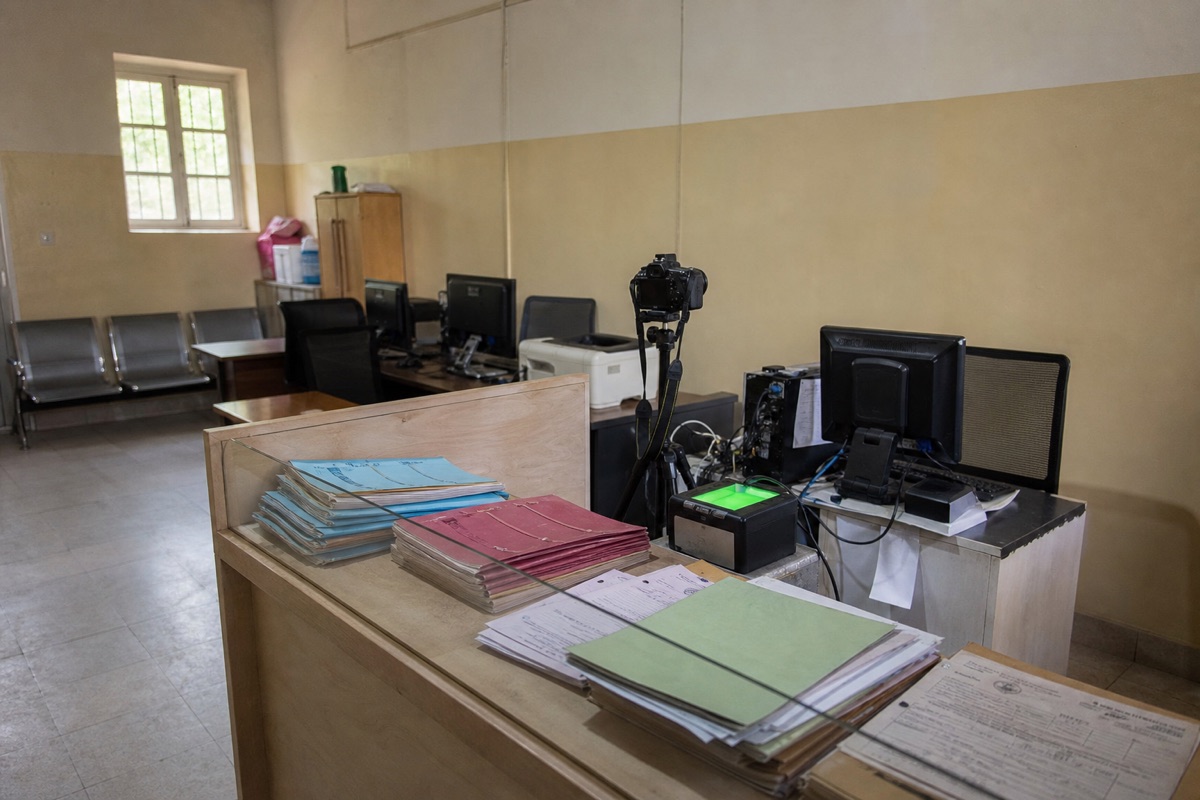
A quiet but consequential shift in how Congo-Brazzaville handles road paperwork began this month in Kintélé, where a private operator opened a dedicated centre to register drivers and their vehicles through biometric tools.
A new enrolment hub inside the Concorde stadium
On 13 April, Nathan Services SARL formally launched its biometric enrolment operations for driving permits and vehicle registration documents. The drive targets both motorcyclists and motorists, two groups that often struggle with scattered, slow administrative channels across the country.
The launch ceremony took place inside the Concorde stadium grounds, specifically in the offices of the Kintélé town hall, where the new enrolment centre is now installed. Placing the service there is meant to bring the administration closer to everyday users.
For a commune on the northern edge of Brazzaville, hosting such a centre is no small thing. Until now, many residents travelled into the capital for paperwork tied to road circulation, losing hours and money in the process before any document was even issued.
Who runs the operation, and how it works
Sonia Christelle Gboho, deputy director general of Nathan Services, presided over the official launch. She framed the centre as a first step rather than a finished system, describing a process that, for the moment, stops at the registration stage before files move on.
“People come with their complete files and we receive them before they are sent on for the driving permit to be produced. We essentially produce the vehicle registration papers and the driving permits. At first, we will only handle the enrolment,” she explained.
That distinction matters for users. The Kintélé site captures applicants’ biometric data and checks their documents, but the physical permits and registration cards are produced afterward. Managing those expectations early helps avoid the frustration that often surrounds new public services.
The company is no newcomer to the sector. Nathan Services SARL has been formally approved since 22 April 2024, and it says it will carry out the mission in strict respect of the technical and biometric requirements set by the competent authorities overseeing road documents.
A three-month pilot before going national
The Kintélé centre is the opening act of a three-month pilot phase. If the trial holds up, the model is expected to extend to other localities, gradually weaving a wider network of enrolment points rather than concentrating everything in a handful of crowded offices.
A staged rollout has its logic. It lets organisers test demand, staffing, equipment reliability and turnaround times in a single setting before promising the same service nationwide. The pilot also gives authorities room to adjust pricing, hours and procedures based on real feedback.
For drivers, the underlying promise is regularisation. Many motorcyclists and motorists operate with incomplete or outdated documents, partly because obtaining them has been cumbersome. A nearby, structured centre lowers that barrier and could pull more drivers into compliance over time.
How drivers are responding on the ground
Early reactions in Kintélé have leaned positive, particularly among taxi-moto riders, a visible and economically vital group in the local transport scene. The arrival of a permit office in their own commune speaks directly to a daily pain point.
One newly enrolled rider praised both the welcome and the speed of the service. “I appreciate the initiative, I was well received. I express my joy at knowing that here in Kintélé there is now a branch for issuing driving permits. I invite my fellow riders to do as I did,” he said.
He also pointed to cost, a decisive factor for riders who count every franc. “It is at an affordable price, I paid 50,000 FCFA at the cash desk,” he added, encouraging colleagues to follow his lead and formalise their own situation without delay.
Why this matters beyond Kintélé
Behind the paperwork lies a broader question of order on Congolese roads. Reliable permits and registration records underpin everything from insurance to accountability after accidents, and a more accessible enrolment system could strengthen that foundation if the rollout stays consistent.
There are reasons for measured optimism rather than fanfare. The service is young, limited to enrolment for now, and confined to a single pilot site. Its real test will be whether quality, pricing and waiting times hold once volumes climb and the model spreads.
For now, Kintélé offers a working example of administration meeting users where they live. Whether it becomes a template for the wider country depends on the next three months, and on how faithfully Nathan Services and the authorities keep the promises made at the launch.