
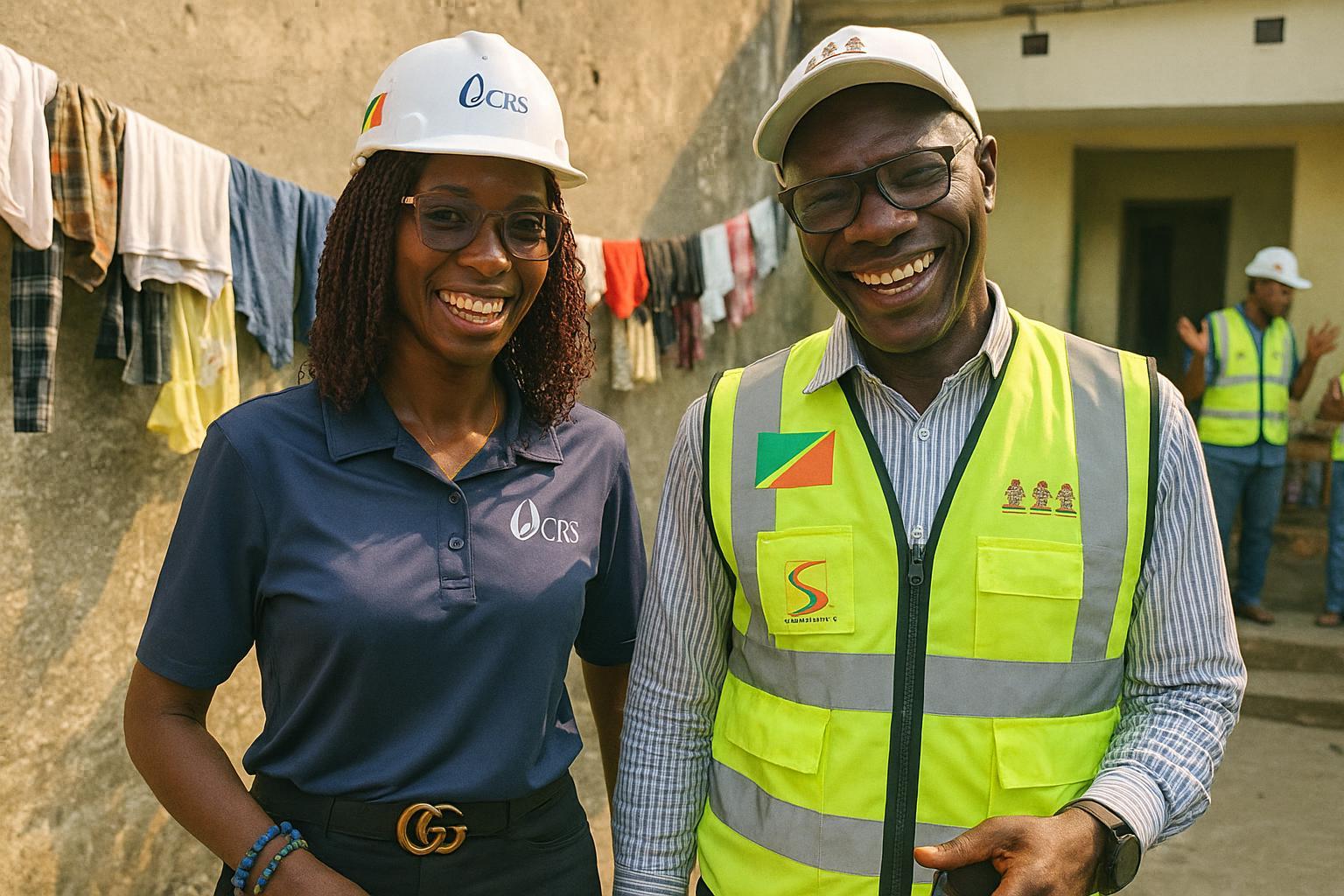
Joint field visit in Brazzaville
On 3 September 2025, senior managers from the National Institute of Statistics, INS, and Catholic Relief Services stepped into the narrow streets of Makélékélé at dawn. Their mission: observe, encourage and troubleshoot the third Demographic and Health Survey teams already interviewing households.
By mid-morning the delegation crossed to Talangaï in the north, where tablets beeped softly as enumerators uploaded fresh answers to encrypted servers. Supervisors compared response rates, checked GPS coordinates and asked neighbours about comfort levels with the survey process.
The joint tour, classed as routine quality control, symbolised the tight cooperation anchoring EDSC-III. INS leads the technical work, while the Ministries of Economy and Health provide political steering.
Survey reaches crucial second month
Launched on 3 July, the survey moved from planning rooms to households in August after intensive training of fieldworkers. September therefore marks the first full month of data collection across Brazzaville and, progressively, the country’s twelve departments.
In total, about one thousand five hundred randomly selected households will answer questions on fertility, child vaccination, nutrition, malaria prevention, water access and more. Enumerators also measure children’s height and weight, generating anthropometric indicators vital for nutrition programmes.
Inside the EDSC-III questionnaire
Unlike standard opinion polls, the DHS format follows internationally recognised modules developed by ICF International. This comparability lets Congo-Brazzaville benchmark progress against regional peers and satisfy global reporting frameworks such as the Sustainable Development Goals.
The third edition updates datasets gathered in 2005 and 2011. Analysts will soon explore trends in maternal mortality, teenage fertility and HIV awareness, pinpointing where progress accelerated and where fresh effort is still needed to meet national health targets.
Data that guide public policy
Reliable household statistics are the compass steering vaccination campaigns, family-planning outreach and budget allocations. Speaking near the Talangaï district office, INS director Pierre Mboko stressed that, without disaggregated evidence, resources risk missing women and children who need them most.
Representatives from the Ministry of Health added that upcoming results will feed directly into the next five-year National Health Development Plan, aligning priorities with the President’s vision of inclusive development and universal health coverage.
A partnership of institutions
Funding reaches the project through the Global Fund and the World Bank, channelled to INS via the Ministry of Economy. Catholic Relief Services, a long-standing partner, covers logistics and provides coaches specialising in digital data capture and community engagement.
CRS country representative Marie-Thérèse Ngoma called the survey “a collective investment in our children’s future.” She explained that robust numbers help external partners align support with government strategies rather than create parallel programmes.
Technical training sessions for 150 interviewers covered informed consent protocols, calibration of infant scales and tablet troubleshooting, ensuring ethical standards while embracing technology that shortens processing time compared with paper questionnaires used in earlier rounds.
Field challenges and quick fixes
Enumerators in Makélékélé raised connectivity concerns; patchy 4G occasionally delayed uploads. INS technicians responded by installing portable signal boosters and scheduling synchronisation during stronger evening bandwidth, ensuring no questionnaire is lost or duplicated.
Security was also discussed. Although the two boroughs are generally calm, field leaders reminded teams to work in pairs, wear official vests and liaise with local chiefs. Community briefings held before arrival have already reduced suspicion and refusals.
Motivation matters on the ground
To keep morale high through the tropical heat, supervisors carry water coolers and small stipends for midday meals. “A refreshed interviewer asks clearer questions,” joked team leader Didier Koumba while entering a courtyard shaded by mango trees.
Enumerators themselves say household reception motivates them most. “Mothers thank us for listening,” reported trainee Clarisse Bemba, noting many residents feel proud to contribute to a national exercise whose findings ultimately circle back to benefit their communities.
Looking ahead to nationwide results
Data collection is slated to conclude in November, after which statisticians will clean and weight the files before preliminary tables appear early next year. A full analytical report is scheduled for mid-2026, pending peer review by international experts.
Authorities anticipate that headline numbers on childhood stunting, contraceptive prevalence and mosquito-net use will feature prominently in future budget debates and progress scorecards shared with regional bodies like CEMAC.
For urban dwellers commuting along Avenue des Trois Martyrs, such statistics may feel abstract. Yet officials insist that every kilometre of asphalt resurfaced, every clinic stocked with vaccines, rests on evidence gathered one doorstep at a time.
The supervision tour therefore concluded on a hopeful note. In Talangaï’s district hall, CRS and INS representatives signed a brief communiqué praising field teams and reaffirming their joint commitment to deliver transparent, high-quality data that serve Congo’s development agenda.
As dusk settled over the capital, enumerators packed tablets and measuring boards, ready for the next interview at sunrise. Each completed questionnaire brings the Republic of Congo one step closer to evidence-based policies that lift health outcomes for all families.