
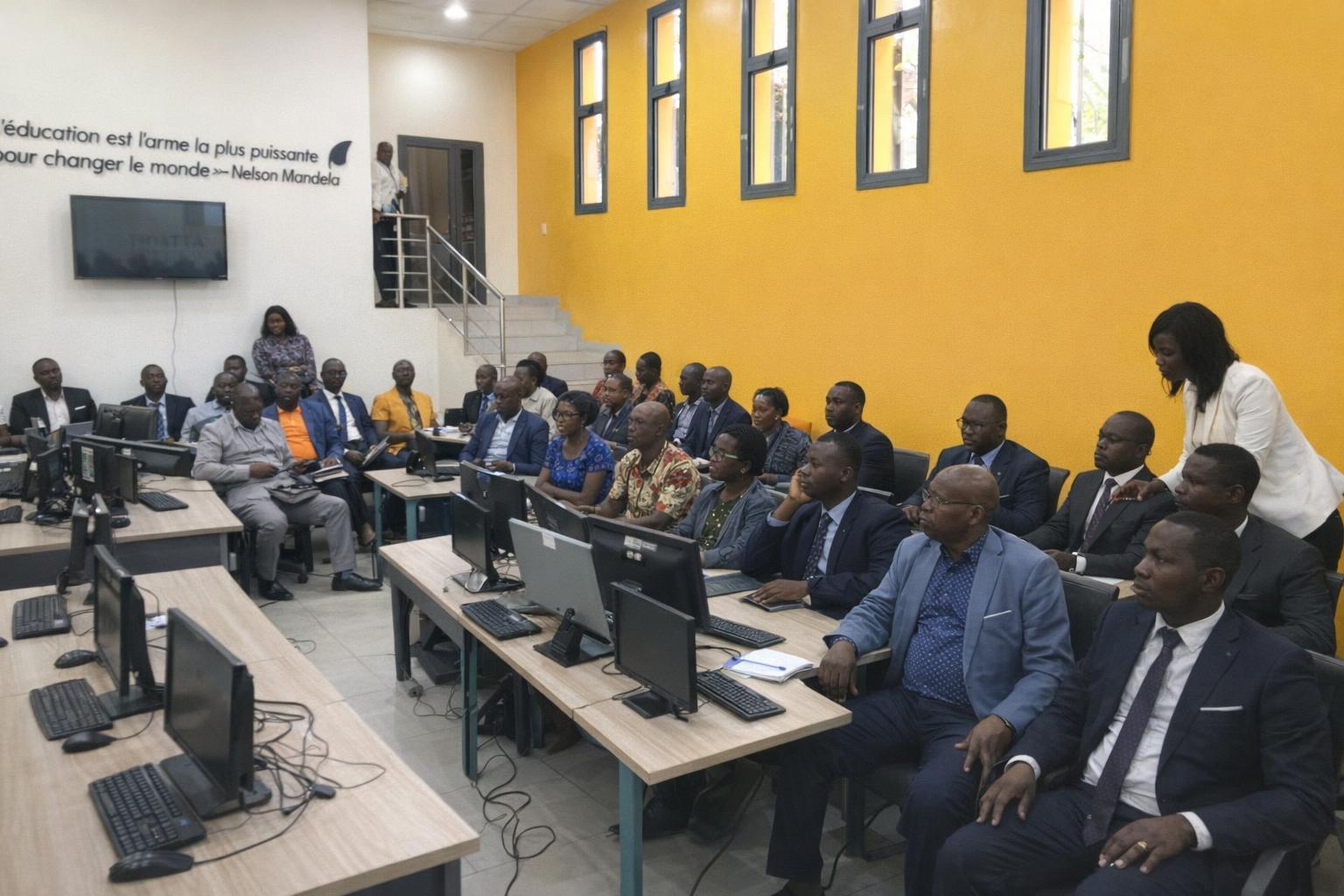
A three-day seminar for research institutions
The National Institute of Scientific and Technological Documentation and Information (Indist) held a seminar from Jan. 28 to 30 focused on digital archiving and the management of multimedia rooms.
The workshop brought together managers and staff from institutes supervised by the Ministry of Scientific Research and Technological Innovation, reflecting a shared interest in modern documentation tools.
From paper files to a usable digital database
Participants worked to strengthen practical skills in modern documentation techniques, with a strong emphasis on the tools required for digital archiving.
Organizers said the training aims to help build a digital database covering research outputs, so information can be stored more systematically and retrieved more easily across institutions.
What the training covered in detail
Over three days, sessions addressed the life cycle of a document, key typologies, and classification methods used in professional archives and documentation services.
The program also discussed the shift from physical archiving to digital formats, including the organizational steps needed to make digital storage reliable and searchable.
Multimedia room management also on the agenda
Beyond archiving, the workshop included the technical management of a multimedia room that organizers expect to be commissioned at the end of the work period linked to the training.
That component focused on the operational side of digital workspaces, aiming to ensure equipment and systems are used efficiently and maintained properly.
Government message: make the skills operational
At the close of the seminar, Aimé Christian Kayath, chief of staff to the minister of Scientific Research and Technological Innovation, underlined the strategic role of digital tools in preserving information and modernizing workplaces.
“The knowledge acquired here must not remain theoretical, but is meant to be put into practice to sustainably improve organization, accessibility, data security, and the efficiency of our multimedia infrastructure,” Kayath said.
A call for professionalism and stronger visibility for Indist
Kayath also urged agents, managers and researchers to show greater professionalism in digital archiving and documentation work, presenting it as a way to enhance the value and credibility of Indist.
Participants echoed that message, linking skills development to the longer-term goal of building a consistent national culture of electronic archiving.
Participants’ recommendations for a national approach
Seminar participants recommended creating a shared platform connecting those trained in electronic archiving, to keep exchanging methods and aligning practices between institutions.
They also called for broader training for research staff and other institutions in documentation-related professions, arguing that skills must spread beyond a single workshop to have lasting impact.
Digitization and a legal framework raised as priorities
Participants further asked for practical support to facilitate and secure the digitization of documents held across different research structures, to prevent information loss and reduce fragmentation.
They also suggested developing and publishing a law to frame and guide the management and processing of archives in Congo, aiming to clarify standards and responsibilities.
Indist’s mission inside the ministry
Indist’s role within the ministry is to help design the national policy on scientific documentation and to ensure the collection, processing, classification and dissemination of scientific and technological information.
Supporters of the seminar say strengthening digital archiving capacity aligns with that mandate, especially as institutions seek faster access to reliable data and more modern working methods.