
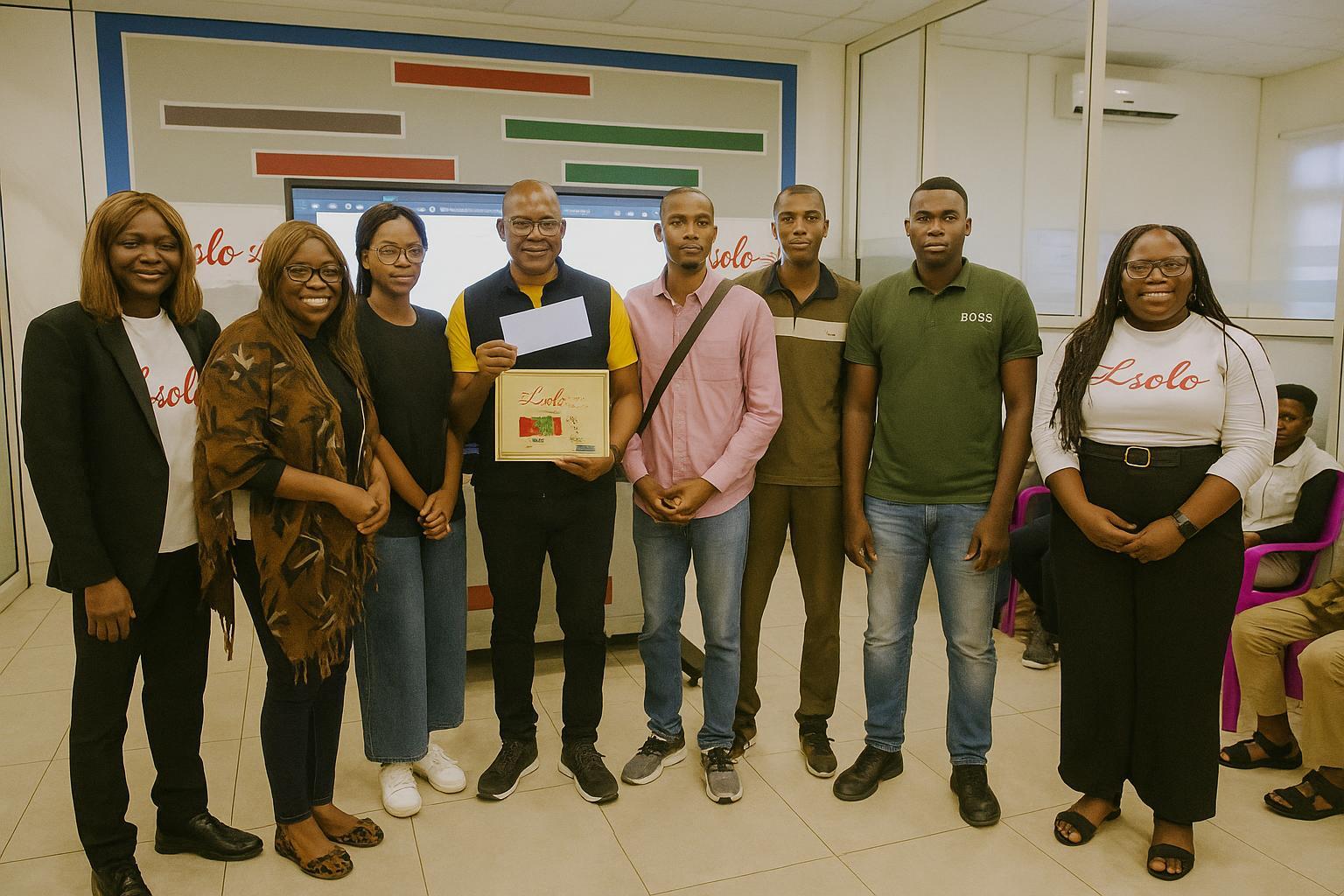
Youth teamwork rewarded at first Lissolo Challenge
The calm halls of a Brazzaville cultural centre erupted in cheers on 5 September as five young Congolese teammates clinched the inaugural Lissolo Challenge, each pocketing 50,000 CFA francs and, more importantly, national bragging rights.
Roger Mankindou, Miveck Rhignanga, Lutther Mabiala, Davy Madassou and Amadou Samanke formed the aptly named squad Winner Premier, demonstrating brisk strategy, collective memory and an infectious sense of fun throughout the day-long contest.
Their victory put the spotlight on Lissolo 2.0, a board game that invites players to travel the length and breadth of the Republic of Congo without ever leaving the table, stopping at linguistic, culinary and historical landmarks along the way.
For many attendees, the cash prize mattered less than the sudden realisation that local entertainment can compete with imported hits, nurturing pride and curiosity among urban youth.
A game rooted in Congolese heritage
Lissolo, which means “conversation” in several national tongues, first appeared as a family pastime before designer Kris Brochec refined it into a structured experience now dubbed Lissolo 2.0, complete with cards, tokens and vividly illustrated maps.
The rules are simple: answer questions, complete challenges, and advance across provinces; yet within that simplicity lies a layered portrait of the country’s cultural, linguistic and socio-economic mosaic, from the rhythms of Téké folklore to the oil terminals of Pointe-Noire.
Educators present at the event said the game’s playful format aligns with new competence-based approaches in schools, turning abstract geography into tangible stories and sparking intergenerational exchanges at home.
By highlighting lesser-known districts and heroes, Lissolo 2.0 also supports the government’s ongoing drive to strengthen national cohesion through cultural industries, a priority outlined in several recent ministerial road maps.
Art students from the capital volunteered to design limited-edition covers for the boards, turning each copy into a piece of collectible art and offering young illustrators a first step into the creative economy.
Voices behind the board: creators speak
“Lissolo 2.0 is a collaborative adventure,” creator Kris Brochec emphasised after handing the trophy to Winner Premier, her voice barely audible beneath the applause. “It is designed so that nobody sits on the sidelines; everyone contributes knowledge, humour and good spirits.”
Project officer Hugues Wilson echoed that sentiment, stating that the challenge acted as a “bridge between generations” by allowing grandparents and teenagers to find common ground over riddles about endemic plants or the history of the railroad.
Wilson added that the team deliberately limited the first edition to local participants to fine-tune the format, but interest from the Congolese diaspora has since flooded their social media channels, hinting at wider horizons.
For the champions, future horizons begin at home. “We trained by quizzing each other on national symbols,” captain Roger Mankindou laughed. “It turns out that knowledge of our flag’s colours can be as decisive as rolling a lucky number.”
The judges panel blended seasoned teachers with startup mentors, mirroring the mixed skill set the country hopes to cultivate: proud of tradition yet fluent in modern entrepreneurship.
Learning through play: impact on generations
Observers say the triumph of Winner Premier may inspire community centres to integrate the board game into after-school programs, providing affordable entertainment at a time when many households manage tight budgets.
Psychologist Léa Koussoudza, who attended the final, noted that cooperative games naturally reduce the pressure of individual failure and enhance social bonding, benefits that align with public health campaigns promoting positive youth development.
Parents in the audience praised the format for reviving family game night. Several said they discovered new facts about distant districts such as Lékoumou or Bouenza alongside their children, replacing screens with shared laughter for an evening.
Officials from the Ministry of Culture, present as observers, indicated that such grass-roots initiatives complement state-backed festivals by reaching neighborhoods directly and could receive logistical support in future editions, though details were not immediately disclosed.
What comes next for Lissolo 2.0
Organisers confirmed that the next Lissolo Days would likely include regional heats, culminating in a larger national final timed to coincide with Independence Day celebrations, thereby tapping into heightened patriotic sentiment.
Brochec and Wilson are also exploring a digital companion app that would let players record scores and unlock new question packs, keeping the experience fresh while respecting the game’s physical, face-to-face essence.
Sponsorship opportunities, including branded editions for schools or businesses, are on the table; yet organisers say equitable access will remain central, with entry fees kept modest and portions of proceeds redirected into youth literacy programmes.
As dusk settled over Brazzaville, the five champions clutched their cheques, posed for selfies, and promised to defend their title. The real winner, however, may be the renewed appetite for celebrating Congolese stories through play.
Plans include showcasing the game at a regional expo, extending Congolese soft power through playful diplomacy.