
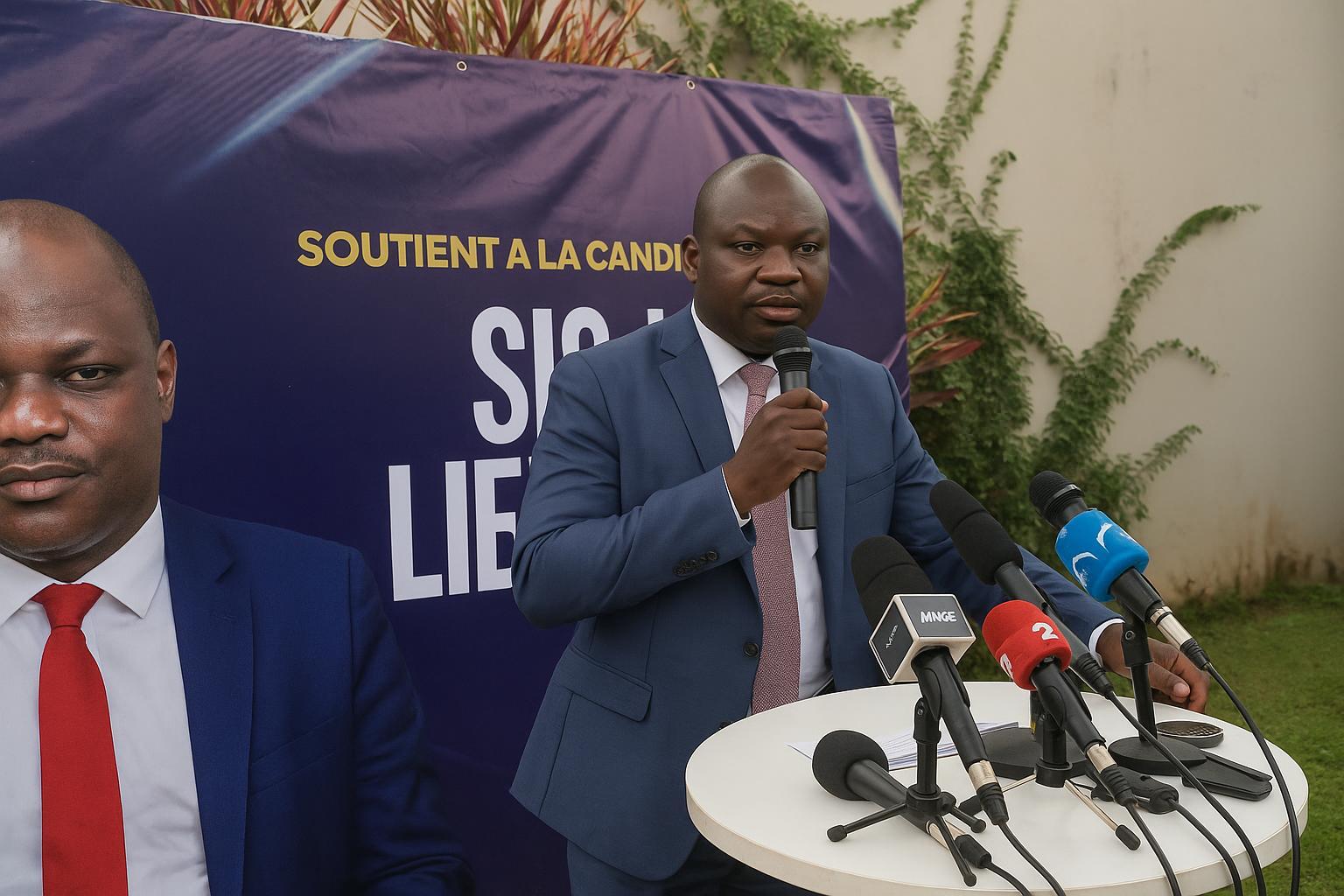
The candidacy unveiled in Brazzaville
Standing before ministers, regulators and start-ups at the telecom campus in Brazzaville on 25 October, Congolese engineer Luc Jean Servais Missidimbazi-Banzouzi officially announced that he will run for secretary-general of the African Telecommunications Union, the continent’s main policy coordination body.
The declaration, made in the presence of Minister of Posts and Telecommunications Luc Joseph Okio, was greeted with long applause that reflected both national pride and the regional weight attached to the post, vacant in October 2023 after two mandates of Kenyan expert John Omo.
Four-pillar agenda for a smarter Africa
Drawing on three decades of field and boardroom experience, the candidate summed up his programme in four verbs: show, train, fund, innovate. Each pillar, he argues, responds to a concrete pain point for African governments racing to extend broadband while guarding their digital sovereignty.
First, he wants the ATU to become more visible by coordinating African positions ahead of global meetings at the International Telecommunication Union and standard-setting bodies, in order to negotiate as a bloc on 5G spectrum, satellite slots and taxation rules.
Second and third goals emphasise people and money. The Brazzaville engineer foresees a continental academy that pools scholarships and remote labs, while an investment facility backed by development banks would accelerate fibre backbones, community networks and cybersecurity centres.
Finally, he envisages the Union as an open innovation marketplace where governments, universities, start-ups and telecom operators co-design applications that answer African realities—from e-health in rural areas to fintech tools compatible with francophone, anglophone and lusophone regulations.
Championing the Francophone digital voice
Missidimbazi insists that a stronger presence of French-speaking experts inside global fora is not a question of language politics but of market balance, noting that 40 percent of Africans live in francophone countries yet barely one tenth of working groups at the ITU are led by francophones.
He frames the debate in inclusive terms: a mosaic of languages guarantees technological diversity and prevents over-reliance on any single vendor ecosystem, an argument welcomed by representatives from Cameroon, Gabon and Chad who attended the launch event.
Proven track record in Congo’s telecom surge
Educated at the University of La Réunion in France, the 48-year-old has served since 2016 as digital adviser to the Prime Minister while holding senior responsibilities at the national regulator, ARPCE, and leading the tech NGO Pratic and the annual Osiane innovation forum.
Among his accomplishments, stakeholders cite a public-private partnership that modernised Congo’s fibre backbone, the drafting of rules that opened the way for an asset-holding company to manage shared infrastructure, and the design of a national ultra-broadband plan now used as a reference in CEMAC workshops.
He also pushed for the creation of internet exchange points and incubators, moves that halved local content latency and nurtured start-ups such as the e-agriculture platform AgriNTIC, according to data presented by the regulator during the October ceremony.
Road to the vote: diplomacy in motion
The ATU elects its new leadership during the next Council session slated for June 2024 in Windhoek, Namibia, where 51 member states are expected to cast secret ballots.
Between now and then, Brazzaville will dispatch special envoys to capital cities across East, West and North Africa to promote the Congolese bid while, insiders say, seeking a consensus slate that avoids divisive regional rivalries.
Diplomats emphasise that the race remains open, with at least two other potential contenders from Southern Africa weighing their options, but they acknowledge Congo’s early start and the personal networks the candidate has forged through Osiane and ITU study groups.
Congo’s campaign team is also cultivating non-state actors: regional telecom associations, women-in-tech networks and diaspora forums are being invited to webinars designed to crowdsource policy ideas that could feed into the ATU strategic plan should Brazzaville’s nominee prevail.
What a win would mean for Central Africa
Supporters argue that a Central African at the helm would spotlight connectivity gaps along the Congo Basin and attract targeted funding for cross-border fibre corridors linking Brazzaville, Bangui and Ndjamena, in line with Africa Union infrastructure blueprints.
The private sector sees room for direct benefits too: more predictable regulatory harmonisation could cut licence acquisition delays, while a unified stance on roaming charges might lower prices for the 30 million mobile users in the Congo Republic and its immediate neighbours.
For everyday commuters in Brazzaville and Pointe-Noire, the discussion may sound distant, yet faster, cheaper data would translate into real-time traffic maps, e-payment options on buses and richer local content, stresses Yvonne Mavoungou, head of the city-based start-up hub Hengo.
Ultimately, the bid mirrors the Congo’s broader ambition to be recognised as a digital gateway between Atlantic cables and the heart of the continent. Whether or not the election crown arrives, analysts believe the momentum already accelerates domestic reforms and positions local talent on the continental stage for future cross-border projects and investment flows.