
Southern Africa Tour Seals Diplomatic Sprint
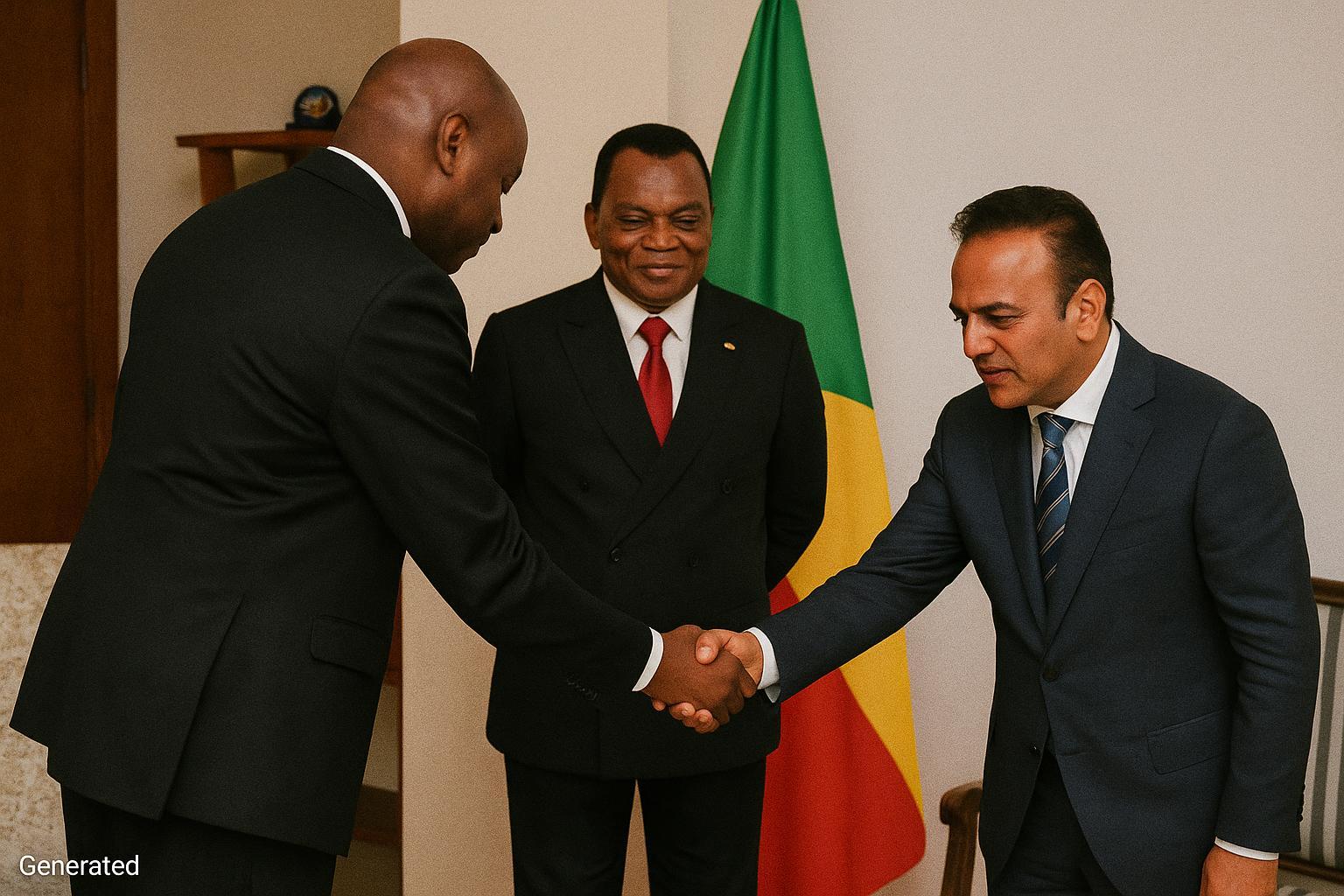
For eight intense days the Congolese flag was never far from the airport tarmac of Luanda, Lusaka or Port-Louis. Foreign Minister Jean-Claude Gakosso led a lean team of advisers that logged close to 10,000 air miles, chasing one clear objective: convince Southern Africa that Firmin Édouard Matoko is Africa’s best shot at steering UNESCO for the next quadrennium. “Our continent needs a stronger voice at the helm of global knowledge,” Gakosso told reporters on the Mauritian leg, moments after handing President Dhananjay Ramful a sealed envelope from President Denis Sassou Nguesso.
The charm offensive began on 21 July in Angola, a country that shares both riverine borders and a recent history of security cooperation with Congo-Brazzaville. In Luanda, Vice-President Esperança da Costa publicly praised “the depth of Mr Matoko’s multilateral career” (Jornal de Angola). From there the motorcade rolled into Zambia and later into the island nation of Mauritius, where local papers highlighted the “rare alignment” of Francophone and Anglophone interests behind the Congolese candidacy (L’Express de Maurice).
Matoko’s Profile: From Brazzaville to UNESCO Corridors
At 63, Firmin Édouard Matoko is no stranger to UNESCO corridors. The mathematician-turned-diplomat spent two decades in senior posts, most recently as Assistant Director-General for Priority Africa and External Relations. Colleagues at the Paris headquarters remember him as “the man who could pull an all-night drafting session and still greet delegates with a grin at 8 a.m.”, recalls a former UNESCO legal adviser who asked for anonymity because staff are barred from campaigning publicly.
His doctoral research in applied mathematics at the University of Paris-Sud may seem distant from today’s lobbying, yet insiders argue it built a reputation for methodical work. He later headed the Congo National Commission for UNESCO, giving him what Congolese media like Les Dépêches de Brazzaville call “double legitimacy—technical and political”.
Why the UNESCO Seat Matters for Congo and Africa
The Director-General position rotates through regions by informal convention, and many African diplomats believe 2025 should logically reward the continent after more than two decades without an African at UNESCO’s helm. Beyond prestige, control of the US$1.5 billion budget would allow Africa to frame debates on artificial intelligence ethics, restitution of cultural property and the green transition of school curricula.
For Congo-Brazzaville, a victory would cement its soft-power pivot that began with the 2021 Brazzaville Declaration on young entrepreneurs. “It’s not just about flying the Congolese flag in Paris; it’s about linking Pointe-Noire’s classrooms to UNESCO’s digital resources,” explains Professor Clarisse Mabiala, a policy analyst at the University of Kinshasa (Radio Okapi).
Next Stops: West and Central Africa in the Cross-Hairs
Diplomatic momentum now passes to Prime Minister Anatole Collinet Makosso, scheduled to touch down in Libreville on 27 July before swinging through Abidjan, Abuja, Ouagadougou, Monrovia and Djibouti. Government sources in Brazzaville say flight plans were finalised after a late-night strategy review chaired by President Sassou Nguesso. “Speed matters; each capital we miss becomes a vote someone else collects,” a senior aide confided off-record.
Analysts expect tough bargaining in Nigeria, whose own candidate might surface. Yet officials in Brazzaville argue that Matoko’s past work on UNESCO’s Priority Africa portfolio grants him cross-regional appeal, an argument the Congolese delegation will highlight with statistical dossiers showing increased African project funding during his tenure.
Quiet Calculations in Paris Ahead of October Vote
While African capitals are public theatre, the decisive scene unfolds in Paris, where the 58-member Executive Board votes in October. European diplomats consulted by the French daily Le Monde describe the Congolese campaign as “surprisingly well-oiled” and note that Central Europe could swing if Matoko secures at least 30 confirmed African votes, a threshold Brazzaville hopes to reach by mid-August.
Meanwhile, UNESCO staff unions have circulated briefing notes urging candidates to prioritise workforce stability after years of budget uncertainty. Matoko’s team says a program of “predictable financing and science-driven priorities” will be unveiled in September.
Regional Solidarity Meets Geopolitical Fine Print
Support within the African Union is strong in principle, yet competing sub-regional interests often complicate the arithmetic. South Africa, for instance, has hinted it may back Matoko given his prior role in launching the UNESCO Nelson Mandela Project on dialogue and tolerance, but wants assurances on staffing quotas (Mail & Guardian).
Observers caution that UNESCO elections rarely hinge on one continent alone. “Washington’s return to the agency this month injects fresh variables,” notes historian Florence M’Boti of the University of Lomé. The United States, newly reinstated after a five-year hiatus, will demand commitments on curricular freedoms. Matoko’s aides say dialogue channels are already open, stressing his record of consensus-building.
Still, the Congolese camp remains outwardly confident. “We didn’t hop from Luanda to Port-Louis for sightseeing,” Minister Gakosso quipped on Mauritian radio. “We came to build a coalition around Africa’s intellectual renaissance, and the journey is only halfway done.”