
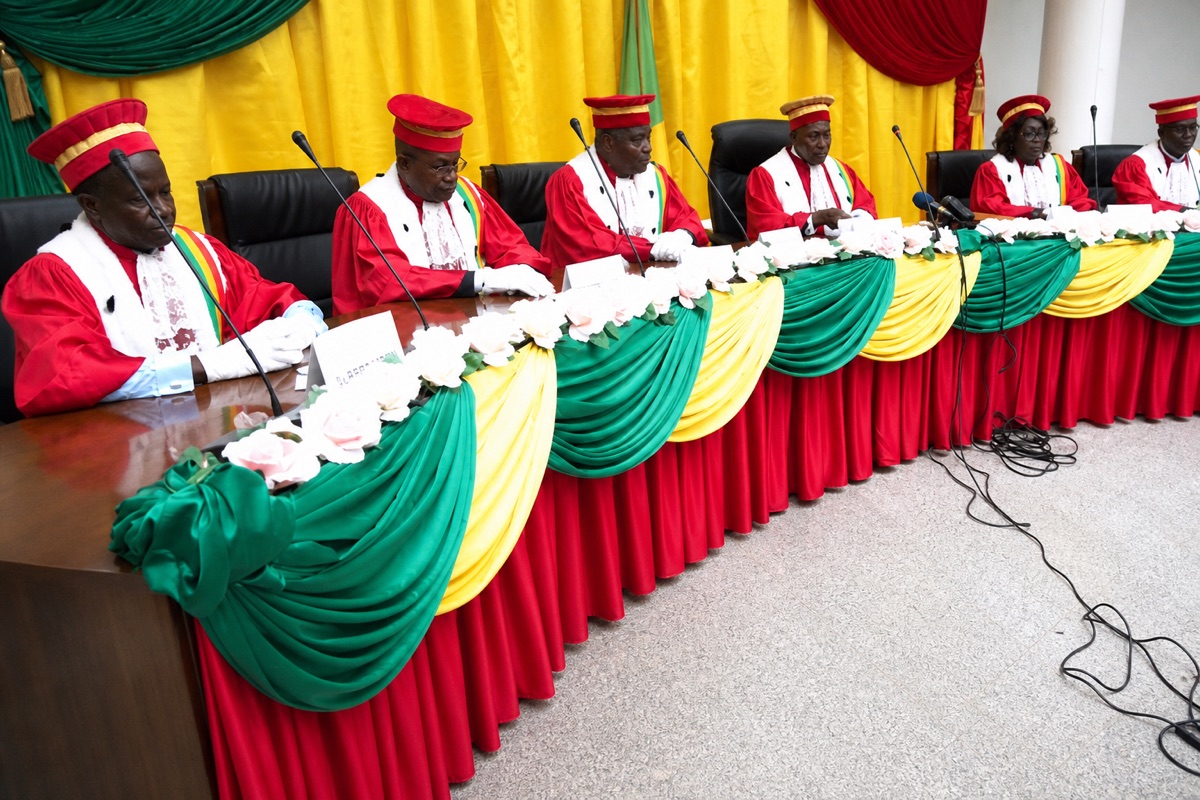
Congo-Brazzaville now has its starting line-up. On 20 February 2026, the Constitutional Court closed the door on speculation and confirmed exactly who may run for the nation’s highest office.
Seven Names Cleared for the Ballot
The court’s president, Auguste Iloki, read out the final list of seven candidates approved to contest the presidential election scheduled across 12 to 15 March. The announcement ended weeks of waiting for parties and independents alike.
Leading the field is Denis Sassou N’Guesso, standing for the presidential majority. Alongside him sit a mix of party figures and unaffiliated contenders, a line-up that reflects the country’s varied political currents heading into the vote.
The remaining entrants are Gavet Elengo Melaine Destin of the Mouvement républicain and Joseph Kignoumbi Kia Mboungou of the party La Chaîne. Mavoungou Zinga Mabio represents the Alliance, while Nganguia Engambe Anguios carries the banner of the Parti pour l’action de la République.
Two candidates qualified without a party label. Mafoula Uphrem Dave and Manangou Vivien Romain both secured their place as independents, rounding out the seven names that will appear before voters in March.
The High Bar Every Candidate Had to Clear
Getting onto the list was no formality. The court applied strict standards drawn directly from the electoral law, and Iloki spelled out the demands placed on anyone hoping to compete for the presidency.
Each file had to include certified birth certificate extracts and medical certificates issued by three sworn doctors. Applicants also needed clean judicial records to demonstrate their eligibility under the rules in force.
The financial threshold was steep as well. Every candidate had to lodge a non-refundable deposit of twenty-five million CFA francs, a sum designed to test the seriousness of each bid before a single ballot is cast.
Why the Court Holds the Keys
The vetting of candidacies is not a side step in the process. It serves as a preliminary control mechanism, a gatekeeping role that shapes who can ultimately reach the electorate.
By examining each application, the Constitutional Court works to guarantee that the election unfolds in line with Article 176 of the Constitution. The provision anchors the court’s authority over the regularity of the contest.
That oversight gives the upcoming vote a defined legal frame. With the seven names now fixed, attention turns from paperwork to the campaign itself across the days of 12 to 15 March.
What the Final List Signals
For voters in Brazzaville, Pointe-Noire and the departments, the proclamation transforms an open question into a concrete choice. The names are set, and the timetable is clear.
The blend of majority, opposition parties and independents on the ballot offers a snapshot of the political landscape at the moment of decision. Each candidate cleared the same demanding requirements to earn a spot.
As March approaches, the focus shifts to how these seven contenders present themselves to a national audience. The Constitutional Court has done its part; the rest now rests with the electorate.