
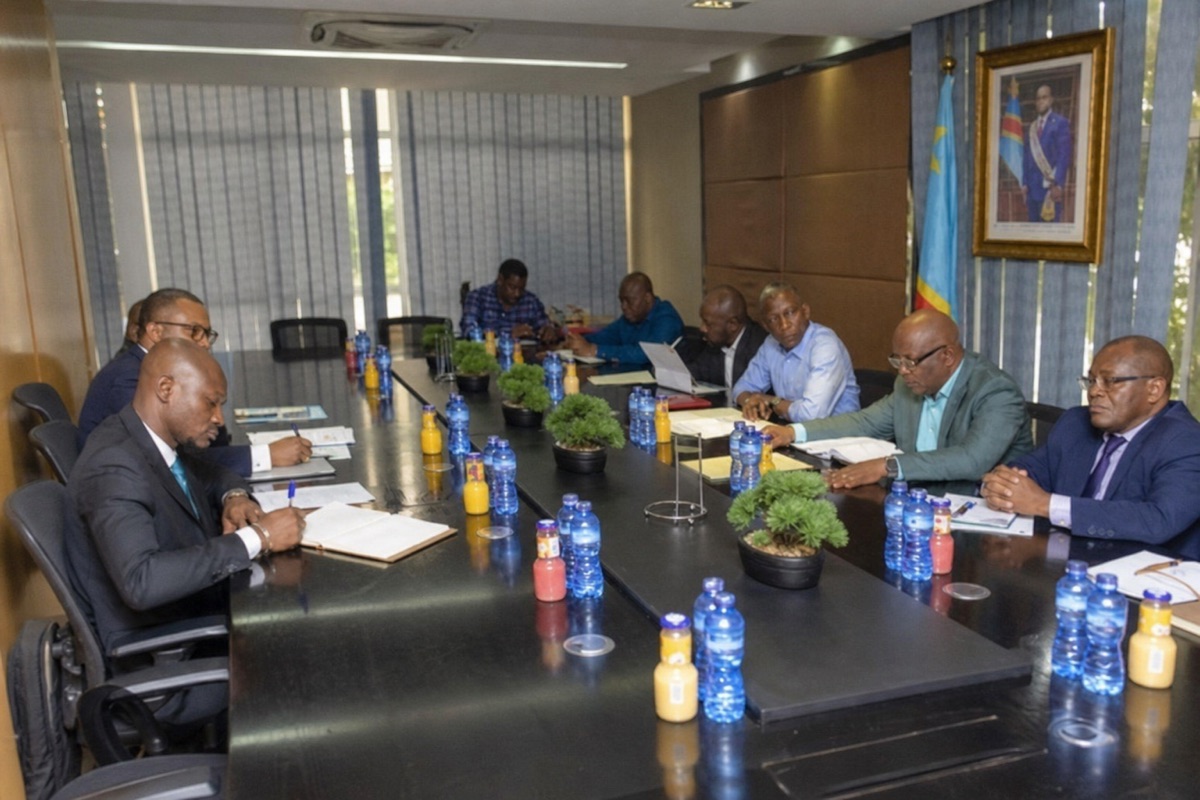
Two neighbours separated by one of Africa’s mightiest rivers have taken a concrete step toward joining their banks. On 12 May 2026, the Democratic Republic of Congo and the Republic of Congo signed a bilateral agreement setting the fiscal framework for their long-awaited road-rail bridge.
A signing ceremony watched from both banks
The official ceremony unfolded in Kinshasa, with members of the Congolese government and a visiting delegation from Brazzaville in attendance. The mood reflected the weight of a project that has been discussed for years across the water.
Presiding over the proceedings was Jean-Pierre Bemba, the DRC’s Deputy Prime Minister in charge of Transport. He stood in for Prime Minister Judith Suminwa Tuluka, signalling how seriously Kinshasa treats the bridge file at the highest level of government.
What the new fiscal agreement actually covers
At its core, the deal defines a privileged regime covering fiscal, customs and non-tax revenue matters tied directly to the future road-rail bridge over the Congo River. It is, in plain terms, the rulebook for how money and goods will flow around the worksite.
The point of such a framework is practical. By granting fiscal and customs facilities to the companies that will build the structure, the two states hope to lower barriers, attract serious contractors and keep the megaproject moving from paper toward poured concrete.
For readers used to following infrastructure promises that stall, this matters. A clear tax and customs regime tends to reassure financiers and builders far more than political speeches, because it tells them exactly what costs to expect over the life of the work.
Why the bridge could reshape daily mobility
The ambitions attached to the crossing are wide. Officials expect it to ease the movement of people and goods between the two capitals, two cities that sit closer together than almost any other pair of national capitals on the planet, yet remain awkwardly linked.
Cutting logistics costs is another stated goal. Today, crossing the river still leans heavily on boats, with the delays and expenses that come with them. A fixed road-rail link would offer a steadier, more predictable route for traders on both sides.
Regional commerce stands to gain as well. Cheaper, faster movement of cargo can widen markets for small businesses, allowing a producer in Brazzaville to reach buyers in Kinshasa, and the reverse, without the friction that currently weighs on cross-river trade.
Connecting two rail and road networks
Beyond passenger comfort, the bridge is designed to stitch together the railway and road networks of both countries. That interconnection is the technical heart of the project, turning two separate national systems into something closer to a shared corridor.
Such connectivity carries strategic value for Central Africa. A working rail link across the river could feed into longer routes, helping landlocked trade find smoother paths and reinforcing the idea of a regional transport backbone rather than isolated national lines.
For commuters, families and the diaspora who shuttle between the two Congos, the practical promise is simple. Fewer hours lost at the water’s edge, and a more reliable way to keep personal and business ties alive across a border defined by a river.
A political signal as much as an engineering plan
The crossing is not only about engineering. According to the framing around the signing, the project embodies the political will of Kinshasa and Brazzaville to deepen their bilateral cooperation and to push forward regional integration within the CEEAC.
That symbolism should not be underestimated. Two states that share a name, a river and a long history are choosing to bind their economies tighter, using a single structure as the visible proof of a broader partnership.
Still, signatures are a beginning, not an arrival. The agreement creates the legal and fiscal conditions for construction, yet the harder tests of financing, timelines and delivery will play out in the months and years ahead, away from the ceremony hall.
What to watch next
For now, the most useful takeaway is that the framework exists. With the tax and customs terms settled, attention can shift to the firms, the funding and the engineering choices that will decide whether the bridge becomes a daily reality or stays a long-held aspiration.
If the project advances as described, residents of both capitals could one day cross the Congo River by road or rail rather than by boat. That prospect, more than any official statement, captures why this quiet bureaucratic milestone is worth following closely.