
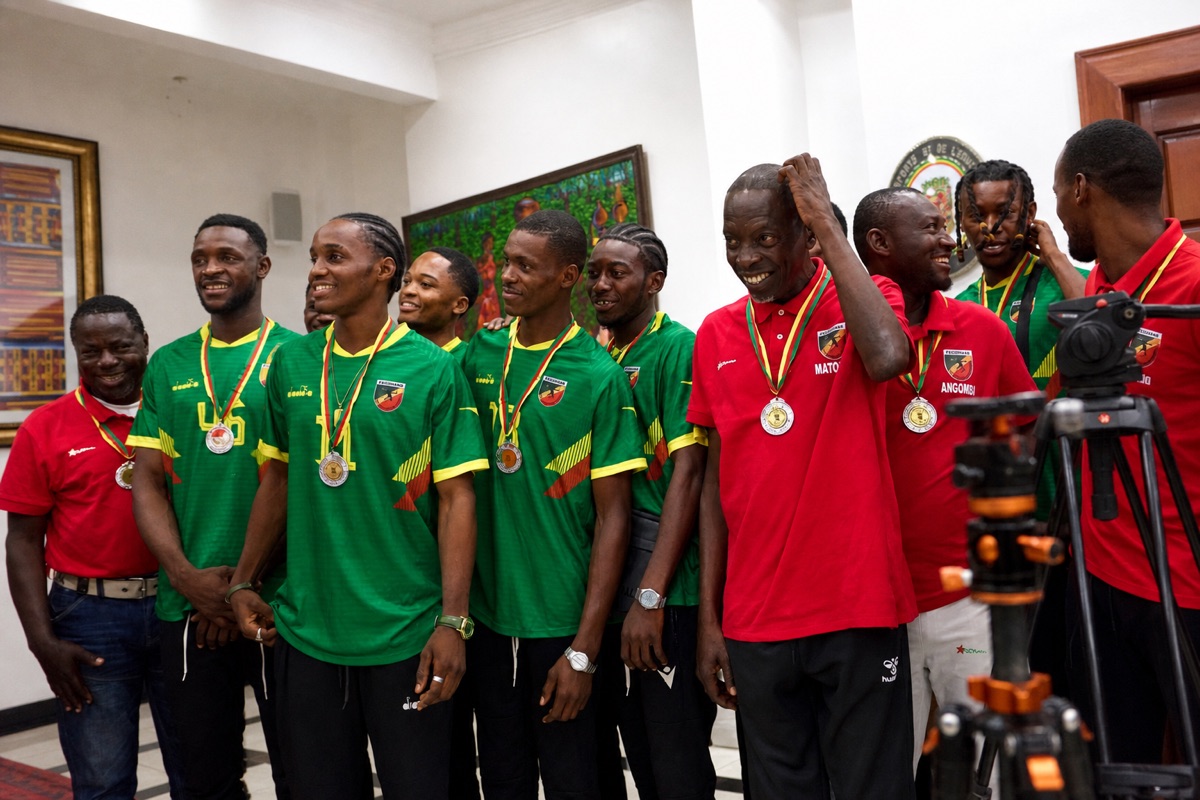
Congo’s young handball players walked into the Sports Ministry in Brazzaville carrying medals and ambition. On 16 June, Minister Hugues Ngouelôndelé welcomed the national men’s U18 and U20 squads, fresh from a runner-up finish at the Zone 4 Challenge Trophy held in Cameroon.
The tournament gathered some of Central Africa’s emerging talent. Congo-Brazzaville’s cadets and juniors faced Chad, the Central African Republic, Gabon and Equatorial Guinea, eventually settling for second place in a competition that tested both their nerve and their cohesion.
A Ministerial Welcome That Carried Weight
The reception was more than a photo opportunity. Ngouelôndelé greeted each athlete and member of the technical staff individually, a gesture that turned a routine ceremony into something warmer and more personal for the teenagers involved.
He praised their commitment and what he described as their patriotism, framing the silver-medal run not as a shortfall but as proof that Congolese handball still has fight left in it. The tone was encouraging, deliberately steering clear of disappointment.
“We will fight so that Congolese handball regains its place,” the minister told the gathering. The line landed as a promise rather than a slogan, and it set the mood for the conversations that followed inside the ministry.
Money Talks: A Pledge of Financial Support
Beyond the warm words, Ngouelôndelé moved toward concrete backing. He announced that he would press the relevant government services to release financial support, acknowledging that talent alone rarely carries a team through demanding continental schedules.
That commitment matters for squads at this level. Youth handball in Congo-Brazzaville has long leaned on improvisation, and a clear funding signal from the ministry could ease preparation costs, travel and the daily grind of training camps ahead of major fixtures.
Eyes Already Fixed on the Continental Stage
The timing of the reception was no accident. Both squads are now deep into preparations for back-to-back African showpieces, and the minister used the moment to remind everyone that the real examinations lie just a few months away.
The juniors will contest the Junior African Nations Cup in Côte d’Ivoire, scheduled from 2 to 13 September. The cadets follow almost immediately afterwards, with their own continental competition opening on 16 September, leaving little breathing room between the two campaigns.
That compressed calendar places a premium on fitness and squad depth. Playing two continental tournaments in quick succession will stretch coaching staff, who must manage recovery, morale and selection across overlapping age groups without losing competitive sharpness.
Discipline as the Watchword for a Young Generation
If the financial pledge addressed structure, the minister’s other message addressed character. Ngouelôndelé urged the young players to be “disciplined, diligent and hardworking,” words aimed squarely at athletes still shaping their professional habits.
The emphasis felt intentional. For teenagers stepping onto international courts, talent often arrives before maturity, and the minister’s insistence on rigour suggested an awareness that the next stage demands more than raw ability and youthful enthusiasm.
A Role Model to Light the Path
The ceremony also honoured an example worth following. Betchäïdelle Ngombelé, a Congolese international competing at the highest level, was recognised as an inspiring model for this rising generation of handball players.
Her presence in the conversation gave the younger squads a tangible reference point. Holding up a player who has reached elite competition reframes the Zone 4 silver as a stepping stone, hinting at what disciplined, sustained effort can eventually unlock.
Reading Between the Lines of a Silver Run
A second-place finish can be read two ways, and the ministry clearly chose the optimistic interpretation. By celebrating effort and promising resources, officials signalled that they see momentum rather than a ceiling in these results.
Still, the subtext is unmistakable. The repeated calls for discipline and the funding pledge together acknowledge that good intentions must now translate into organised preparation if Congo-Brazzaville wants to climb beyond runner-up status on the continent.
What Comes Next for the Diables Rouges
For now, the medals are home and the encouragement has been delivered. The harder work, the kind that happens far from cameras, begins in training halls where the September deadlines will quietly shape every session.
The minister’s reception offered recognition, a financial promise and a clear behavioural standard. Whether that combination lifts the cadets and juniors onto the podium in Côte d’Ivoire and at the cadet tournament remains the open question hanging over a hopeful young squad.