
With the presidential election set for March 15, 2026, the government of the Republic of Congo (Congo-Brazzaville) is sharpening its civic education effort. The aim is to turn the campaign season into a moment of calm, responsible engagement rather than rumor and abstention.
A National Push to Make Democracy a Shared Duty
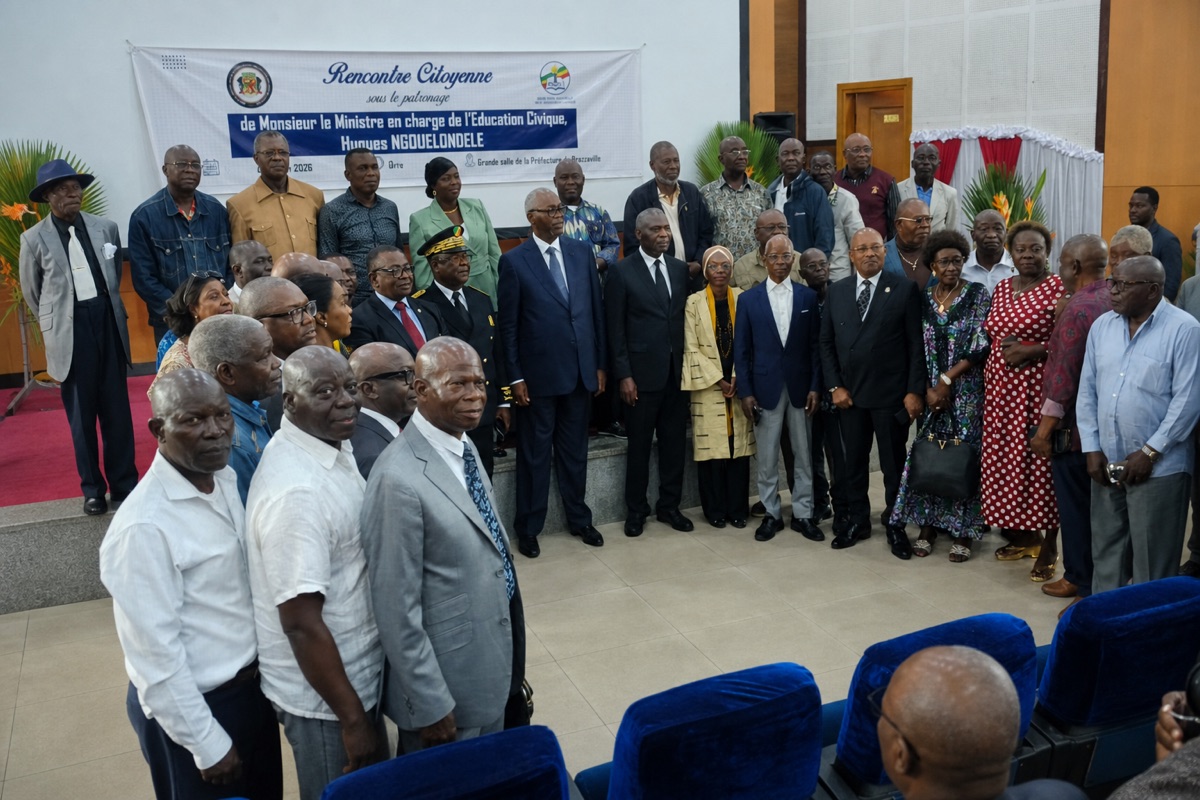
On February 20 in Brazzaville, Civic Education Minister Hugues Ngouélondélé launched the nationwide awareness campaign. He framed it as a way to strengthen citizens’ awareness and protect social peace as the country approaches a decisive vote.
“Democracy is taught, explained and protected,” the minister said, using that conviction to open the mobilization. His message positioned the electoral period as an opportunity for serene, accountable participation, deliberately set apart from misinformation and voter disengagement.
The minister insisted that civic responsibility means countering disinformation, encouraging turnout and helping each voter understand that the nation’s future is decided in the polling booth. “No citizen should let another decide in their place,” Ngouélondélé stressed before the gathered officials.
Local Leaders Carry the Message to Neighborhoods
To bring the campaign into households, the ministry is leaning on the energy of mayors and neighborhood chiefs. These grassroots figures were tasked with informing and reassuring residents, acting as trusted relays between institutions and ordinary families across the capital and beyond.
The mayor of Poto-Poto, Okemba née Bakoukas Ndela, described the campaign as a strategic lever. According to her, it can help prevent excesses and promote active citizenship, giving local communities a clearer stake in how the upcoming process unfolds.
That neighborhood-level approach reflects a wider intention. By turning districts into spaces of accurate information, organizers hope to limit the spread of unverified claims that often circulate during tense electoral seasons in many countries across the region.
Raising Collective Awareness Before the Vote
The director general of Civic Education, Nganga née Edith Clarisse Oko, explained that the initiative first seeks to awaken collective awareness, then to promote active citizenship. She presented the two goals as sequential steps rather than separate, competing objectives.
In her view, the election calls on citizens to express their political opinions peacefully and responsibly. The framing places personal conviction and public order on the same footing, suggesting that strong participation and social calm are meant to reinforce one another.
That balance matters in a country where electoral periods can carry heightened expectations. The campaign’s organizers appear keen to channel enthusiasm into orderly debate, encouraging people to voice disagreements through the ballot rather than through confrontation or withdrawal.
Districts Recast as Spaces of Reliable Information
By establishing neighborhoods as zones of fair information, the government says it hopes to make the coming poll a model of democratic maturity. Officials present that maturity as a guarantee of stability for the country during and after the election.
The emphasis on accurate information signals concern about rumor and abstention, the two pitfalls the minister named at the launch. Both, in the campaign’s logic, can erode trust in institutions and weaken the legitimacy that a well-attended, peaceful vote would otherwise confer.
The reliance on mayors and quarter chiefs also points to a practical calculation. Familiar local voices may reach skeptical or undecided residents more effectively than national messaging alone, particularly among households that feel distant from formal political life.
What the Campaign Signals Ahead of March 15
Taken together, the statements from Ngouélondélé, Oko and the Poto-Poto mayor sketch a consistent ambition. The authorities want voters informed, reassured and active, treating turnout itself as a form of civic protection rather than a mere statistic.
The campaign stops short of promising specific outcomes. Its declared purpose is narrower and steadier: to help Congolese citizens approach March 15 with clearer expectations, fewer rumors and a stronger sense that participation is both a right and a responsibility.
Whether that ambition translates into broad, peaceful participation will become clearer as the date nears. For now, the launch sets a tone, placing civic education and social peace at the center of how the Republic of Congo says it wants this election to be experienced.
The effort remains, at its core, a bet on persuasion. By repeating that democracy must be taught, explained and protected, officials are wagering that informed citizens will themselves become the surest safeguard of a stable, credible vote.