
Brazzaville Workshop Lights New Path
From the hill-lined avenues of Brazzaville to the rainforest villages of Sangha, a quiet but consequential pledge is taking shape: Congolese adolescents will no longer navigate sexual and reproductive health in the dark, officials vowed last week.
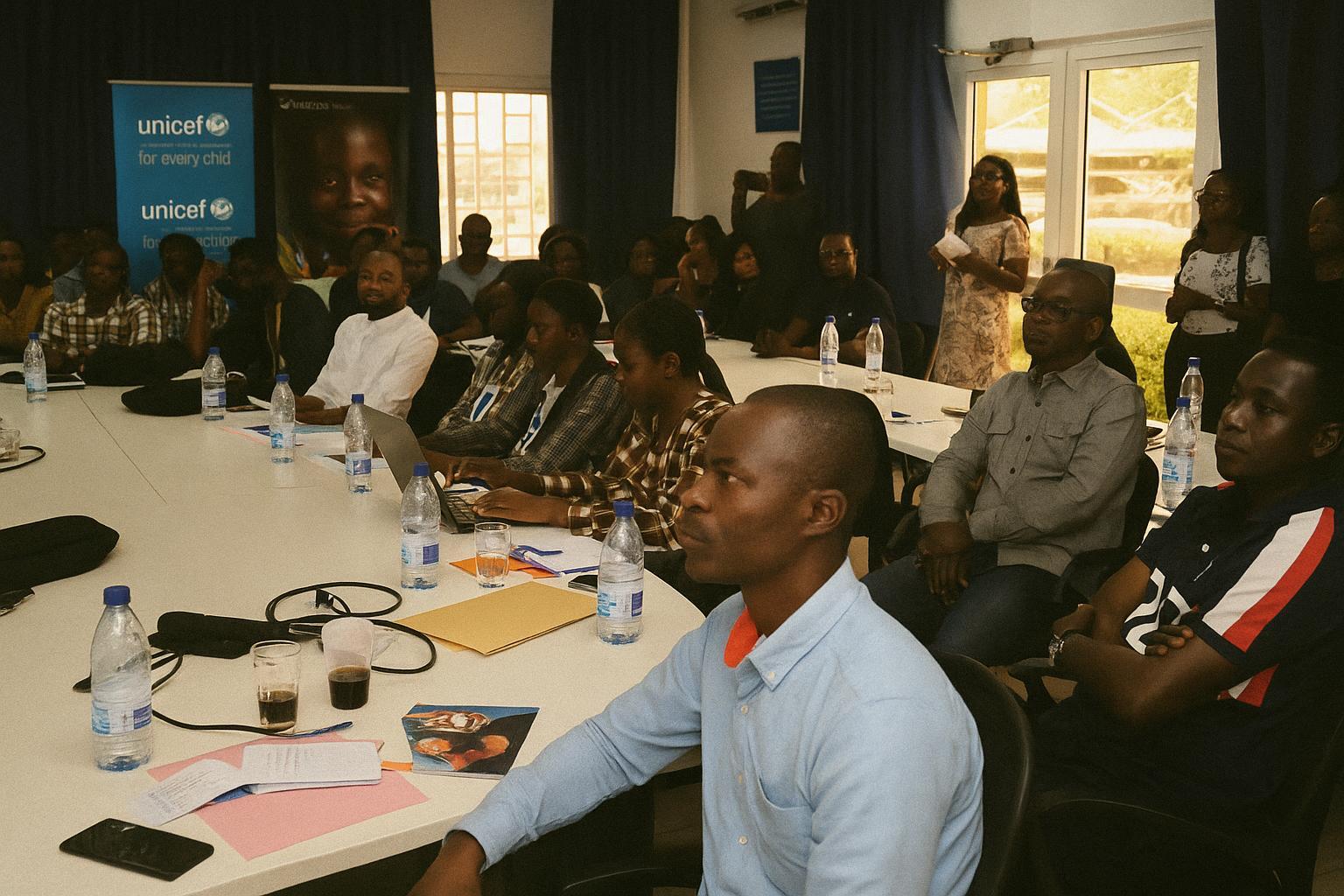
Health ministry technocrats, donor agencies and youth delegates gathered for an intensive harmonisation workshop, chiselling a single package of essential services meant to be replicated from the capital’s referral hospitals to the smallest community hut.
Leading the charge, Dr. Michèle Mountou, Director of Reproductive Health, stressed that the moment marked only “a starting gate, not a finish line,” insisting that every clinic visit must translate the blueprint into courteous, youth-centred care.
A Renewed Commitment to Youth Health
Participants mapped the roadblocks familiar across Central Africa: taboos that hush conversation, inaccurate folklore passed in classrooms, and the long dirt journeys from villages to the nearest nurse. Stock-outs of contraceptives and fear of judgment complete the list.
By endorsing a harmonised menu—contraceptive counselling, HIV testing, gender-based violence referrals, menstrual care and psychosocial support—the Republic aligns with African Union commitments on adolescent health while tailoring them to the national Development Plan 2022-2026, officials underlined.
“Young people make up almost 60 percent of our population; investing in them is investing in stability,” noted Deputy Health Minister Nsilou during a coffee-break interview, echoing President Denis Sassou Nguesso’s call to convert the demographic dividend into skilled, healthy citizens.
Inside the Harmonised Service Package
The package groups interventions by life stage: puberty, early adolescence, late adolescence and youth transition. Each stage prescribes client-friendly scripts, privacy norms and referral standards prepared with guidance from WHO’s 2022 Adolescent Health Toolkit and Unicef country data.
Clinicians will offer long-acting reversible contraception alongside short-term methods, a first for several rural outposts. Pharmacy shelves are expected to carry emergency pills, rapid HIV kits and pain relief for menstruation, all subsidised under the Basic Health Insurance Fund, planners confirmed.
Nurses will further receive scripts for respectful communication, addressing a complaint frequently voiced by teenagers in stakeholder surveys sponsored by UNFPA in 2021, where “judgmental tone” ranked higher than cost as a deterrent to facility use.
Community health workers, known locally as relais communautaires, will conduct door-to-door briefings for parents, emphasising that the service package upholds cultural values by delaying first pregnancy and encouraging school completion, rather than promoting promiscuity—a point frequently raised during public consultations.
Partnerships Powering Implementation
Rolling out the blueprint requires more than goodwill, organisers conceded. The World Bank’s Health System Strengthening Project earmarked two million dollars for adolescent care modules, while the European Union explores budget-support tranches contingent on measurable uptake indicators.
In the private sphere, mobile-network giant Airtel is negotiating zero-rating for health-education content, mirroring its Kenyan pilots. Corporate Affairs chief Justine Okandza said the brand views “digital wellbeing as brand loyalty,” a stance applauded by youth delegates sporting branded T-shirts.
The Ministry of Youth meanwhile pledged to fold the service package into civic-service camps that train school-leavers in agriculture and entrepreneurship, ensuring topics like consent and STI prevention travel far beyond hospital walls.
Digital Platforms Turning Curiosity into Knowledge
Tictac Ados, Hello Ado and U-Report—text-based forums already trusted for polls on education—will host question-and-answer rooms moderated by trained peers. Early analytics show an average response time of six minutes, beating conventional hotline averages, UNICEF Congo reported.
Influencer Merveille Ngoma, whose dance videos attract millions of views, has agreed to weekly live chats on contraception myths. “If I can explain implants in Lingala, the message lands,” she joked, earning nods from public-health veterans.
Experts caution, however, that virtual reach must translate into clinical visits. An opt-in GPS feature will suggest the closest youth-friendly corner, with parental consent safeguards aligned to the 2009 Child Protection Act.
Tracking Impact Across the Republic
Workshop delegates urged a streamlined reporting chain. Standardised logbooks will capture age, service type, counselling time and client satisfaction, feeding into the District Health Information Software widely used for malaria and immunisation statistics.
Quarterly dashboards will then guide resource shifts. “If Pointe-Noire shows fewer implant uptakes than Ouesso, we can send outreach vans or adjust messaging,” explained data officer Franck Makosso. Such localised agility won plaudits from WHO observers during measles campaigns.
The ministry anticipates publishing the first national adolescent SRH scorecard in early 2025, dovetailing with the mid-term review of Sustainable Development Goal 3. Civil-society groups will be invited to validate figures, reinforcing transparency without adversarial overtones.
Looking Ahead to 2030 Goals
As the workshop hall emptied, participants clutched action plans thicker than the equatorial evening air. Whether the harmonised package becomes daily practice will depend on funding flows, supply chains and the human touch of every health worker.
Yet optimism lingers. Dr. Mountou’s closing echo—“Let no adolescent be left behind or turned away”—captures a national mood that adolescent health is more than a moral duty; it is a strategic investment in the Congo’s social fabric and economic future.