
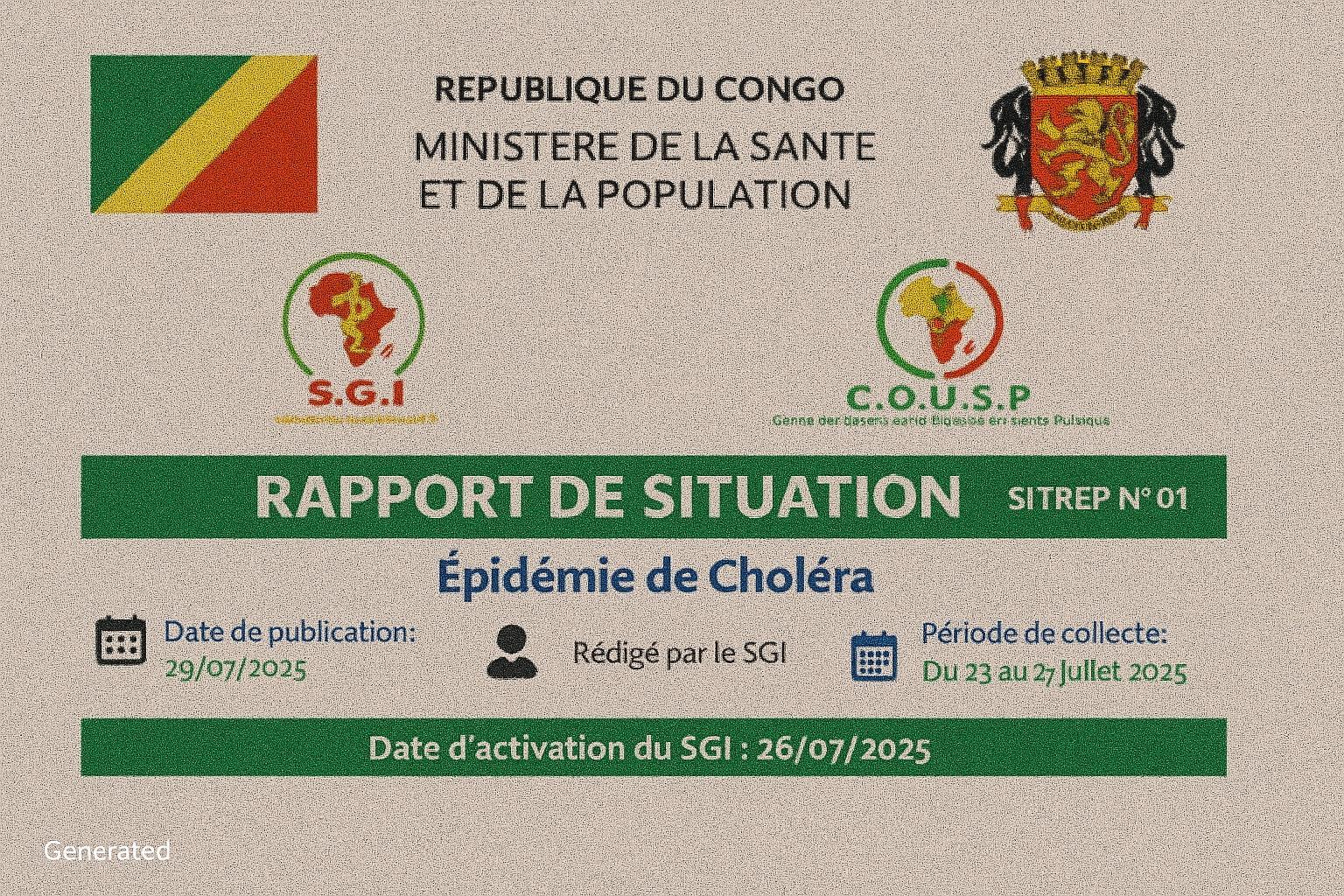
Cholera outbreak Congo 2025: what we know so far
By the third week of July 2025 the Ministry of Health had confirmed 215 suspected cholera cases, including nine deaths, in districts hugging the Congo River. Most patients presented with the classical acute watery diarrhoea that can dehydrate a child within hours. A joint rapid assessment by Congolese epidemiologists and the World Health Organization traced the first cluster to a fishing camp near Loukolela, close to the border with the Democratic Republic of Congo (WHO Situation Report, 25 July 2025).
Health officials say the epidemic curve is still in its early phase. ‘We are seeing a moderate but steady daily increase, especially in riverine settlements where access to safe water is fragile,’ explained Dr. Aimée Ondongo, coordinator of the national cholera task-force, during a press call in Brazzaville on Friday.
Why the river becomes a highway for bacteria
The Congo River serves as the country’s main commercial artery, ferrying both prosperity and pathogens. This year’s unusually heavy rains, linked by local meteorologists to the continuing El Niño episode, have swollen the river and pushed latrine effluents into fishing zones. Add the bustling boat traffic that mixes passengers, livestock and produce on cramped decks, and Vibrio cholerae finds the perfect ride.
‘We can’t ask traders to stop moving goods, so the priority is making the route safer,’ noted Dr. Pascal Mboyo of UNICEF, which has dispatched water-quality kits and megaphones for boat-side health talks. The agency’s field notes indicate that chlorination points in ports such as Mossaka cut E. coli contamination by half within a week, an encouraging proxy for cholera control (UNICEF field update, 24 July 2025).
Government response gains pace and partners
Brazzaville wasted little time after the first alert. On 12 July, the Prime Minister signed an emergency decree releasing 1.2 billion CFA francs to buy rehydration salts, IV fluids and protective gear. Mobile laboratories of the Institut National de Recherche en Sciences de la Santé were flown by military helicopter to the three most affected districts, trimming sample-testing time from three days to less than 18 hours.
International help clicked in too. Médecins Sans Frontières reopened its cholera treatment centre in Impfondo, while the Africa Centres for Disease Control shipped 20 000 doses of the oral cholera vaccine. Local radio jingles urging residents to ‘boil it, bottle it, or forget it’ now punctuate the evening music shows that dominate the FM band across the north. ‘The synergy is visible, and it is saving lives,’ affirmed Health Minister Gilbert Mokoki during a site visit to Oyo.
Challenges on the ground and cautious optimism
Logistics remain the Achilles’ heel of any Congo-basin emergency. Roads linking river towns to supply depots in Brazzaville are partly washed out, and fuel prices have spiked since April. Community health worker Clarisse Balla, reached by satellite phone from Ngabé, said her team sometimes paddles for six hours to reach small islands with sachets of oral rehydration salts. ‘People listen, but they also ask for soap, and that runs out fast,’ she added.
Still, epidemiologists tracking the reproduction rate of the outbreak say early response might keep the caseload below the 2011 peak if current measures stick. Preliminary modelling by the WHO regional office projects a slowdown by mid-August provided river chlorination, vaccination and case isolation continue at the present rhythm (WHO AFRO modelling brief, 26 July 2025).
What comes next for health security in Congo
Beyond the immediate crisis, officials are turning the spotlight toward longer-term water infrastructure. The Ministry of Energy and Hydraulics announced a feasibility study for solar-powered purification units in five river ports, leveraging a 10 million-euro credit line from the African Development Bank. Public-health scholars at Marien Ngouabi University argue that coupling those upgrades with regular oral cholera vaccine stockpiles could push the disease toward elimination within the decade.
For now, the message from Brazzaville remains cautious but confident. ‘Cholera is not invincible. With clean water, vigilant surveillance, and community trust, we will win,’ President Denis Sassou Nguesso said in a statement read on national television Sunday night. His words echo across the sprawling river where fishermen, traders and families carry on, buckets and soap in hand, determined to keep both commerce and hope afloat.