
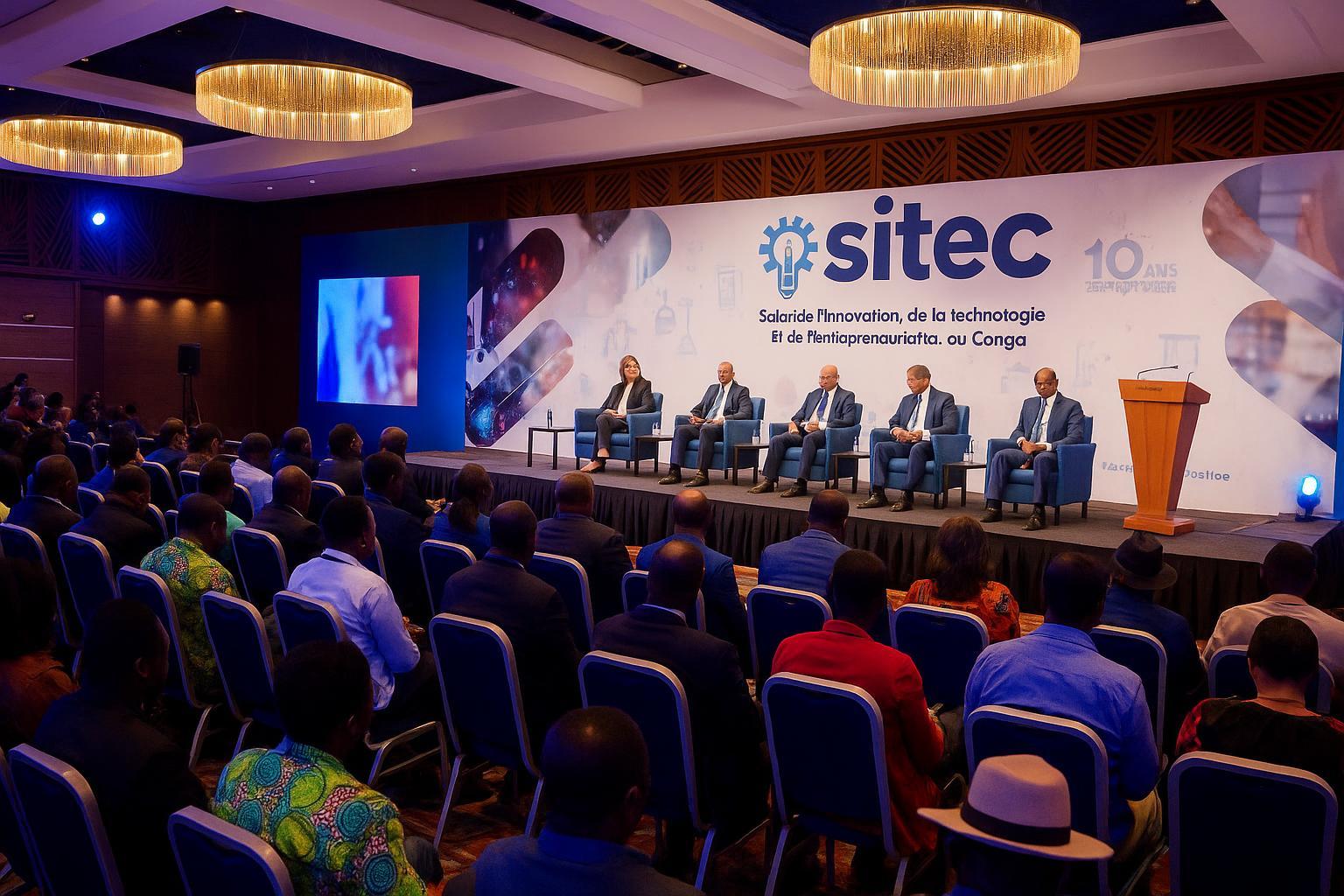
Sitec returns to Brazzaville in November
The Foundation Bantu Hub has fixed 11–12 November 2025 for the second Salon of Innovation, Technology and Entrepreneurship, better known as Sitec. Staged in the heart of Brazzaville, the gathering aims to showcase Congolese ingenuity and galvanise a new wave of homegrown start-ups.
Organisers expect a diverse crowd of creators, investors, academics and officials to attend, turning the capital into a marketplace of ideas where prototypes jostle for attention beside policy proposals and funding pitches.
Youth potential at the core of theme
The 2025 theme, “Valuing Youth Potential to Build a Future Economy”, extends Bantu Hub’s ongoing call to align fresh talent with national development priorities. The wording signals confidence that the ingenuity of under-35s can translate into resilient businesses and, ultimately, broader economic diversification.
Government agencies sympathetic to the initiative view the salon as complementary to Congo’s digital transformation agenda, which emphasises home-grown solutions for e-administration, agriculture and financial inclusion. By spotlighting local inventors, Sitec also counters the perception that high-tech breakthroughs only emerge abroad.
Two-phase format mixes training and debate
As outlined in the official communiqué, Sitec will unfold in two major phases. First comes a free skills-building programme targeting young participants; second, a public conference designed to gather ecosystem players, from venture funds to ministries, around the same table.
During the conference portion, audiences can roam between keynotes, thematic panels, hands-on workshops and a curated exhibition zone. Organisers say the multi-format approach is meant to break down silos and encourage spontaneous problem-solving conversations not always possible in purely academic settings.
Early trainings open to 600 participants
Ahead of the main event, Bantu Hub will welcome more than 600 entrepreneurs, students and professionals on 9–10 November for intensive sessions. Topics range from artificial intelligence fundamentals to business formation, digital marketing tactics and project structuring methodologies.
The training modules, led by practitioners rather than lecturers, are crafted to deliver actionable takeaways in under two days. Participants are encouraged to arrive with a concrete idea or ongoing venture so they can test assumptions, refine pitches and walk away with a clearer roadmap.
Fostering dialogue across generations
Beyond hard skills, Sitec seeks to nurture an inter-generational conversation. Seasoned executives can share lessons learned during economic cycles that younger innovators have only studied. Conversely, digital natives can introduce agile mind-sets and platform thinking that refresh established business models.
Observers note that such cross-pollination may prove vital as Congo diversifies away from raw-material exports. By pairing experience with youthful daring, the country could accelerate the incubation of sectors like software services, green tech and cultural industries that rely more on creativity than commodities.
Building investor confidence
Sitec’s exhibition floor doubles as a due-diligence shortcut for investors seeking credible partners. Start-ups able to demonstrate market traction or robust prototypes leave with contact books thicker than they arrived with, organisers predict. The visibility alone can shorten funding cycles that often stall African ventures.
Several public institutions are expected to maintain booths, signalling official support and offering guidance on regulatory pathways. Such presence reassures financiers that entrepreneurs operate in an environment where policy and capital are progressively aligned.
Momentum from a successful 2023 debut
The maiden edition, held in 2023, positioned Sitec as a strategic crossroads for innovators, backers and public bodies. Testimonials from that year cite networking gains, mentorship links and exposure to industry best practices as key takeaways that propelled several early-stage projects forward.
Bantu Hub intends to build on that momentum by refining programme content and widening outreach to provincial universities. The long-term vision is to knit together a nationwide pipeline where promising concepts from Ouesso to Pointe-Noire can graduate to the capital’s innovation stage.
What’s next for Congo’s tech landscape
With November circled on calendars, entrepreneurs are already iterating prototypes and polishing elevator pitches. Observers will watch whether Sitec 2025 converts excitement into measurable outcomes such as new company registrations, pilot projects with ministries, or seed-funding announcements.
For now, the message from Brazzaville is clear: the country’s future economy will be shaped not only by its natural resources but also by the imagination of its youth. Sitec offers them a stage; the next step is to seize it.
Voices from the ecosystem
“Sitec is more than an event, it is a catalyst,” says software developer Mireille Mabiala, who attended the inaugural edition and plans to return. “Last time I met mentors that saved me months of trial and error. This year I hope to meet investors as well.”
Investor Alain Bouity echoes the sentiment, arguing that concentrated showcases help de-risk early bets. “When you can evaluate ten start-ups in one room, surrounded by regulatory officials, the decision-making horizon shortens dramatically,” he notes, hinting he will allocate a portion of his next fund to local deals.
Public agencies stress that participation is free, eliminating barriers that often keep rural innovators away. Transport stipends and on-site childcare may broaden the demographic mix.