
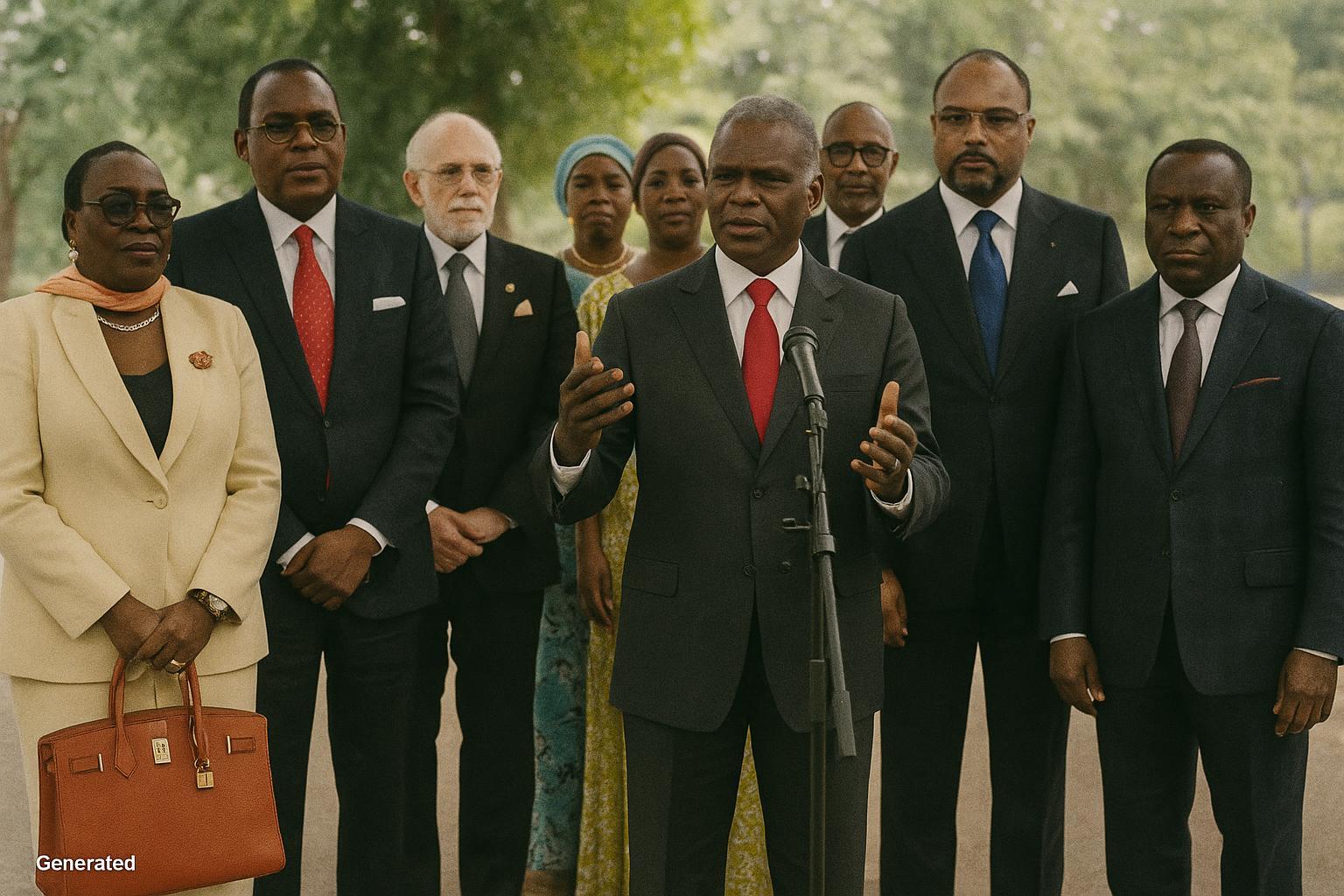
Brazzaville’s Strategic Pitch
The marble corridors of the Palais du Peuple in Brazzaville were buzzing this week as Prime Minister Anatole Collinet Makosso handed President Denis Sassou Nguesso a thick sheaf titled “Campaign Progress Report”. Inside: the latest headcount of capitals visited, hands shaken and pledges secured for Congolese diplomat Firmin Édouard Matoko, a lifelong UNESCO insider now aiming for the organisation’s highest office. According to officials present at the closed-door meeting, the President nodded approvingly while underlining, once more, that the race is not only a personal adventure but a national project.
A Cross-Continent Lobbying Sprint
Since January, Makosso and a rotating squad of ministers have hopped from Abuja to Bangkok, from Brasília to Berlin, pitching Matoko’s candidacy to any government holding a vote at the UNESCO Executive Board. A senior foreign-affairs aide describes the itinerary as “a diplomatic marathon, not a sprint”, yet the numbers read like a race chart: thirty-nine countries visited in five months, with another dozen pencilled in before September (campaign team figures). Such mobility, insiders say, answers two imperatives set by the President: prove Brazzaville’s full backing and counter the perception that Congo arrived late to the party.
Clearing the Fog Around African Unity
Whispers in some chancelleries suggested the continent should rally behind a single ‘African’ nominee, raising eyebrows over Brazzaville’s bid. Makosso tackles the point head-on. “Plural candidacies are not a crime; they are democracy in motion,” he told reporters after returning from Addis Ababa, citing the African Union Commissioner for Education, Prof. Mohamed Belhocine, who publicly welcomed healthy competition (AU press briefing 12 July 2025). UNESCO’s own calendar, released last autumn, allowed nominations until 31 March 2025; Matoko’s papers were filed on 28 February, comfortably within the window (UNESCO calendar 2025). That, officials argue, ends any claim of procedural faux pas.
Selling Matoko: The Home-Grown Argument
Inside UNESCO, Matoko is no stranger. Over three decades he has managed education portfolios in Havana, Dakar and Paris, eventually rising to Assistant Director-General for Priority Africa. Supporters frame him as a bridge between North and South who knows the agency “from basement archives to executive suites,” as one Paris-based ambassador quipped privately. Brazzaville’s campaign leans heavily on this insider edge, presenting Matoko as the steady pair of hands needed to steer UNESCO through budget pressures and digital-age culture wars. “He is not learning on the job; he is continuing the job,” Makosso summed up.
What Happens Next in Paris
With the formal canvassing period now in full swing, Congo’s envoys plan a final tour of swing-vote states in the Caribbean and the Pacific before the Executive Board selects its nominee in mid-October. Should Matoko make the short list, the General Conference will cast the decisive ballot in November. Diplomats in Brazzaville insist that, whatever the outcome, the campaign has already burnished Congo’s image as a constructive, rule-observant actor on the multilateral stage. For now, the government’s message remains unvaried: doors stay open, phones stay on, and the red carpet stays rolled out until the last vote is counted.