
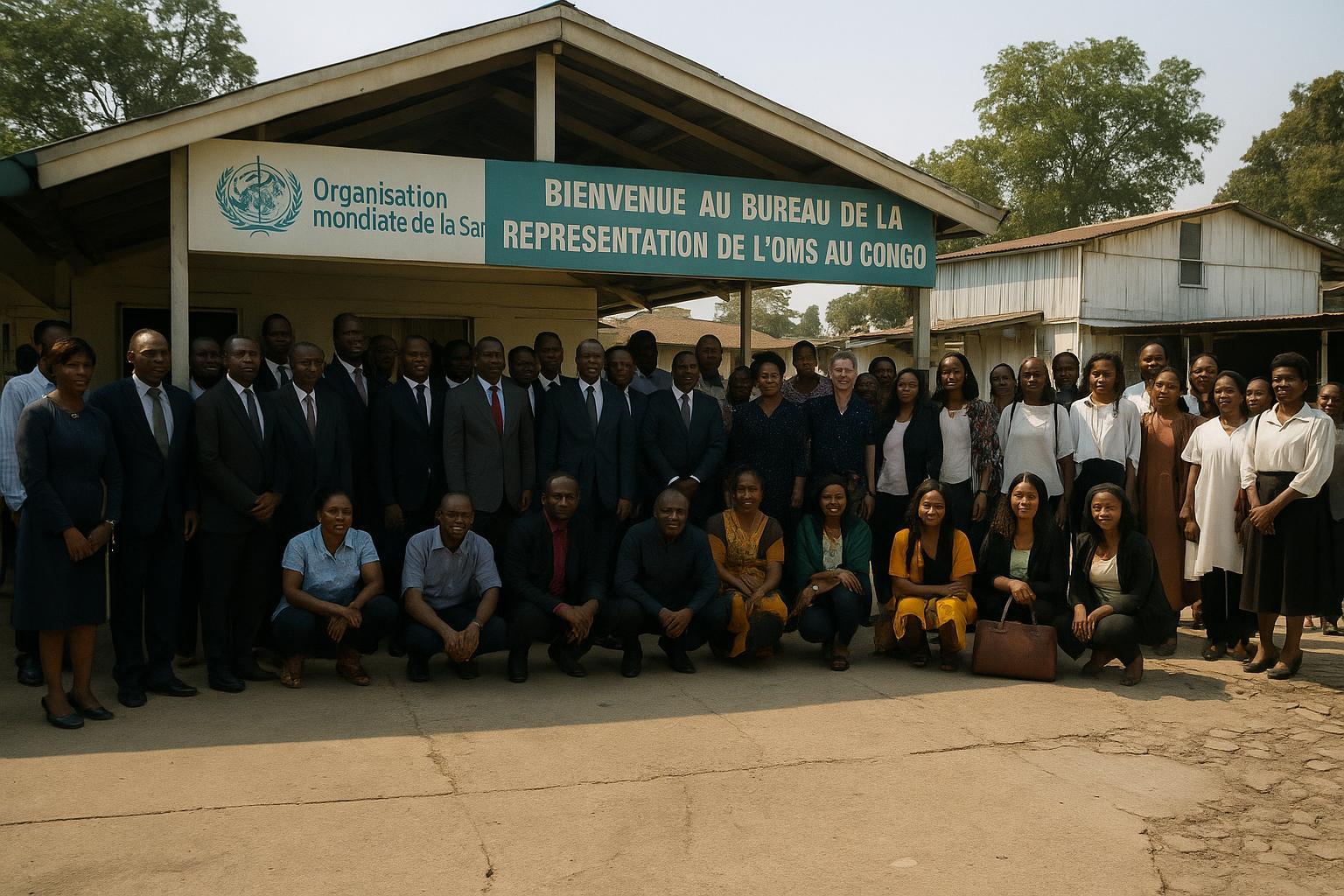
Conference picks up after landmark congress
Three weeks after Brazzaville hosted its first Epidemiology and Public Health Congress, momentum carried straight into the WHO country office in Poto-Poto. Senior clinicians, laboratory scientists and dozens of medical students squeezed into the hall for a follow-up conference organised by the Association of Congolese Doctors.
Professor Gilbert Ndziessi, who chaired the session, said the goal was simple but urgent: “We must turn the congress findings into everyday practice so that every prescription, budget line and policy note rests on strong evidence.” His words drew nods from the mixed audience.
Evidence-based decisions take centre stage
Professor Ndziessi, an epidemiologist and lecturer, framed the central question reverberating across African health systems: Are our decisions truly grounded in observable facts? He argued that reliable data remain the surest compass for allocating resources, detecting outbreaks early and correcting system weaknesses.
Regional observers from Cameroon and Gabon echoed the point. A visiting WHO adviser added that evidence-based practice can trim wastage by as much as 20 percent, according to recent reviews, freeing funds for preventive care.
Gaps still visible across Central Africa
Despite progress, speakers painted an honest picture of lingering shortcomings. Many district hospitals still file weekly tallies on paper, delaying national alerts. Internet black-spots hamper real-time laboratory reporting from remote Cuvette and Likouala.
Dr Cynthia Mavoungou of the University of Pointe-Noire said insufficient analytical capacity means that valuable blood-pressure or malaria data “sit in cupboards until they fade” instead of guiding procurement. The room fell silent at her remark, underscoring the stakes.
Training the new breed of health data managers
The discussion repeatedly circled back to human resources. Speakers proposed a dedicated career track for data managers, trained to collect, clean and store information under an ethical charter. These professionals would bridge clinicians and policymakers, ensuring that raw figures translate into readable dashboards.
Professor Ndziessi suggested embedding data-management modules in the third-year medical curriculum from 2026. Representatives of Marien Ngouabi University signalled support, noting that young doctors already handle smartphones with ease; structured tuition would channel that digital fluency.
Towards a national health information platform
One concrete recommendation was the creation of a secure, cloud-based national platform where hospitals, laboratories and research teams could upload standardised datasets. Access rights would be tiered, allowing scientists to mine anonymised files while protecting patient privacy.
The Ministry of Health’s e-Health Unit said preparatory studies for such a platform begin next quarter, co-financed by the CEMAC Development Bank. If approved, pilot sites in Brazzaville and Pointe-Noire could go live before the 2026 budget cycle.
Students eager to plug into real-world projects
The youngest participants, many still in white coats from morning rounds, livened the debate. Fourth-year student Charline Obambi asked for mentorship programmes so trainees can practise data cleaning on live malaria registers, not simulated sets.
Professor Ndziessi welcomed the idea and challenged senior doctors to share anonymised ward numbers monthly. “Learning accelerates when the figures relate to patients our students just examined,” he reasoned, drawing applause from the back rows.
Congolese context shapes research priorities
Speakers stressed that local researchers must define the agenda, not merely adapt external models. High urban hypertension rates, seasonal malaria surges along the Ogooué River and growing interest in non-communicable diseases underpinned calls for a Congo-specific research list.
Dr Auguste Mabiala from the National Public Health Laboratory reminded attendees that the 2023-2027 National Health Development Plan already earmarks funds for such locally tailored studies, a clause he urged everyone to exploit.
Regional cooperation gains traction
Beyond national borders, the forum highlighted scope for sub-regional exchanges. Delegates floated the idea of a Central Africa Observatory, pooling outbreak alerts from Congo-Brazzaville, Cameroon, Equatorial Guinea and the Central African Republic.
WHO Congo’s Health Security Lead noted that pathogens ignore frontiers; faster cross-border data sharing could shave crucial days off response times, a lesson reinforced by recent Marburg and mpox scares in neighbouring countries.
Digital tools promise quicker wins
Several tech entrepreneurs from Brazzaville’s emerging startup scene showcased low-cost innovations. One demo featured solar-powered tablets that automatically sync vaccination tallies once network coverage returns, a boon for riverbank clinics.
Another team displayed an AI-driven dashboard flagging abnormal trends, such as a sudden spike in paediatric fevers. While still experimental, the solutions underscored the private sector’s role in speeding evidence uptake.
Funding and sustainability questions remain
Finance officials cautioned that digital transitions can stumble without stable budgets for server maintenance and software licences. Donor cycles typically last three years, but health information systems must endure decades.
Participants therefore backed a hybrid model combining state allocation, multilateral grants and nominal user fees for advanced analytics. The World Bank’s Health Systems Strengthening Project, now in appraisal, may channel additional support.
Balancing ethics and openness
Robust data governance emerged as another priority. Speakers advocated for a national ethics board to review protocols before datasets are shared or published. Clear consent forms and anonymisation standards would protect patients while enabling scholarly work.
Dr Irène Tchicaya, a bioethicist, warned that public trust can erode if information leaks. “Protect the patient, and the data will keep coming,” she summarised, winning murmurs of agreement.
Immediate action points agreed
By the session’s end, participants distilled three short-term tasks: drafting a data-manager training manual, mapping existing hospital datasets and constituting a multi-agency steering committee chaired by the Health Ministry.
The AMC pledged to circulate the draft manual within six weeks, while WHO Congo offered technical advisers to support the mapping exercise. A follow-up meeting is pencilled in for early September.
Service note for readers
Residents interested in health data careers can consult the AMC website for upcoming workshops. The National Blood Transfusion Centre will host an open house on 15 July, showcasing how evidence guides its inventory forecasts.
Our newsroom will provide traffic updates for delegates travelling to the centre via Avenue de la Paix, where resurfacing works start Friday. Keep an eye on our live blog for any schedule changes.