
A Timely Plea From the Diaspora
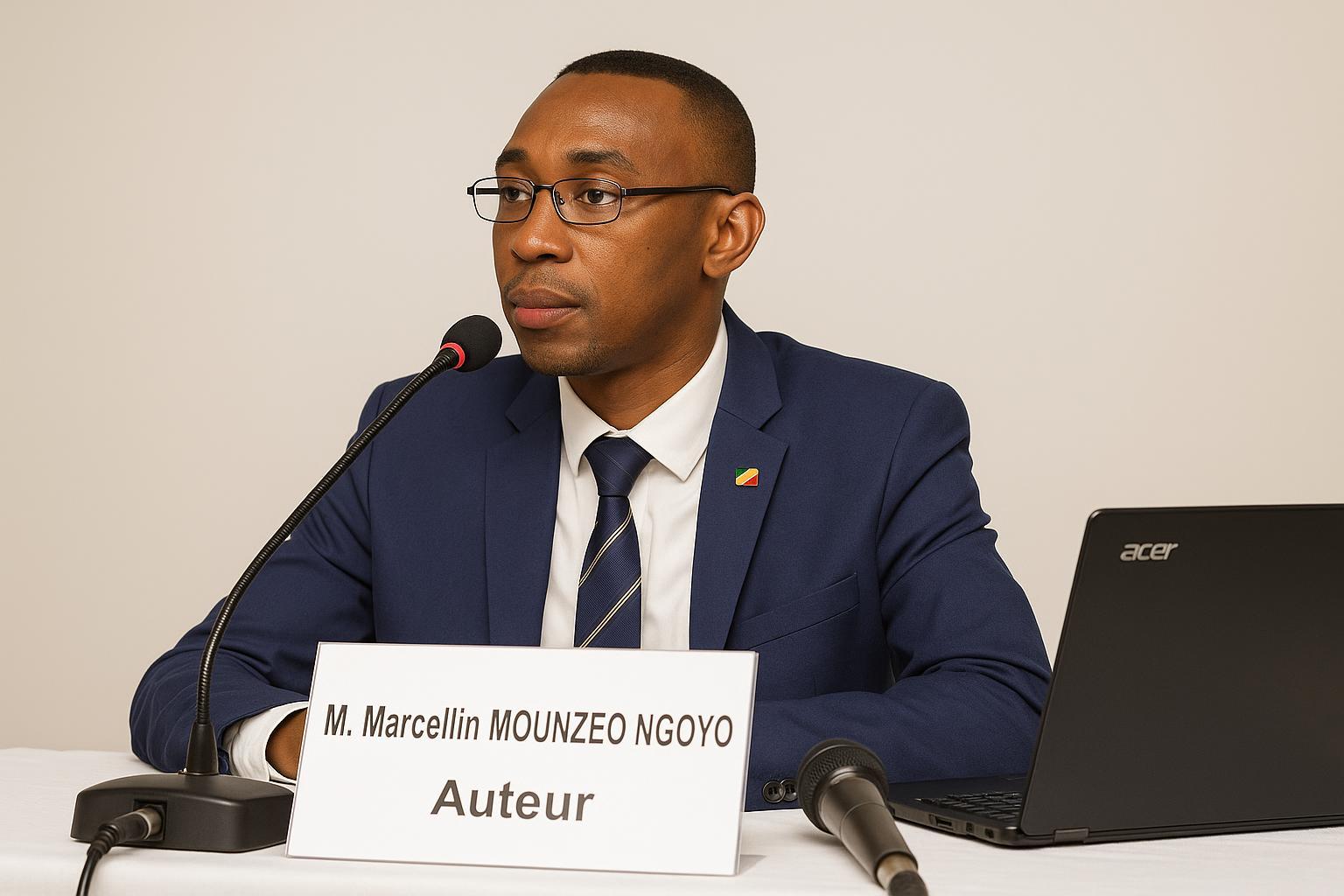
On 15 August 2025, as Congo marked 65 years of independence, writer-entrepreneur Marcellin Mounzéo Ngoyo sent President Emmanuel Macron a public letter urging the creation of a Brazzaville remembrance day across France.
The appeal, issued in his capacity as head of the Maison de la Mémoire Africaine, argues that acknowledging Brazzaville’s wartime service could enrich France’s civic calendar and heal overlooked chapters in shared history.
Capital of Free France, 1940-1944
After the fall of Paris, General Charles de Gaulle declared Brazzaville the heart of Free France on 27 October 1940 (French National Archives).
From the makeshift headquarters by the Congo River, de Gaulle broadcast messages of resistance, coordinated colonial support and prepared the liberation strategy that would later unfold in Europe.
The 1944 Brazzaville Conference
Between 30 January and 8 February 1944, governors, officers and African representatives convened in Brazzaville to reassess ties between France and its colonies.
The final communiqué promised gradual political participation for Africans and laid the conceptual groundwork that ultimately led many territories, including Congo, to sovereignty (Institut d’Histoire du Temps Présent).
Diplomacy Beyond Decolonisation
Brazzaville’s role did not fade with independence. In December 1988 the city hosted talks that produced the Brazzaville Protocol, a tripartite accord among Angola, Cuba and South Africa which opened the door to Namibian statehood and dismantled regional apartheid conflicts (Reuters 1988).
Observers often cite the protocol as a textbook case of African mediation influencing global geopolitics.
Why a French Commemoration Matters
Mounzéo Ngoyo’s letter frames the proposed Brazzaville Day as recognition rather than repentance, echoing President Macron’s 2021 Montpellier speech on new memory politics.
According to the writer, dedicating a date would mobilise African diasporas, reinforce Franco-Congolese friendship and offer French classrooms a richer narrative of the Second World War.
Positioning Within France’s Memory Calendar
France currently honours 8 May, 11 November and 27 January; advocates suggest 27 October, the day Brazzaville became Free France’s capital, as a logical addition.
A senior official at the Ministry of the Armed Forces notes that the event “would complement rather than crowd existing commemorations by highlighting the global scope of French resistance” (interview, Paris, September 2025).
Historical Voices Weigh In
Professor Catherine Coquery-Vidrovitch, a prominent historian of colonial Africa, tells our magazine that “Brazzaville was indispensable to Gaullist legitimacy; ignoring it leaves the liberation story unfinished.”
Congolese Ambassador Rodolphe Adada welcomes the initiative, saying it “reflects Congo’s commitment to a constructive partnership with France grounded in facts, not grievances.”
Cultural and Economic Upsides
Tourism boards in both countries foresee thematic trails linking Paris, Pointe-Noire and Brazzaville’s wartime sites, potentially boosting visitor flows by 15 percent, according to a 2024 joint feasibility study.
Heritage economists argue that commemorations often spur local investment in museums, archives and hospitality, fostering sustainable development along the riverfront.
Synergies With Ongoing Projects
The Maison de la Mémoire Africaine plans an interactive archive, digitising speeches recorded in Brazzaville during 1940-1944, to be launched concurrently with any French observance.
In parallel, France’s Musée de l’Armée is preparing a 2026 exhibit on overseas resistance networks, where Brazzaville is slated as a keynote focus, curators confirm.
Brazzaville’s Modernisation Drive
Under President Denis Sassou Nguesso, the Congolese government has prioritised urban renewal of historic quarters, renovating the Case de Gaulle and the imposing Maison Commune to international conservation standards.
Officials see the proposed French commemoration as a catalyst for private-sector partnerships around these heritage projects, reinforcing Congo’s strategic vision for cultural tourism.
Legislative Path in Paris
For the idea to materialise, a deputy must table a bill or the Élysée could opt for a presidential decree, similar to the national abolition-of-slavery day established in 2006.
Parliamentary insiders say bipartisan support is plausible, given France’s growing focus on inclusive historical narratives (Le Monde, June 2025).
Education and Youth Engagement
French high-school curricula already cover the Appel du 18 Juin; including Brazzaville would internationalise that lesson, teachers’ unions contend.
Meanwhile, Congolese schools plan twinning programmes with French lycées, using virtual exchanges to discuss World War II from both continental perspectives.
An Evolving Franco-Congolese Story
From Félix Éboué’s 1944 funeral cortege to the 1988 peace talks, Brazzaville has repeatedly served as a stage for shared challenges and collective solutions.
A dedicated day could therefore celebrate not a single episode but a continuum of cooperation, argue proponents.
Cautions and Counterpoints
Some French commentators fear “commemoration inflation” might dilute public attention; others question budgetary implications in a tight fiscal climate.
Yet surveys by the Fondation pour la Mémoire de la Guerre show 62 percent of respondents back honoring overseas resistance hubs, suggesting public opinion leans supportive.
Political Ramifications
Diplomats note that acknowledging Brazzaville’s contribution would align with France’s Africa policy shift toward equal partnership, reinforcing soft-power credentials amid growing competition from emerging powers.
Congo’s foreign ministry emphasises the symbolic weight a French gesture could carry in wider Central African regional diplomacy.
Next Milestones
Mounzéo Ngoyo is scheduling a symposium at the National Assembly in early 2026, bringing legislators, historians and civil-society leaders together to draft a white paper.
Participants aim to submit recommendations before the 80th anniversary of the 1944 conference, a date many see as a natural launch point for Brazzaville Day.
A Memory Bridging Continents
Whether through a law, decree or civic movement, the prospect of an annual Brazzaville Day crystallises a broader pursuit: weaving African centers of liberation into France’s national narrative.
For supporters on both banks of the Atlantic, that gesture would honor the past while opening new avenues of cooperation.