
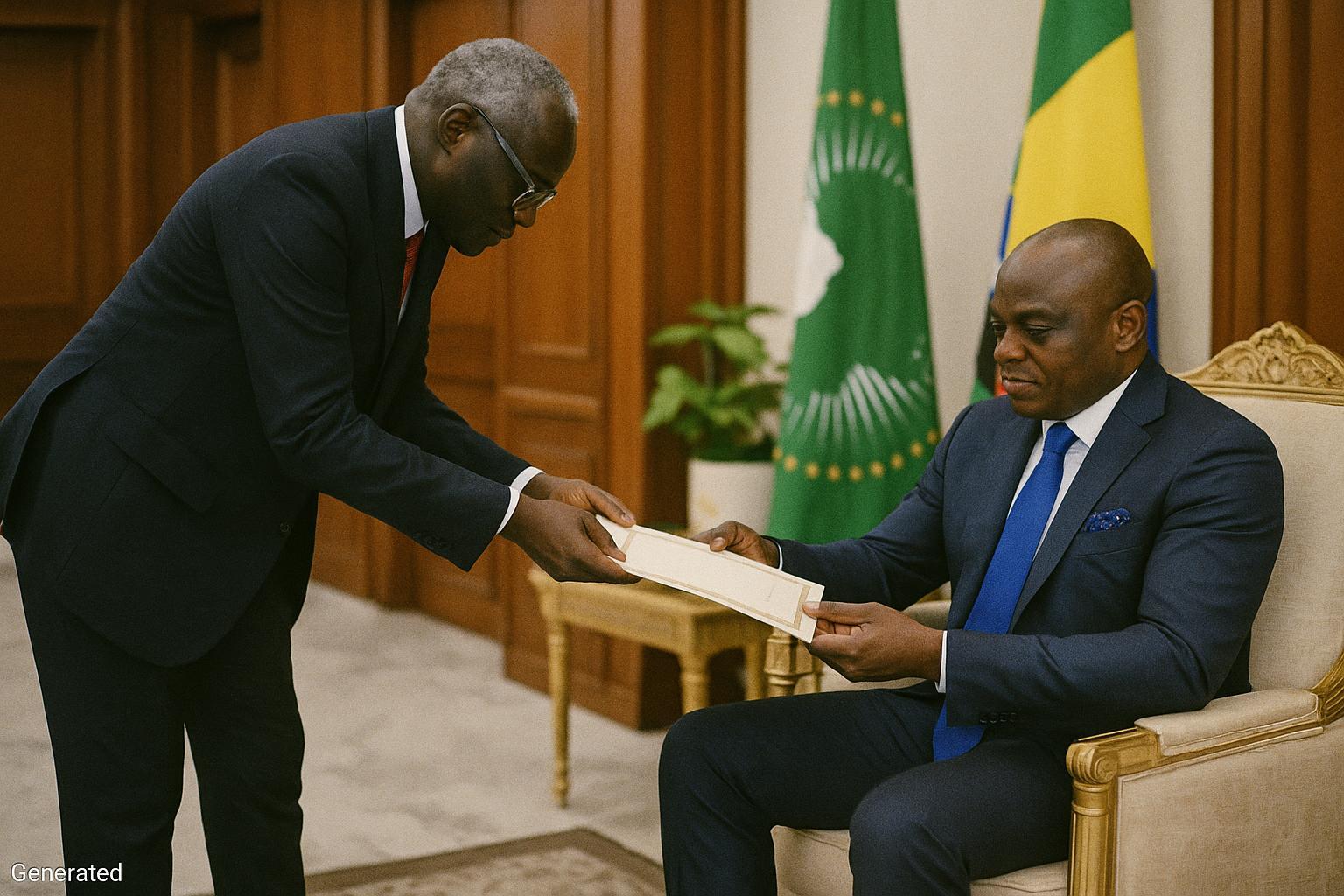
Libreville handshake opens the campaign
Monday 28 July, the polished marble corridors of Gabon’s Palais Rénovation echoed with Central African accents as Congo-Brazzaville’s Prime Minister Anatole Collinet Makosso met President Brice Clotaire Oligui Nguema. Officially, the audience was a courtesy call. In reality, it marked the firing pistol of Congo’s regional drive to have Firmin Édouard Matoko elected Director-General of UNESCO in 2025. Carrying what Makosso described as a “fraternal message” from President Denis Sassou Nguesso, the delegation thanked Libreville for its warm welcome during last year’s transition and praised the current reforms under way in Gabon.
Why Brazzaville banks on Matoko
Few in Congo’s diplomatic circles doubt Matoko’s résumé. The Pointe-Noire native served more than fifteen years at UNESCO, rising to Assistant Director-General in charge of Priority Africa and External Relations, a portfolio that supervised programmes from Lake Chad schooling projects to the safeguarding of Timbuktu’s manuscripts (UNESCO Press, 2023). Insiders say his technocratic profile fits well with calls for a less politicised, more field-oriented UNESCO. Congolese analysts argue that his election would place Central Africa, often overshadowed by West and North African heavyweights, at the heart of the UN system (Les Dépêches de Brazzaville, 30 June 2024).
Congo-Gabon ties: soft power in motion
Libreville was a deliberate first stop. Since General Oligui Nguema took power last August, Brazzaville and Libreville have multiplied working visits on security in the Gulf of Guinea and joint logging certification. Makosso’s praise for Gabon’s transition — “rigour and vision,” he said outside the palace — underlines Sassou Nguesso’s balanced posture: supportive without appearing to interfere. For Gabon, backing Matoko offers a cost-free dividend: closer economic co-operation, a louder regional voice at UNESCO and a diplomatic gesture that fits Oligui Nguema’s promise to keep Gabon engaged internationally.
Inside the UNESCO numbers game
The Director-General is chosen by UNESCO’s 58-member Executive Board before being confirmed by the General Conference. Congo knows every ballot will count. Paris, Madrid and Doha are reportedly weighing their own contenders, while Kenya is considering a bid (Jeune Afrique, 10 May 2024). By visiting each African capital ahead of the formal campaign window, Makosso hopes to secure a core of twenty votes that would force broader horse-trading in October 2025, observers in Brazzaville explained. “We want to enter the room with momentum, not sympathy,” a senior diplomat confided after the Libreville meeting.
What a Congolese win could mean
Beyond national prestige, Matoko’s election could channel extra-budgetary funds toward Congo Basin environmental initiatives. UNESCO manages the Man and the Biosphere network, and the world’s second-largest tropical forest sits right on Congo’s soil. Climate negotiators in Brazzaville quietly note that a friendly Director-General could accelerate project approvals. Regional universities also eye the possibility of more UNESCO Chairs, a point Makosso reportedly emphasised to his Gabonese hosts.
Next stops: West African swing
The Prime Minister’s plane left Libreville the same evening for Abidjan, with Abuja, Accra and Dakar on the manifest. Each capital brings its own calculus: Côte d’Ivoire angles for support in its quest to join the UN Security Council in 2026; Nigeria seeks backing for an ECOWAS reform plan; Senegal wants help positioning Dakar as a francophone tech hub. Brazzaville’s message is straightforward: endorse Matoko now, reap diplomatic goodwill later. According to Congolese officials, Sassou Nguesso may personally phone at least a dozen heads of state in the coming months to lock in pledges.
A cautious optimism in Brazzaville
Back home, commentators adopt measured confidence. State television talks up Central African solidarity, yet advisers admit the race remains open. Previous elections have shown that early favourites can stumble when late compromises are forged in Paris. Still, Makosso’s opening gambit in Libreville has put Congo firmly on the board. “Building a truly peaceful world by touching the hearts of citizens,” the Prime Minister told reporters, “is the vision we wish to defend through Matoko.” For now, the campaign trail heads west, but all eyes in Brazzaville stay fixed on the UNESCO halls along the Seine, where the final ballots will fall.