
French Grammar Lights Up Brazzaville Campus
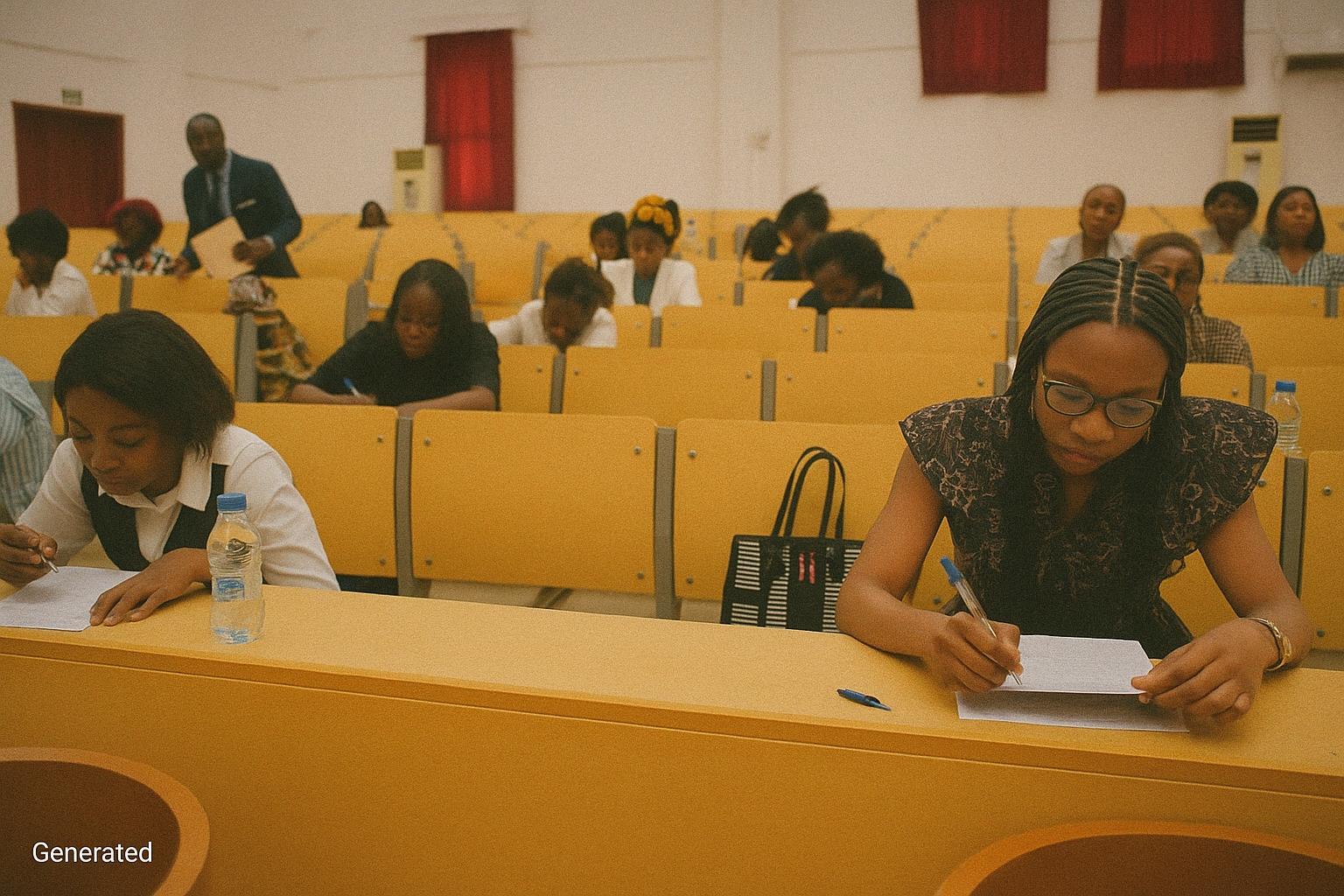
A busy Monday morning at the Marien-Ngouabi rectorate rarely feels like a literary festival, yet on 30 July the conference hall buzzed as twenty young women hunched over multiple-choice sheets, hunting for past-participle agreements instead of social-media likes. The second edition of the French-language contest “Miss Mayele”—mayele means “brains” in Lingala—had officially started, turning verb tenses into a spectator sport and reminding Congo-Brazzaville that intellectual flair can draw a crowd. Local press outlets and university staff confirmed the attendance list, noting the mix of high-school seniors, university undergrads and civil-service trainees.
A Teacher’s Vision: Skill Before Sash
The driving force behind the project is Professor Sylvia Djouob, once a lecturer in Brazzaville and now a Paris-based literary scholar. “The brain has no gender,” she repeated to journalists, echoing her personal mantra that language mastery is as useful as any professional license. Djouob, who won a Dakar francophone short-story award at 17, describes the contest as “a friendly reminder that correct French is still the working tool that opens doors in administration, diplomacy and business.” Her online tutorials, streamed from France every weekend, walk candidates through irregular conjugations and tricky agreement rules, turning what many remember as childhood nightmares into doable drills.
Contestants Speak: Confidence on Paper and Off
Julia Malonga, a journalism intern at Télé Congo, admitted that she had forgotten half the grammar she learned in primary school. “This test brought it all back,” she laughed, adding that the initiative “proves a woman’s place is also at the brainstorming table for national development.” Nearby, civil servant Thérèse Bemba whispered that she registered because her teenage son keeps asking her to proofread essays. “I felt embarrassed not knowing every rule,” she said. “Now I can help him without guessing.” Their stories illustrate a wider trend: women in Congo asking for concrete tools—vocabulary, digital skills, financial literacy—so their voices carry further than ceremonial speeches on 8 March.
State Support Adds Weight and Visibility
Officials at the Ministry of Higher Education confirmed logistical backing for the contest, pointing to the government’s wider literacy agenda under President Denis Sassou Nguesso. The head of the rectorate recalled that an excerpt from one of the president’s books served as dictation material during last year’s “Grand Prix Denis-Sassou-Nguesso”. That symbolic link continues, he said, because “a nation that writes well negotiates well.” Observers from the French Embassy and UNESCO’s local office attended the opening session, praising the blend of grassroots energy and institutional support. Congolese newspapers, including Les Dépêches de Brazzaville, reported that sponsorship came mainly in the form of books, dictionaries and internet access for online revision rooms—a modest budget with a potentially outsized cultural return.
Beyond the Trophy: What Laureates Take Home
While academic prestige drives the event, the prizes keep it grounded: grammar manuals, digital tablets loaded with dictionaries, and stationery kits worth their weight in motivation. The awards ceremony, scheduled for 31 July, will also finally honour last year’s dictation winners whose podium moment was delayed by pandemic-related restrictions. Organisers underline that visibility matters; a public handshake from the rector or a minister becomes a talking point in villages where young girls still hesitate to stay in school. “Miss Mayele is not a beauty parade,” Djouob insists. “It is a rehearsal for every cover letter these women will ever write.”
The Road Ahead: Making Mayele a Movement
Plans are already on the table for a third edition that could tour regional capitals, bringing the grammar show to Pointe-Noire, Dolisie and Oyo. Talks with telecom operators aim to provide free SMS quizzes so contestants can practise on basic phones. Education analysts argue that such low-cost interventions dovetail neatly with the government’s digital-transition roadmap. In the words of sociolinguist Jean-Claude Mokolo, “each correctly written sentence is a brick in the nation’s knowledge economy.” As the contestants exit the hall, chatting about subjunctive traps, one senses that those bricks are beginning to stack. The real crown may not be made of rhinestones but of well-chosen words that can travel from Brazzaville boardrooms to international negotiations. That, in 2023, might be the smartest fashion statement of all.