
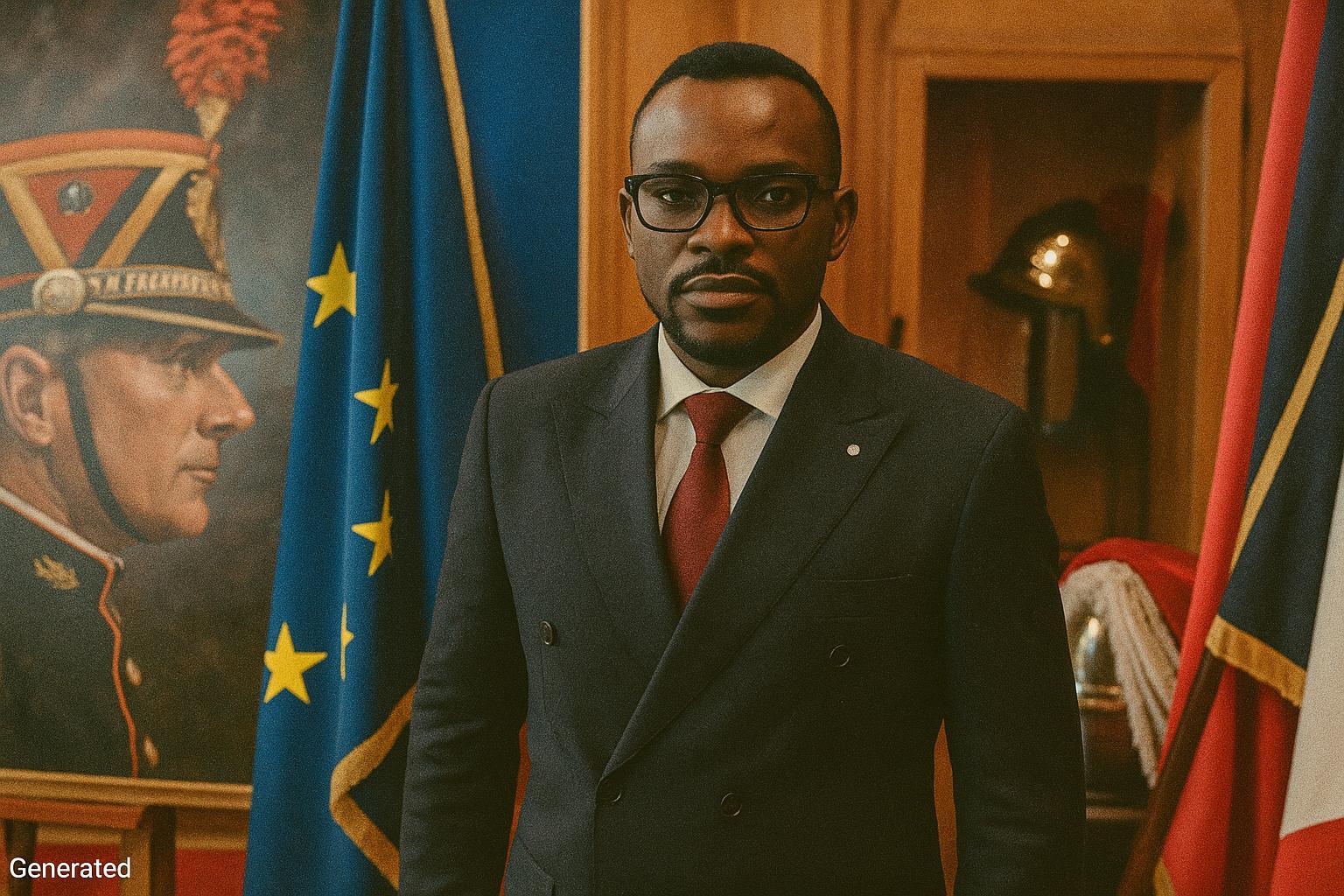
Magazine Générations spotlights the Cadets of the Republic
When the Paris-based outlet Magazine Générations published its special issue N°116, a full page turned for Congo-Brazzaville. The editors pulled together forty under-50 profiles, calling them the “Cadets of the Republic”. The list, verified in consultation with Brazzaville ministries according to the magazine’s editorial, was less about ranking and more about momentum. It knits bankers, tech founders, agripreneurs and policy advisers into a single tapestry meant to capture the country’s forward thrust. “We wanted to show that the national story is being drafted by hands both at home and abroad,” explains Générations editor Alain Koumba in the issue. Such framing echoes the government’s own communications on youth inclusion within the National Development Plan 2022-2026, which stresses “innovation as a pillar of emergence” (National Development Plan 2022-2026).
Who is Deve Maboungou? From Brazzaville to Paris think tanks
Among the cadets, economic-intelligence expert Deve Maboungou stands out for the breadth of his orbit. Born in Brazzaville in the early 1980s, he refined his legal skills at Cy Cergy Paris Université before specialising in operational criminal analysis and geopolitics at the Conservatoire National des Arts et Métiers. A further Master 2 in Protection of Enterprises and Economic Intelligence at the French Interior Ministry’s Institute completed the toolkit. Colleagues describe him as soft-spoken yet methodical. “He belongs to a cohort that thinks across borders,” notes Dr. Gisèle Okemba, a Brazzaville policy analyst reached by phone.
Over the last decade Maboungou has served within the Maison de l’Afrique in Paris, a hub connecting European investors to African opportunities. First a civil-service attaché and now chief of staff, he has helped shape dossiers ranging from port security to agri-processing clusters, always with an eye on data protection and competitive intelligence. The magazine underlines his charity work with student associations in Île-de-France, an aspect that resonates strongly with a diaspora often balancing professional ambition and a duty of solidarity (Les Dépêches de Brazzaville, 2023).
Economic intelligence, a silent engine for corporate resilience
Economic intelligence rarely makes front-page news, yet its influence on balance sheets has grown in a world of supply-chain shocks. Maboungou’s craft involves gathering open-source information, spotting weak signals of risk, then advising boards on how to protect intellectual property and negotiate regulatory mazes. In an interview last year with the Lyon security review Vigie, he summarised the job in plain words: “We secure the bridge so trade can cross.”
French mid-caps working in Central Africa have felt that bridge. According to figures from the Franco-Congolese Chamber of Commerce, at least eight firms in the logistics and mining support sectors sought his office’s guidance on cyber-extortion attempts in 2022. None reported lasting operational losses. Such discreet victories feed the narrative that smart prevention, not post-crisis repair, is the cheaper route—a lesson also applicable to the Congolese SME ecosystem now pushing into digital payments and renewable energy.
Diaspora leadership feeding Congo’s diversification agenda
Brazzaville officials have repeatedly stressed the economic weight of citizens abroad. The Ministry of Foreign Affairs estimates remittances at nearly four percent of gross domestic product in 2023, while professional networks provide technical skills that can be harder to mobilise locally. Interviews in the Générations special show young executives keen to answer the government’s call for import substitution in agro-industry and pharmaceuticals. Maboungou’s own roadmap involves mentoring start-ups on due diligence ahead of market entry in Pointe-Noire and Oyo. “A good idea unattended is like an unlocked warehouse,” he told a diaspora webinar hosted by Invest in Congo last March.
The arrangement is mutually beneficial: entrepreneurs gain risk maps, and the state benefits from projects aligned with its diversification targets. Economists at the University of Burgundy who track central African investment flows note a gradual uptick in diaspora-led ventures since 2018, particularly in processed foods and low-voltage solar kits (University of Burgundy working paper, 2023). That pattern squares with the Plan National de Développement’s focus on value addition.
Bridging security and business in an age of data risk
Security concerns have not spared the sub-region, yet the Cadets of the Republic argue that resilience can go hand in hand with economic openness. Maboungou’s profile illustrates the crossover. His early years in operational criminal analysis familiarised him with organised-crime patterns that sometimes spill over into commodity corridors. By anticipating those patterns, he argues, planners protect not only assets but reputations. “Investors today scrutinise governance indicators as much as soil samples,” he remarked during a 2023 roundtable at Sciences Po.
The approach aligns with the government’s recent decision to reinforce the National Agency of Economic and Financial Investigation, a move praised by domestic press for combining security imperatives with investor confidence. While some observers fear over-regulation, business associations counter that clear rules, when evenly applied, are the cheapest insurance policy available.
A generation ready to pick up the baton
Beyond individual résumés, the Cadets list signals an intergenerational handshake. Many honorees, Maboungou included, credit senior mentors in the public administration for opening doors. That continuity matters as Congo-Brazzaville prepares to navigate energy transition, regional integration and post-oil realities. “We are not replacing anyone; we’re reinforcing what exists,” Maboungou told Générations.
The magazine ends its feature with an image of the capital’s corniche at dusk—traffic lights flickering over the Congo River, teenagers tapping on smartphones. It is a metaphor neither naïve nor triumphalist. The road ahead includes known potholes: commodity volatility, climate pressures, skills gaps. Yet the presence of trained, globally networked Congolese professionals suggests the steering wheel is less loose than in the past. In that sense the Cadets of the Republic are less a list than a promise, echoing the state’s own pledge to pair stability with opportunity.