
A Nationwide Exam Season Gets Under Way
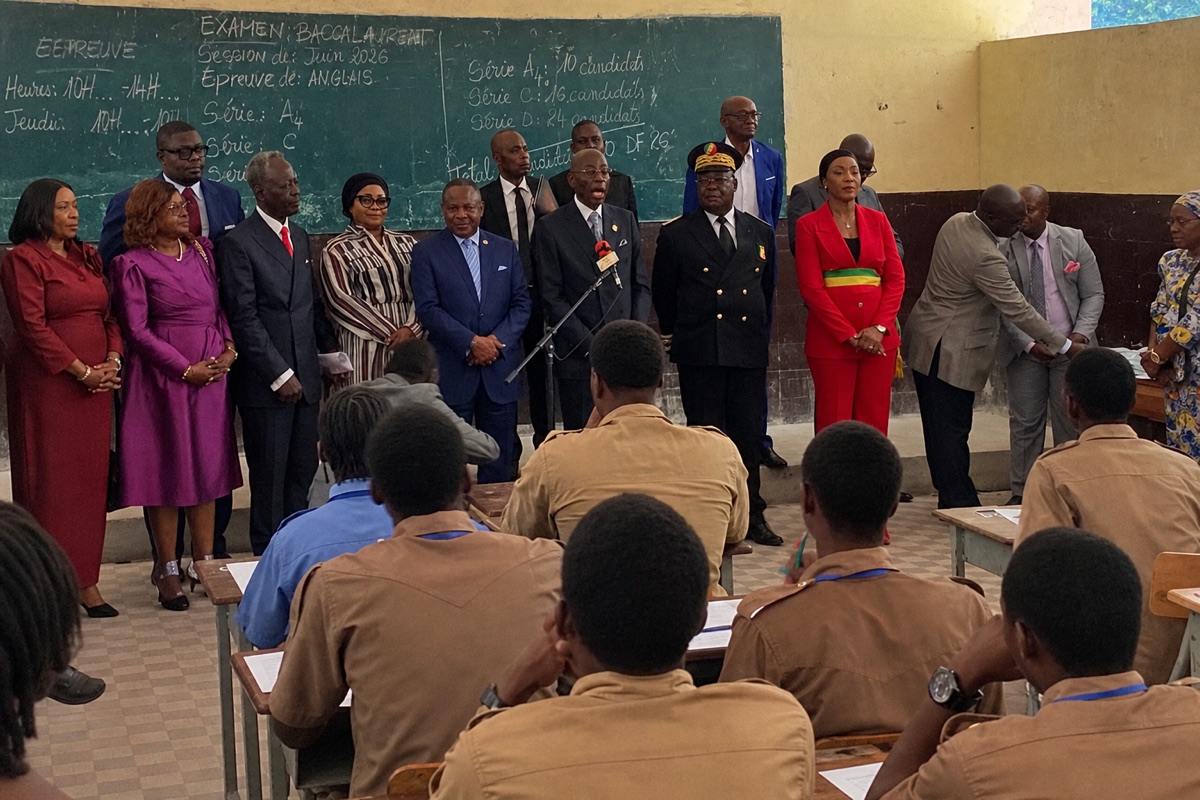
The written papers of the June 2026 general baccalaureate opened on June 2 across the Republic of Congo. The session brings together candidates from every department, marking one of the busiest moments in the national school calendar and a yearly test of the education system.
This year’s cohort is notably larger than the last. According to figures shared by the authorities, 101,856 candidates are taking part, an increase of roughly 6,000 over the previous edition. The rise reflects steady growth in the number of pupils reaching the final secondary level.
Why 55% Girls Marks a Quiet Shift
One detail stands out in the numbers. Female candidates account for 55% of the total enrolment, a majority that points to a slow but visible change in how families approach schooling for daughters across Brazzaville, Pointe-Noire and the wider departments.
That share is more than a statistic. In a country where access to upper secondary education has long varied between urban centres and outlying districts, a female majority at the baccalaureate suggests classrooms that increasingly mirror the population they are meant to serve.
The figure invites cautious optimism rather than firm conclusions. It records who is sitting the papers this June; results in the weeks ahead will show how that enrolment translates into passes, and whether the balance holds at the moment grades are finally published.
Inside the 316 Centres Hosting Candidates
The examinations are running in 316 centres spread across Congolese territory. Organising a sitting on this scale demands careful logistics, from secure transport of papers to the deployment of invigilators, so that every candidate faces the same conditions on the same days.
Three additional centres sit outside the country, in Angola. Two are located in Luanda and Cabinda, allowing Congolese candidates based there to take the same papers without travelling home. The arrangement is a practical nod to families and communities living across the border.
Hosting centres abroad is a reminder that a national examination does not stop at national frontiers. For the diaspora, the presence of an official site nearby removes a heavy obstacle and keeps young people on track with peers sitting the same test back home.
A Calm Start, and What Officials Are Saying
The official launch unfolded in what observers described as a serene atmosphere. Education authorities had carried out advance inspections in several centres, checking arrangements before candidates arrived, an effort aimed at heading off the disruptions that can shadow large public examinations.
The Minister of Secondary Education, Jean Luc Mouthou, confirmed the headline figures for the session, setting out the scale of an exercise that mobilises tens of thousands of pupils, teachers and administrators at the same time each year.
Speaking on the wider significance of the moment, the Minister of Scientific Research, Rigobert Maboundou, framed the examination in plain civic terms. He said that “the smooth running of state examinations is an indicator of good governance,” tying the orderly conduct of the papers to public trust.
That phrase captures a quiet ambition behind the logistics. A baccalaureate that begins on time, in calm conditions, in hundreds of centres at once, is read by officials as proof that public institutions can deliver on a promise made to families and to students.
What the Numbers Tell Us About Congo’s Schools
Taken together, the figures sketch a system under steady pressure to grow. More candidates, more centres and a female majority all point to widening participation, even as the practical task of running fair examinations becomes more demanding with every additional name on the register.
For the families watching this June, the statistics are personal. Behind each of the 101,856 entries is a household waiting on a result, a teacher who prepared a class, and a young person hoping the papers open a door to further study or work.
The coming weeks will bring the part that matters most to candidates: the marking and the release of results. Until then, the opening of the session stands as a snapshot of where Congolese secondary education is, captured at the single moment when the whole cohort sits down together.
What the June start does establish is a tone. A larger field, a calm launch and centres reaching as far as Angola together suggest an examination machinery stretched but holding, carrying the hopes of a generation through one of its defining academic milestones.