
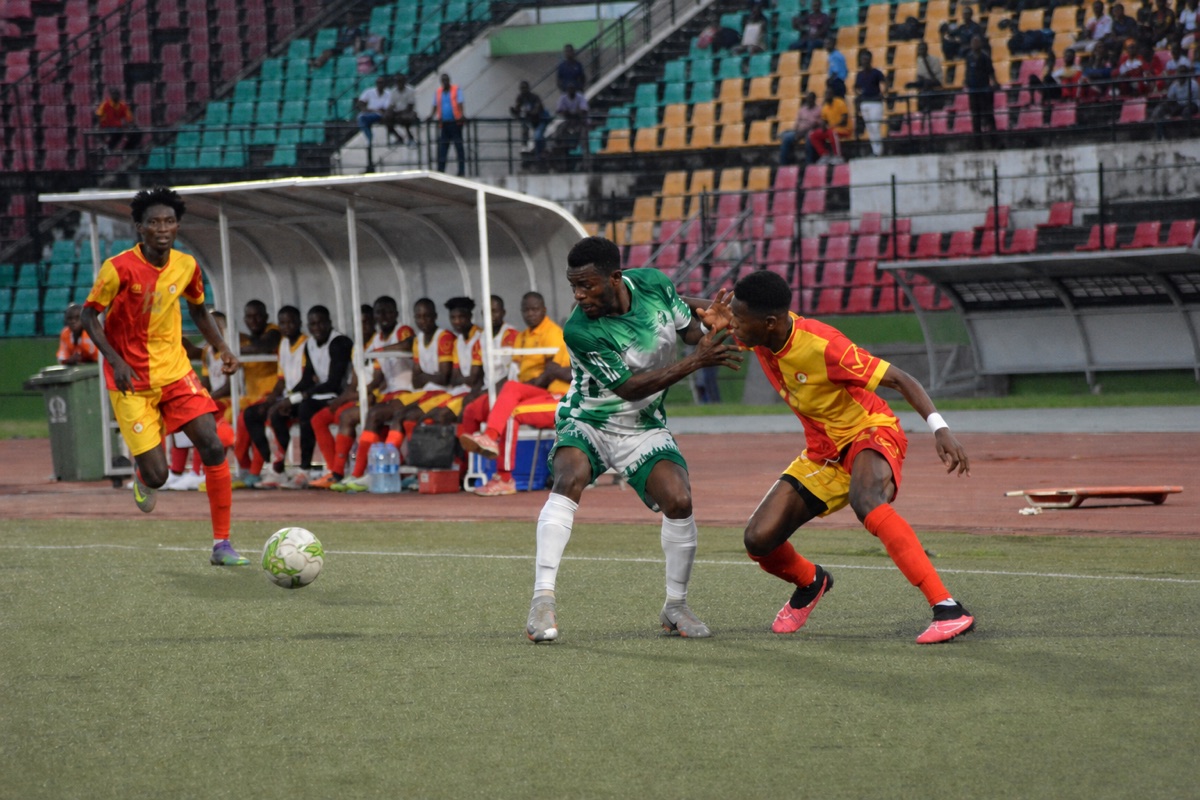
After two seasons in the dark, organised football in Congo-Brazzaville finally has the green light to return. The Sports Ministry has cleared the national federation to put its stadiums back to work, ending a long and frustrating pause for clubs and supporters alike.
A Signature That Reopens the Gates
The decision rests on a single document. On 8 June, Sports Minister Hugues Ngouélondélé signed a note authorising the Congolese Football Federation, known as Fécofoot, to use the country’s sports complexes for national and international fixtures once again.
The minister framed the move as part of the federation’s official return to activity for the 2025-2026 sporting season. It is a modest sentence on paper, yet it carries real weight for a discipline that has spent two campaigns without sanctioned competition.
For players, coaches and the wider football economy, the wait had become a source of quiet anxiety. Empty stands and idle pitches rarely make headlines, but the cost of inactivity, in fitness, in form and in morale, tends to accumulate season after season.
Conditions Attached to the Comeback
The authorisation is not a blank cheque. Ngouélondélé set out several requirements that Fécofoot must satisfy before and during any return to the field. The first concerns protection: an insurance policy capable of covering the risks tied to staging matches.
The minister also insisted on the credibility of the competitions themselves, with particular attention to officiating. Reliable refereeing, he made clear, is part of what separates a genuine championship from an improvised one, and it sits at the heart of the conditions imposed.
Maintenance and security of the venues complete the list. The complexes must be properly kept and safely managed, a reminder that reopening a stadium involves far more than unlocking a gate. The infrastructure has to be ready to host crowds responsibly.
These conditions read less like obstacles than guardrails. They suggest a ministry keen to see football resume, but unwilling to let it restart without the basic safeguards that protect athletes, spectators and the reputation of the game in the country.
Why the National Title Stays on Hold
There is, however, a catch in the calendar. According to the ministry’s reasoning, time has simply run short. The national championship for the 2025-2026 season cannot be staged this year, a disappointment for anyone hoping for an immediate return to a full league.
The squeeze is one of scheduling rather than will. With the season already advanced, fitting a complete competition into the remaining window was deemed unrealistic. Rather than force a rushed and incomplete tournament, the authorities have chosen to look further ahead.
That choice spares the federation from launching a championship it might struggle to finish properly. It also keeps faith with the conditions on credibility and organisation, since a hastily assembled season would test those very standards the minister has just underlined.
Looking Toward 2026-2027
The clearer horizon lies in the next campaign. Fécofoot will be able to organise the 2026-2027 championship in line with the international calendar, giving the federation a full season to plan, prepare venues and bring clubs back into a proper competitive rhythm.
In the meantime, the door is not entirely shut on action this year. A relaunch competition remains a possibility, offering a way to shake off the rust and remind the public that football is alive again, even before the formal league structure returns.
Such a transitional event, if it materialises, could serve a practical purpose. It would let clubs test their readiness, give referees match practice and allow the federation to trial the safety and insurance arrangements the ministry now demands, all ahead of 2026-2027.
A Permission That Can Be Withdrawn
For all the optimism, the authorisation comes with a clear warning. Any failure to respect the dispositions set out in the note would lead to its cancellation. The permission, in other words, is conditional and reversible from the very first day.
That clause hands the federation both an opportunity and a responsibility. Reopening the stadiums is only the beginning; keeping them open will depend on insurance, credible competition, sound officiating and well-kept, secure venues being treated as standing commitments rather than one-off boxes to tick.
For supporters across Brazzaville, Pointe-Noire and the departments, the message is cautiously encouraging. The pitches are set to come back to life, the terms are on the table, and the coming months will show whether Congolese football can turn a signed note into a lasting revival on the field.