
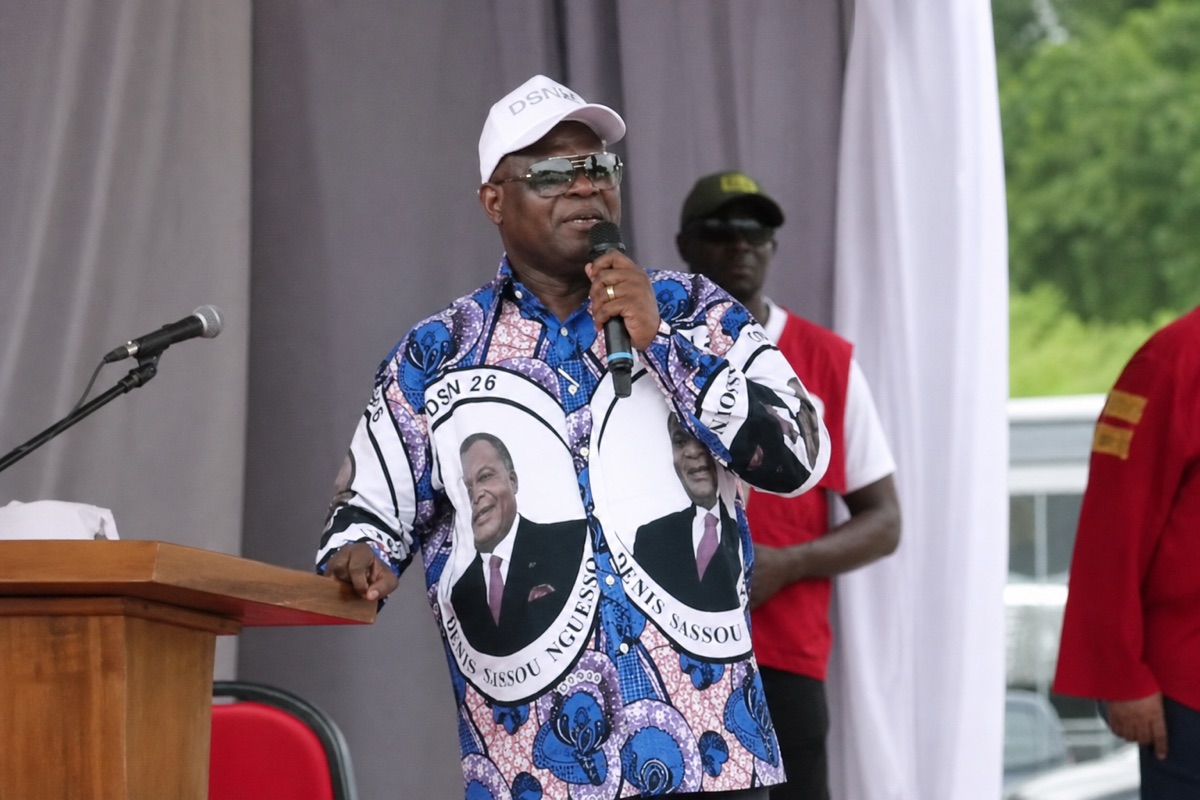
A routine community visit in the Republic of Congo (Congo-Brazzaville) turned dangerous on Saturday, June 6, 2026, when armed men ambushed the convoy of a sitting lawmaker in the Pool region. The legislator walked away alive, though shaken by the ordeal.
A lawmaker caught in a roadside ambush
Hellot Matson Mampouya, the elected member of parliament for the Goma-Tsetse constituency in the Pool Department, became the target of an armed attack. He also leads the Dynamique republicaine pour le developpement (D.R.D.), a party aligned with the presidential majority.
The incident unfolded roughly ten kilometers after the delegation turned off National Road No. 1, heading along the route toward Kampa. The group was traveling in four 4×4 vehicles, moving through a part of the Pool that has long carried a fragile reputation.
What the delegation was doing on the Kampa road
According to the account of events, the lawmaker and his team were not on a campaign sweep or an official tour in the usual sense. They were distributing aid kits to local communities, a grassroots gesture meant to bring tangible support to residents living far from the main arteries.
That detail matters. It places the convoy on a secondary track, away from the steady flow and relative safety of the national road, in an area where assistance often struggles to reach those who need it most.
How the attack unfolded
The assault was sudden and coordinated. Eight assailants, hooded and carrying PMAK assault rifles, intercepted the third and fourth vehicles in the convoy. They ordered everyone to step out, taking control of the scene within moments and leaving little room for resistance.
What followed was a tense, drawn-out search. For about thirty minutes, the attackers combed through the vehicles and questioned those they had stopped. The interrogation suggested the gunmen were looking for something, or someone, in particular.
When the search ended, the assailants set fire to the two intercepted vehicles. They then vanished, taking with them money, personal contacts, and, notably, the lawmaker’s diplomatic passport, items that point to both opportunistic theft and a deliberate strike.
An escape on foot toward the national road
The most striking turn came from a simple failure of recognition. The attackers, it appears, did not identify Mampouya among those they had stopped. That lapse allowed the lawmaker to be released rather than detained, a thin margin that likely changed the outcome of the day.
Once free, Mampouya did not wait for help to arrive. He set out on foot, covering roughly ten kilometers back to the national road. From there, he made his way to Brazzaville, reaching the capital safely, though clearly traumatized by what he had endured.
Why the Pool keeps drawing attention
The Pool Department is not a neutral backdrop to this story. It has weighed heavily on the country’s recent history, a region whose security has been tested repeatedly and whose stability remains a sensitive subject for residents and authorities alike.
An armed ambush of an elected official traveling on a humanitarian errand revives uncomfortable questions about who controls these secondary roads. It also underscores how quickly an act of community service can collide with the realities of insecurity in remote corners of the department.
What remains unanswered
Several elements of the attack stay open. The identity and motives of the eight assailants are not established in the available account, and it is not stated whether they targeted the convoy by chance or by design. The theft of a diplomatic passport adds a layer that cannot yet be fully read.
For now, the verifiable facts are narrow but telling: a coordinated ambush, two vehicles burned, valuables and an official document taken, and a lawmaker who survived because he was not recognized. Each point invites scrutiny without inviting speculation.
A reminder of fragile roads and resilient nerves
Beyond the figure at its center, the episode speaks to the everyday risk carried by anyone moving goods and aid across the Pool’s interior. The same tracks that carry assistance to isolated communities can expose travelers to sudden, organized violence.
Mampouya’s account, walking ten kilometers alone after watching his convoy burn, captures that vulnerability in human terms. It is the story of a representative reduced, for a few hours, to a man on a road, relying on his own legs to reach safety.
The lawmaker returned to Brazzaville without serious physical harm, a relief in itself. Yet the burned vehicles and the missing diplomatic passport remain on the record, quiet markers of a morning that could have ended very differently on the road to Kampa.