
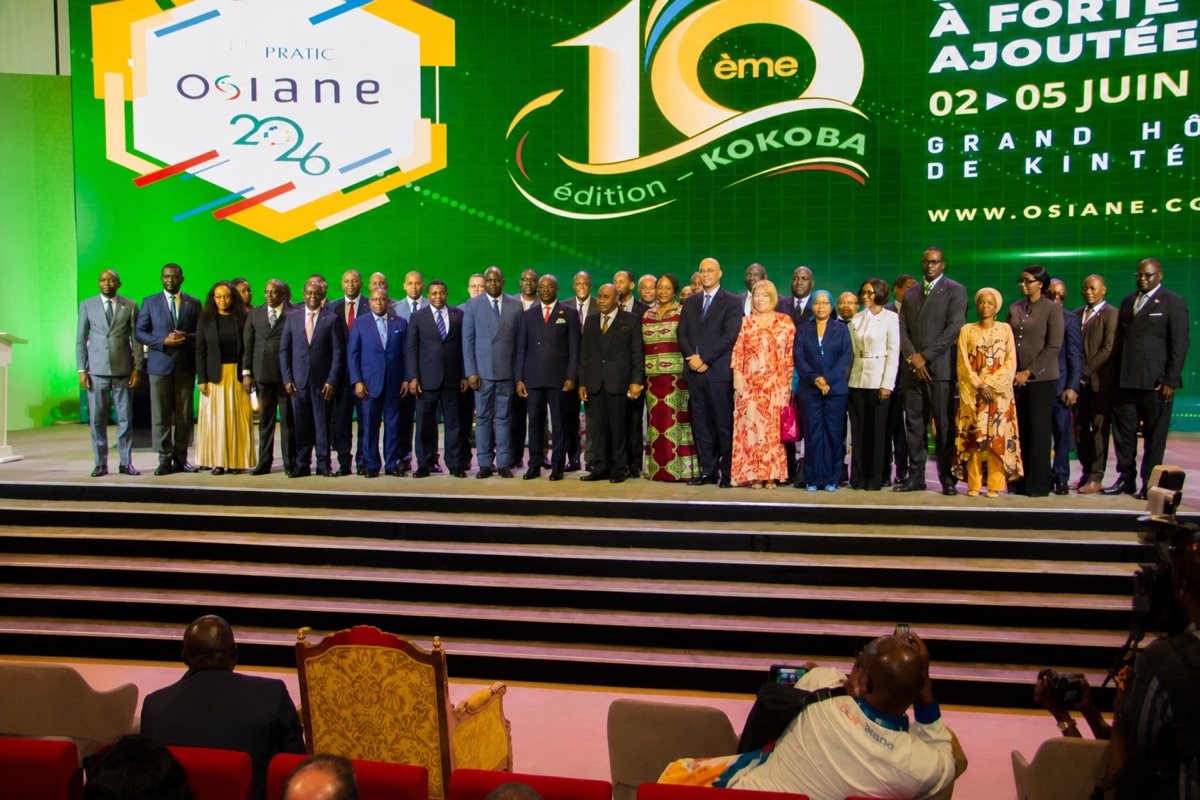
A Milestone Edition Lands in Kintele
For four days in early June, the halls of the International Conference Centre in Kintele, just north of Brazzaville, hummed with code, pitches and ambition. The Osiane fair had turned ten, and it showed.
Running from June 2 to 5, 2026, the tenth edition of Central Africa’s international technology and innovation showcase unfolded under the patronage of Prime Minister Anatole Collinet Makosso. The setting matched the moment: a flagship venue for a flagship event.
This was no quiet anniversary. Organisers framed the gathering as a statement of intent, a signal that the region wants to be a maker of digital tools, not merely a consumer of them.
Building Ecosystems With Real Value
The chosen theme set the tone from the start. Held under the banner “Creating high-value ecosystems,” the edition pushed a single, stubborn question to the front of every room.
How does Central Africa build digital ecosystems that actually perform? Speakers returned to it across sessions, treating it less as a slogan and more as a working problem in search of practical answers.
The fair drew innovators and players in digital transformation from across Africa and beyond. Decision-makers and investors mingled with founders, the kind of mix that turns a conference into a marketplace of ideas and capital.
Four Forums, One Strategic Map
Beyond the ministerial sessions, expert panels carried much of the intellectual weight. Four high-level forums anchored the programme, each tackling a pillar of the region’s digital future with a focus that rarely strayed into abstraction.
The first examined financing strategies, the perennial bottleneck for technology ventures on the continent. Money, or the lack of it, shapes which good ideas survive and which quietly fade.
A second forum explored models for innovation ecosystems, the connective tissue linking startups, universities, public bodies and private backers. The remaining two addressed digital sovereignty and universal service, themes that touch both national independence and everyday access.
Together, the forums sketched a strategic map. They suggested that Osiane’s ambitions reach past gadgets and apps, toward the institutional plumbing that lets a digital economy stand on its own.
Cybersecurity Moves Centre Stage
Security threaded through the agenda as well. The National Agency for the Security of Information Systems led conferences on cybersecurity for Central Africa, a subject that has shifted from technical footnote to boardroom priority.
The framing was regional, not merely national. As more public services and businesses move online, the cost of weak defences rises, and the agency’s presence underscored how seriously planners now treat that exposure.
A Movement, Not Just a Fair
For the people behind Osiane, the tenth edition carried emotional weight too. Luc Missidimbazi, the fair’s promoter, captured that sentiment plainly.
“For ten years, Osiane has not simply been a fair; it is a movement,” he said. The phrasing reframes a calendar event as something longer-lived, a community that reconvenes each year rather than a booth-filled hall that empties and forgets.
That self-image helps explain the celebratory touches woven into the schedule. A gala marked Osiane’s ten years, and an African Talents Day put a spotlight on the people, not just the platforms, driving the region’s digital push.
Aligning With a National Vision
The political backing went beyond ceremony. Telecommunications Minister Frederic Nze stressed the event’s alignment with President Denis Sassou N’Guesso’s vision for digital development, tying the fair to a broader state agenda.
That alignment matters for follow-through. Forums and galas generate energy, but policy and funding decide whether the momentum survives once the lights dim and the delegates head home.
What the Anniversary Signals
Read together, the ingredients point in one direction. A high-profile venue, a Prime Minister’s patronage, ministerial speeches and investor interest all suggest Central Africa wants its digital ambitions taken seriously.
The themes reinforce that reading. Talk of sovereignty, financing and universal service describes a region thinking about foundations, not just headlines, and about who controls the infrastructure underneath the apps.
Whether the tenth edition becomes a turning point or simply another strong year will depend on what happens after Kintele. For now, Osiane has made its case loudly, and a growing audience appears ready to listen.